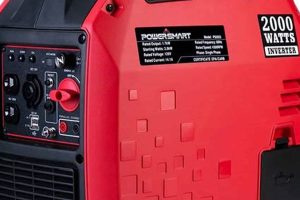
Compact, mobile power sources offer homeowners a convenient way to maintain essential electrical functions during outages caused by severe weather, grid failures, or planned maintenance. These devices, ranging in size and power output, can supply electricity for critical appliances, lighting, and communication devices, enhancing safety and comfort. For example, a moderately sized unit might power a refrigerator, a few lights, and a sump pump, preventing food spoilage, providing illumination, and mitigating basement flooding.
The ability to generate electricity independently provides valuable peace of mind and enhances household resilience. Historically, homes relied on candles, oil lamps, and wood-burning stoves during power disruptions. Modern compact power sources offer a significantly safer, more efficient, and convenient alternative, minimizing disruption to daily routines and preserving essential services. This is particularly crucial in areas prone to power outages or for individuals reliant on electrically powered medical equipment.
Considerations for selecting an appropriate unit involve evaluating power needs, fuel type, runtime, noise levels, and safety features. Further exploration of these topics will provide homeowners with the information necessary to make informed decisions and ensure they acquire a device suited to their specific requirements and circumstances.
Safety and Operational Tips for Home Power Generation
Safe and effective use of independent power sources requires careful planning and adherence to safety guidelines. These tips provide crucial information for homeowners considering or already utilizing such equipment.
Tip 1: Calculate Power Requirements: Determine the wattage required to operate essential appliances and devices. This information is crucial for selecting a unit with sufficient capacity. Overloading a unit can lead to damage and safety hazards.
Tip 2: Proper Ventilation is Essential: Operate units outdoors in well-ventilated areas, away from windows, doors, and vents. Exhaust fumes contain carbon monoxide, a colorless, odorless, and lethal gas.
Tip 3: Safe Refueling Procedures: Allow the unit to cool completely before refueling. Gasoline and other fuels are highly flammable and pose a significant fire hazard when handled near hot surfaces.
Tip 4: Dry Operation is Critical: Never operate a unit in wet or damp conditions. Protect the unit from rain and snow. Water and electricity create a dangerous combination.
Tip 5: Connection Methods and Safety: Use heavy-duty, outdoor-rated extension cords specifically designed for generators. Avoid overloading circuits. Inspect cords for damage before each use.
Tip 6: Professional Installation of Transfer Switches: Consider professional installation of a transfer switch to safely connect a unit to a home’s electrical system. This prevents backfeeding, a dangerous condition that can harm utility workers and damage appliances.
Tip 7: Regular Maintenance Enhances Performance: Adhere to the manufacturer’s recommended maintenance schedule. This includes regular oil changes, air filter cleaning, and spark plug replacement. Proper maintenance ensures optimal performance and extends the unit’s lifespan.
Tip 8: Store Fuel Safely: Store fuel in approved containers in a well-ventilated area away from ignition sources. Never store fuel indoors or near the unit itself.
By following these safety precautions and operational guidelines, homeowners can harness the benefits of independent power generation while minimizing risks and ensuring the safety of their families and communities.
Careful consideration of these tips facilitates informed decision-making and promotes responsible use of power generation equipment. This knowledge empowers homeowners to select and operate units safely and effectively, ensuring preparedness for unforeseen power outages.
1. Power Output

Power output, measured in watts, is a critical factor when selecting a portable generator for home use. It directly determines which appliances and devices can be powered simultaneously and for how long. Understanding power requirements and matching them to generator capacity is essential for effective power management during outages.
- Starting vs. Running Watts
Appliances have two wattage ratings: starting and running. Starting watts, significantly higher than running watts, represent the power surge required to initiate operation (e.g., a refrigerator compressor starting up). Running watts represent the power needed to maintain operation. Generators must accommodate both, with sufficient surge capacity to handle starting demands and continuous power for sustained operation. Mismatched ratings can lead to tripped breakers or damage to the generator and appliances.
- Wattage Requirements of Common Appliances
Refrigerators typically require 600-800 starting watts and 200-300 running watts. A sump pump might need 800-1000 starting watts and 400-600 running watts. Lighting and smaller electronics generally have lower requirements. Calculating total wattage needs for essential items ensures the generator can handle the anticipated load.
- Generator Size and Capacity
Generators range in size from small, portable units producing a few thousand watts to larger models capable of powering an entire house. Selecting the correct size involves accurately assessing power requirements based on desired appliance usage during an outage. Oversizing provides flexibility for future needs, while undersizing can result in insufficient power supply.
- Impact on Runtime
Power output significantly impacts runtime. Higher power output generally results in shorter runtime on a given fuel tank. Balancing power needs with desired runtime is crucial for effective outage management. Larger fuel tanks or fuel efficiency features can mitigate this trade-off.
Careful consideration of power output ensures that the chosen generator aligns with specific household needs during a power outage. Accurate wattage calculations, understanding starting and running watts, and awareness of the relationship between power output and runtime enable informed decisions and reliable performance when it matters most.
2. Fuel Type

Fuel type is a critical consideration when selecting a portable generator for home use. The choice of fuel impacts not only the generator’s operation but also factors such as cost, storage, availability, and environmental impact. Understanding the advantages and disadvantages of various fuel types is essential for informed decision-making.
- Gasoline
Gasoline is the most common fuel type for portable generators due to its widespread availability and relatively low cost. However, gasoline has a limited shelf life and can degrade over time, leading to engine problems. Proper storage in approved containers and the use of fuel stabilizers can mitigate these issues. Gasoline generators require more frequent maintenance, including oil changes and spark plug replacements, compared to some other fuel types. Furthermore, gasoline combustion produces emissions that contribute to air pollution.
- Propane
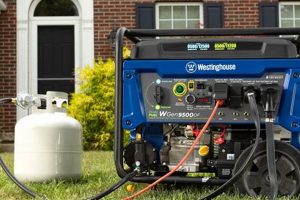
Propane offers a longer shelf life than gasoline, eliminating concerns about fuel degradation during storage. Propane burns cleaner than gasoline, producing fewer emissions. Propane generators typically require less maintenance than gasoline models. However, propane requires specialized storage tanks and may be less readily available than gasoline in some areas, particularly during emergencies. The cost of propane can also fluctuate depending on market conditions.
- Diesel
Diesel generators are known for their durability, fuel efficiency, and long runtimes. Diesel fuel has a longer shelf life than gasoline and offers greater energy density, allowing for extended operation on a single tank. Diesel generators tend to be more expensive than gasoline or propane models, and diesel fuel can gel in cold temperatures, potentially causing operational issues. Diesel exhaust also contains particulate matter, raising environmental concerns.
- Dual Fuel/Tri-Fuel
Dual-fuel and tri-fuel generators offer operational flexibility by utilizing multiple fuel sources. These models typically run on gasoline and propane, with some tri-fuel models also accommodating natural gas. This versatility allows users to adapt to fuel availability and price fluctuations. However, these generators often come at a higher initial cost and may require more complex maintenance procedures compared to single-fuel models. Performance can also vary depending on the fuel used.
The optimal fuel type for a home generator depends on individual needs and priorities. Factors such as budget, fuel availability, runtime requirements, maintenance considerations, and environmental impact all play a role in the decision-making process. Careful consideration of these factors will ensure the selected generator aligns with the homeowner’s specific circumstances and provides reliable power during outages.
3. Runtime

Runtime represents a crucial factor influencing the practicality of portable generators for home use. It dictates the duration a generator can operate continuously on a single fuel tank. This duration directly impacts the generator’s ability to provide essential power during extended outages. Runtime is inextricably linked to fuel consumption and tank size. A larger fuel tank generally translates to a longer runtime, assuming a constant power output. However, higher power demands often result in increased fuel consumption, potentially shortening the runtime. For example, a generator with a 5-gallon tank might power essential appliances for 8 hours at half load, but only 4 hours at full load. Understanding this relationship allows homeowners to estimate how long they can rely on generator power during an outage.
Several factors influence runtime. Power output, as previously mentioned, plays a significant role. Fuel efficiency, inherent to the generator’s design and engine technology, also affects runtime. External factors, such as ambient temperature and load fluctuations, can also impact fuel consumption and therefore runtime. For instance, operating a generator in extreme cold might reduce fuel efficiency and shorten the runtime. Similarly, consistently running the generator near its maximum capacity will deplete the fuel tank faster than operating it at a lower load. Accurately estimating runtime requires considering these variables and consulting manufacturer specifications, which typically provide runtime estimates under various load conditions.
Effective runtime management is essential for maximizing the benefits of a portable generator during a power outage. Calculating power requirements for essential appliances allows homeowners to estimate the necessary runtime and select a generator with an appropriately sized fuel tank. Employing energy-saving practices, such as limiting non-essential appliance usage and utilizing energy-efficient lighting, can extend the runtime. Regular maintenance, including clean air filters and proper carburetor adjustments, also contributes to optimal fuel efficiency and maximized runtime. Understanding and managing runtime empowers homeowners to prepare effectively for power outages and ensure essential services remain operational during extended disruptions.
4. Noise Levels

Noise levels generated by portable generators represent a critical consideration for homeowners. These units produce sound during operation, ranging from a low hum to a loud roar, depending on the engine size and design. This noise can disrupt daily life, disturb neighbors, and even violate local noise ordinances. Understanding the factors influencing noise levels and available mitigation strategies is essential for responsible generator ownership.
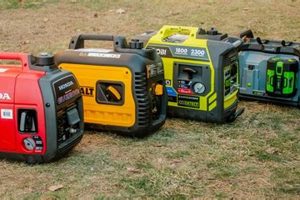
Generator noise primarily originates from the engine’s combustion process and the cooling fan. Larger engines generally produce more noise. Open-frame generators, while often more affordable, typically exhibit higher noise levels than enclosed or inverter models. Inverter generators, employing advanced electronic circuitry, offer significantly quieter operation, making them suitable for noise-sensitive environments. Operating a generator at a lower load can also reduce noise output. For instance, powering only essential appliances during an outage produces less noise than running the generator at its maximum capacity. Furthermore, the generator’s placement significantly impacts noise propagation. Positioning the unit away from windows, doors, and neighboring properties minimizes noise intrusion.
Managing generator noise involves selecting an appropriate model and implementing noise reduction strategies. Choosing an inverter generator or a model with a low decibel rating offers an inherent advantage. Utilizing sound-dampening enclosures or constructing noise barriers can further mitigate noise pollution. Regular maintenance, including muffler inspection and replacement, ensures optimal noise control. Ultimately, responsible generator operation involves respecting community noise levels and taking appropriate measures to minimize disturbance. Awareness of noise regulations, consideration of neighborly relations, and implementation of effective noise reduction techniques contribute to harmonious coexistence with portable generators in residential settings. Failure to address noise concerns can lead to disputes, fines, and diminished quality of life for both the generator owner and the surrounding community.
5. Safety Features

Safety features in portable generators designed for home use are critical for protecting users, connected appliances, and the surrounding environment. These features mitigate inherent risks associated with electricity generation and fuel combustion, such as fire, electrocution, and carbon monoxide poisoning. Understanding these safety features and their functions is paramount for safe and responsible generator operation. A crucial safety feature is the automatic shut-off for low oil levels. This mechanism prevents engine damage caused by insufficient lubrication, a common issue that can lead to overheating and potential fire hazards. For example, if the oil level drops below a critical threshold, the generator will automatically shut down, preventing catastrophic engine failure and mitigating the risk of fire.
Overload protection prevents damage to the generator and connected appliances by automatically shutting off the power supply when the electrical load exceeds the generator’s capacity. This safeguard prevents overheating and potential fires caused by excessive current draw. For instance, attempting to run multiple power-hungry appliances simultaneously might overload the generator, triggering the overload protection and preventing damage. Carbon monoxide (CO) detectors and shut-off systems are vital for preventing CO poisoning, a serious and potentially fatal hazard associated with gasoline-powered generators. These systems detect elevated CO levels in the surrounding air and automatically shut down the generator, preventing the buildup of this odorless, colorless, and deadly gas. This is particularly crucial during extended outages where generators might run for prolonged periods in enclosed or poorly ventilated areas. Proper grounding and GFCI (Ground Fault Circuit Interrupter) outlets prevent electrical shocks by diverting stray currents to the ground. These features protect users from electrocution, especially in damp or wet conditions, where the risk of electrical shock is significantly higher.
Neglecting these safety features can have severe consequences, including equipment damage, property loss, and personal injury or even fatalities. Understanding the function and importance of each safety feature empowers users to operate portable generators responsibly, minimizing risks and ensuring the safety of themselves, their families, and their property. Regular inspection and maintenance of these safety features are crucial for ensuring their continued effectiveness. Checking and testing these features periodically, following manufacturer guidelines, guarantees that they function as intended when needed most. A comprehensive understanding of generator safety features, coupled with responsible operation and maintenance, provides the foundation for safe and reliable power generation during outages, protecting both people and property from potential hazards.
6. Maintenance
Regular maintenance is essential for ensuring the reliable and safe operation of portable generators used in residential settings. Neglecting routine maintenance can lead to decreased performance, increased fuel consumption, costly repairs, and potentially hazardous situations. A well-maintained generator provides consistent power during outages, maximizing its lifespan and minimizing the risk of malfunctions.
- Oil Changes
Regular oil changes are crucial for lubricating engine components, reducing friction, and preventing overheating. Engine oil degrades over time and loses its lubricating properties. Following the manufacturer’s recommended oil change intervals, typically based on operating hours, ensures optimal engine performance and longevity. For instance, a generator used frequently might require oil changes every 50 operating hours, while a less frequently used unit might require changes every 100 hours. Using the correct oil type and viscosity, as specified in the owner’s manual, is essential for proper lubrication and preventing engine damage. Neglecting oil changes can lead to premature engine wear, reduced efficiency, and potential engine failure.
- Air Filter Cleaning/Replacement
Clean air filters are vital for proper engine combustion. A clogged air filter restricts airflow, reducing engine efficiency, increasing fuel consumption, and potentially causing damage. Regularly cleaning or replacing the air filter, according to the manufacturer’s recommendations, ensures optimal airflow and engine performance. In dusty or dirty environments, more frequent cleaning or replacement might be necessary. A clean air filter maximizes fuel efficiency, minimizes emissions, and prolongs engine life.
- Spark Plug Maintenance
Spark plugs ignite the fuel-air mixture within the engine cylinder. Worn or fouled spark plugs can cause misfires, reduced power output, and increased fuel consumption. Periodically inspecting and replacing spark plugs, as recommended by the manufacturer, ensures reliable engine starting and efficient operation. Using the correct spark plug type, as specified in the owner’s manual, is essential for proper ignition and preventing engine damage.
- Fuel System Care
Proper fuel system maintenance prevents fuel degradation, carburetor clogging, and other fuel-related issues. Using fresh, clean fuel and adding fuel stabilizer, especially for gasoline generators during storage, prevents fuel degradation and ensures reliable starting. Draining the fuel system before extended storage periods prevents gum and varnish buildup in the carburetor and fuel lines. Periodically checking and cleaning the fuel filter prevents fuel contaminants from reaching the engine.
Consistent adherence to a comprehensive maintenance schedule ensures the reliable operation of portable generators in residential applications. By addressing these key maintenance aspects, homeowners can maximize the lifespan of their generators, minimize the risk of malfunctions, and ensure a readily available power source during outages. This proactive approach to maintenance provides peace of mind and contributes to a safe and dependable power supply when it is needed most.
Frequently Asked Questions
This section addresses common inquiries regarding the selection, operation, and maintenance of portable generators for residential use. Clarity on these points facilitates informed decision-making and promotes safe and effective power management during outages.
Question 1: How is the appropriate generator size determined for a specific home?
Generator sizing involves calculating the total wattage required to operate essential appliances and devices. Determining starting and running wattage requirements for each item and summing these values provides the necessary generator capacity. Consulting appliance manuals or online resources provides wattage information. Adding a safety margin ensures sufficient power availability.
Question 2: What are the primary differences between conventional and inverter generators?
Conventional generators produce raw power, while inverter generators utilize electronic circuitry to produce cleaner, more stable power suitable for sensitive electronics. Inverter generators offer quieter operation, better fuel efficiency, and more compact designs. Conventional generators generally provide higher power output at lower price points.
Question 3: Where should a portable generator be placed during operation?
Generators must operate outdoors in well-ventilated areas, away from windows, doors, and vents. Exhaust fumes contain carbon monoxide, a colorless, odorless, and lethal gas. Placement on a stable, level surface prevents tipping and ensures adequate ventilation. Protecting the generator from rain and snow is essential.
Question 4: What type of maintenance is required for a portable generator?
Regular maintenance includes oil changes, air filter cleaning or replacement, spark plug inspection and replacement, and fuel system care. Adhering to the manufacturer’s recommended maintenance schedule ensures optimal performance, fuel efficiency, and longevity.
Question 5: What safety precautions are essential when operating a portable generator?
Essential safety precautions include never refueling a hot generator, allowing the unit to cool completely before refueling, using heavy-duty outdoor-rated extension cords, avoiding overloading circuits, and keeping the generator dry during operation.
Question 6: What is a transfer switch, and why is it important?
A transfer switch safely connects a generator to a home’s electrical system. It prevents backfeeding, a dangerous condition that can harm utility workers and damage appliances. Professional installation is recommended for safe and compliant integration.
Understanding these key aspects of portable generator selection, operation, and maintenance empowers homeowners to utilize these power sources safely and effectively during outages. Prioritizing safety and adherence to manufacturer guidelines ensures reliable performance and mitigates potential hazards.
For further information and specific recommendations, consult manufacturer documentation and local safety regulations.
Portable Generators Home
Residential power solutions provided by portable generators offer crucial support during grid failures. Careful consideration of power requirements, fuel type, runtime, noise levels, safety features, and maintenance needs ensures appropriate unit selection and safe operation. Prioritizing safety, adhering to manufacturer guidelines, and understanding operational best practices mitigate potential risks associated with generator use. Informed decision-making empowers homeowners to select units aligned with specific needs, ensuring reliable power availability during unforeseen outages.
Reliable access to electricity is fundamental to modern life. Portable generators offer a critical bridge during power disruptions, safeguarding essential services and enhancing household resilience. Investing in a properly sized and maintained generator, coupled with a thorough understanding of safe operating procedures, provides invaluable peace of mind and preparedness for unforeseen circumstances. Responsible generator ownership contributes to individual and community well-being during times of power instability.