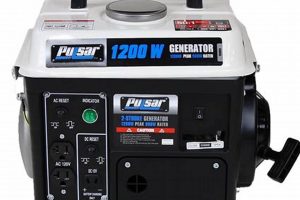
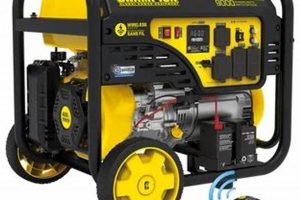
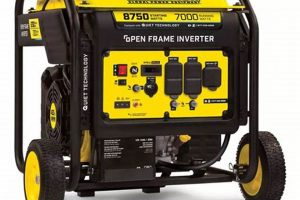
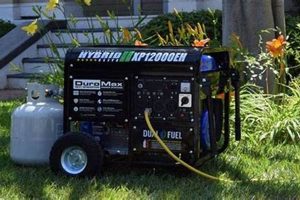
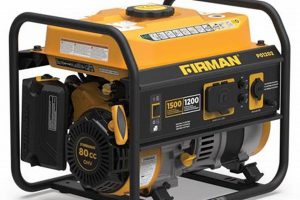
Compact, fuel-powered electricity sources offer convenient power for a variety of applications. These devices, often ranging from 1000 to 4000 watts, can provide temporary power for tools, appliances, and lighting during outages, at campsites, or in remote locations lacking grid access. For example, construction workers might utilize one to power saws and drills on a job site without readily available electricity.
The key advantage of these compact power sources lies in their portability and independence from the electrical grid. This makes them invaluable during emergencies, providing essential power for critical appliances like refrigerators or medical equipment. Historically, access to electricity away from fixed connections has been challenging. The development of these compact, fuel-driven generators revolutionized this, enabling a wide range of activities and enhancing emergency preparedness. Their affordability and ease of use contribute significantly to their widespread adoption.
This article delves deeper into the various aspects of these compact generators, exploring topics such as selecting the appropriate size, understanding different fuel types, ensuring safe operation, and performing routine maintenance. Further sections will address specific applications and provide practical guidance for choosing the best unit to meet individual needs.
Tips for Safe and Effective Generator Use
Proper operation and maintenance are essential for maximizing the lifespan and ensuring the safe use of compact, fuel-powered generators. These tips provide practical guidance for achieving optimal performance and preventing common issues.
Tip 1: Calculate Power Needs: Before selecting a unit, determine the wattage requirements of the devices intended for connection. Adding the wattage of each item ensures the generator can handle the expected load. Overloading can damage both the generator and connected equipment.
Tip 2: Proper Ventilation is Crucial: Operate generators outdoors in well-ventilated areas. Exhaust fumes contain carbon monoxide, a colorless, odorless, and poisonous gas. Never operate a generator indoors, in garages, or near open windows.
Tip 3: Ground the Generator: Proper grounding is essential for preventing electrical shocks. Consult the owner’s manual for grounding instructions specific to the unit.
Tip 4: Allow the Engine to Cool: Before refueling, allow the engine to cool completely. Hot engine components can ignite fuel vapors, posing a significant fire hazard.
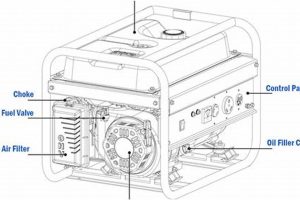
Tip 5: Regular Maintenance: Adhering to a regular maintenance schedule, including oil changes, air filter cleaning, and spark plug replacement, is vital for optimal performance and longevity. Refer to the owner’s manual for specific maintenance intervals.
Tip 6: Store Fuel Safely: Store fuel in approved containers in a well-ventilated area away from ignition sources. Never store fuel indoors or near the generator.
Tip 7: Dry Operation Precautions: Never run a generator dry. Running out of fuel while operating can damage the engine and fuel system components.
Following these guidelines enhances safety and extends the operational life of the generator, ensuring reliable power when needed. Proper operation and maintenance contribute significantly to trouble-free performance and prevent potential hazards.
This information provides a foundation for understanding the safe and effective use of compact generators. The subsequent conclusion offers final thoughts and reinforces the importance of responsible generator operation.
1. Portability

Portability is a defining characteristic of compact, fuel-powered generators, directly influencing their usability and suitability for various applications. This characteristic stems from design elements such as compact dimensions, integrated handles or wheels, and relatively lightweight construction. The resulting ease of transport allows these generators to serve as reliable power sources in locations lacking grid access or during power outages. For example, disaster relief efforts often rely on portable generators to power essential equipment in affected areas. Similarly, outdoor events and remote work sites benefit from their ability to provide power where and when needed.
The practical significance of portability extends beyond mere convenience. In emergency situations, portability facilitates rapid deployment of power for critical needs, such as medical equipment or communication systems. For professionals, it allows for uninterrupted workflow in off-grid locations, enhancing productivity and efficiency. Furthermore, recreational activities, like camping or tailgating, become significantly more comfortable and convenient with access to portable power. However, achieving portability requires careful engineering to balance power output, runtime, and physical size. Manufacturers often employ advanced materials and efficient engine designs to minimize weight and bulk without compromising performance.
In summary, portability significantly enhances the versatility and practicality of compact generators. This feature enables diverse applications, from emergency preparedness to professional work and leisure activities. Understanding the importance of portability, along with other key considerations, facilitates informed decisions when selecting a generator to meet specific power requirements and usage scenarios.
2. Size and Weight
The size and weight of a compact, fuel-powered generator are critical factors influencing its portability and suitability for various applications. These attributes directly impact ease of transport, storage requirements, and placement options. Careful consideration of these factors is essential for selecting a generator that aligns with specific needs and usage scenarios.
- Physical Dimensions:
The overall dimensions, including length, width, and height, determine the generator’s footprint and influence its suitability for confined spaces. A smaller footprint allows for easier storage in vehicles, sheds, or limited storage areas. For instance, a compact generator designed for camping can easily fit in a car trunk, while a larger unit intended for construction sites might require a dedicated trailer for transport. The dimensions also affect placement options at the point of use.
- Weight:
Weight significantly impacts portability and ease of handling. Lighter generators are easier to lift, carry, and maneuver, particularly in challenging terrain or during emergency situations. A lightweight unit might be easily carried by a single person, while a heavier generator might require two people or mechanical assistance for transport. This factor becomes crucial when transporting the generator up stairs, across uneven ground, or over longer distances.
- Impact on Portability:
The combined effect of size and weight directly determines the overall portability of the generator. A compact and lightweight design maximizes portability, enabling convenient transport and deployment in various locations. Conversely, a larger and heavier unit sacrifices portability for potentially higher power output or longer runtime. The desired level of portability depends heavily on the intended application and usage patterns. For example, a homeowner might prioritize portability for ease of storage and deployment during power outages, while a contractor might accept a larger, less portable unit to power heavier equipment.
- Relationship to Power Output:
Generally, larger generators tend to offer higher power outputs. However, advancements in engine technology and design allow manufacturers to create relatively compact and lightweight units with surprisingly high power output. Balancing size and weight against power requirements is crucial for selecting the most appropriate generator for a specific task. A camper might prioritize a smaller, lighter unit for powering essential devices, while a homeowner might opt for a slightly larger unit with higher wattage to run more appliances during an outage.
Understanding the interplay between size, weight, portability, and power output is crucial for selecting the optimal generator. Careful consideration of these factors ensures the chosen generator meets specific power requirements while remaining manageable and convenient to transport and use. This careful selection process empowers users to harness the full potential of these versatile power sources effectively and safely.
3. Power Output (Wattage)
Power output, measured in watts, is a crucial specification for portable small gas generators, directly determining the types and number of devices it can power simultaneously. Understanding wattage requirements is fundamental for selecting a generator that effectively meets specific power needs. Insufficient wattage can lead to overloaded circuits, potential damage to the generator and connected devices, and ultimately, failure to provide the necessary power. Conversely, an excessively high wattage may result in unnecessary fuel consumption and higher operating costs.
- Starting vs. Running Watts:
Electrical devices often require a higher surge of power to start, known as starting wattage, than they do for continuous operation, known as running wattage. Motorized appliances, such as refrigerators and air conditioners, exhibit significant differences between these two values. A generator must be capable of supplying both the starting and running wattage demands of the intended load. For example, a refrigerator might require 1200 starting watts but only 700 running watts. Selecting a generator based solely on running wattage could result in failure to start the appliance.
- Calculating Total Wattage Needs:
Accurately assessing total wattage requirements involves summing the running watts of all devices intended for simultaneous use and factoring in the highest starting wattage among them. This calculation ensures the generator can handle the combined load without overloading. For instance, simultaneously powering a 1000-watt microwave, a 500-watt electric heater, and a refrigerator requiring 700 running watts and 1200 starting watts would necessitate a generator with a minimum capacity of 2700 watts (1000 + 500 + 700 + (1200-700)).
- Wattage and Fuel Consumption:
Higher wattage generators generally consume more fuel per hour. While a higher wattage provides greater power capacity, it also leads to increased operating costs. Selecting a generator with a wattage output closely matched to actual needs optimizes fuel efficiency and minimizes expenses. Running a 5000-watt generator to power a single 1000-watt appliance results in significant fuel waste compared to using a more appropriately sized generator.
- Wattage and Generator Size/Cost:
Wattage often correlates with generator size and cost. Higher wattage generators tend to be larger and more expensive. Balancing power requirements with budget constraints and portability needs is essential for making informed purchasing decisions. A homeowner needing to power essential appliances during a power outage might opt for a mid-range wattage generator, while a contractor powering heavy-duty tools would require a significantly higher wattage unit, accepting the increased size and cost.
Careful consideration of power output, starting and running wattage requirements, and the relationship between wattage, fuel consumption, size, and cost ensures the selected portable small gas generator effectively meets specific power demands without unnecessary expense or operational inefficiencies. A well-matched generator provides reliable power, optimizing performance and cost-effectiveness for various applications.
4. Fuel Efficiency (Runtime)

Fuel efficiency, often expressed as runtime at a given load, is a critical consideration for portable small gas generators. Runtime, typically measured in hours, represents the duration a generator can operate on a full tank of fuel at a specified load. This metric directly influences the practical usability of a generator, particularly in situations where refueling is inconvenient or impossible. A higher fuel efficiency translates to longer runtimes, reducing the frequency of refueling and enhancing operational flexibility. For example, during extended power outages, a fuel-efficient generator can provide essential power for longer periods without interruption, minimizing disruption to daily routines or critical operations.
Several factors influence fuel efficiency. Engine size and design play a significant role. Smaller, more efficient engines generally consume less fuel for a given power output. Technological advancements, such as inverter technology, contribute to increased fuel efficiency by dynamically adjusting engine speed based on the load, minimizing fuel consumption during periods of lower power demand. Operating the generator at less than its maximum rated load also improves fuel efficiency. For instance, a generator running at 50% load will typically operate longer on a single tank than one running at its full rated capacity. Understanding these factors empowers users to optimize generator performance and maximize runtime.
The practical significance of fuel efficiency extends beyond mere cost savings. In emergency situations, extended runtime can be crucial for maintaining essential services. For professionals relying on generators for power in remote locations, longer runtimes translate to increased productivity and fewer interruptions. Furthermore, for recreational applications like camping, fuel efficiency reduces the logistical burden of carrying and refueling multiple fuel containers. Therefore, careful consideration of fuel efficiency during generator selection ensures optimal performance and maximizes the practical benefits of portable power.
5. Noise Levels
Noise levels represent a significant consideration when selecting and operating a portable small gas generator. These devices inherently produce noise due to the combustion engine and associated mechanical components. The intensity of this noise, typically measured in decibels (dB), can significantly impact the surrounding environment and influence user experience. Operating a loud generator in a quiet residential neighborhood or near a campsite can be disruptive and inconsiderate. Furthermore, prolonged exposure to high noise levels can pose risks to hearing health. Understanding the factors influencing noise levels and employing strategies to mitigate noise pollution is crucial for responsible generator operation.
Several factors contribute to a generator’s noise output. Engine size and design play a key role. Larger engines generally produce more noise. However, advancements in muffler technology and engine design can significantly reduce noise levels. Operating the generator at a lower load can also decrease noise output. Enclosure design also influences noise levels. Some generators feature sound-dampening enclosures that effectively minimize noise pollution. Placement of the generator can further impact perceived noise levels. Positioning the unit away from reflective surfaces and directing the exhaust away from populated areas can help minimize noise impact. For instance, placing a generator behind a barrier or a dense bush can help absorb and deflect sound waves.
The practical implications of generator noise levels extend beyond mere annoyance. In noise-sensitive environments, such as hospitals or residential areas, operating a loud generator can be disruptive and even violate local noise ordinances. Construction sites and outdoor events also benefit from quieter generator operation, improving communication and reducing overall noise pollution. Manufacturers often provide noise level specifications in their product literature, enabling informed purchasing decisions based on anticipated noise impact. Selecting a quieter generator or implementing noise reduction strategies promotes responsible generator use and minimizes disturbance to the surrounding environment. This careful consideration of noise levels ensures that portable power generation enhances convenience without compromising the quality of life for users and those in proximity.
6. Safety Features
Safety features in portable small gas generators are crucial for mitigating potential hazards associated with their operation. These features protect users, connected equipment, and the surrounding environment from risks such as fire, electrocution, carbon monoxide poisoning, and noise pollution. Understanding and utilizing these safety features is paramount for responsible and safe generator operation. Neglecting these features can lead to serious accidents and damage.
- Overload Protection:
Overload protection prevents damage to the generator and connected devices by automatically shutting down the unit when the electrical load exceeds its capacity. This prevents overheating and potential fires caused by excessive current draw. For example, attempting to power too many appliances simultaneously can overload the generator. Overload protection safeguards the generator’s internal components and prevents damage to sensitive electronics connected to it. This feature is essential for preventing electrical fires and equipment damage.
- Low-Oil Shutdown:
Low-oil shutdown automatically shuts off the engine when oil levels drop below a safe operating threshold. This prevents engine damage caused by insufficient lubrication. Running a generator with low oil can lead to catastrophic engine failure and costly repairs. This safety feature protects the engine’s internal components, extending its lifespan and preventing costly repairs. Automatic shutdown ensures that the engine operates within safe parameters, even if routine maintenance is overlooked.
- Carbon Monoxide (CO) Shutoff:
Carbon monoxide (CO) shutoff is a critical safety feature that detects dangerous levels of carbon monoxide and automatically shuts down the generator. Carbon monoxide is a colorless, odorless, and highly toxic gas produced during fuel combustion. Operating a generator in a poorly ventilated area can lead to dangerous CO buildup, posing a serious health risk. CO shutoff sensors continuously monitor the surrounding air and trigger an automatic shutdown if CO levels exceed safe limits. This feature is essential for preventing CO poisoning, a potentially fatal condition.
- Spark Arrestors:
Spark arrestors are devices designed to trap and extinguish sparks emitted from the generator’s exhaust system. These sparks can ignite flammable materials in the vicinity, posing a fire hazard, especially in dry or vegetated areas. Spark arrestors are particularly important when operating generators near dry grass, leaves, or other combustible materials. They significantly reduce the risk of accidental fires, protecting property and surrounding environments. This safety feature is especially crucial in areas prone to wildfires.
These safety features are integral components of modern portable small gas generators, contributing significantly to their safe and reliable operation. Understanding and utilizing these features, coupled with adherence to safe operating procedures, ensures that these versatile power sources provide convenient electricity without compromising user safety or the surrounding environment. Regular inspection and maintenance of these safety features are crucial for ensuring their continued effectiveness and preventing potential hazards. By prioritizing safety, users can maximize the benefits of portable power while minimizing risks.
7. Maintenance Requirements
Regular maintenance is essential for ensuring the reliable and long-lasting performance of a portable small gas generator. Neglecting routine maintenance can lead to decreased efficiency, mechanical failures, and potentially hazardous operating conditions. A well-maintained generator provides consistent power when needed, maximizing its lifespan and minimizing the risk of unexpected breakdowns. For instance, a generator used for backup power during outages must be regularly maintained to ensure it starts and operates reliably when needed. Ignoring maintenance can result in failure during a critical power outage.
Specific maintenance tasks vary depending on the generator model and manufacturer recommendations, but several common procedures apply to most units. Regular oil changes are crucial for lubricating engine components and preventing excessive wear. Air filter cleaning or replacement ensures proper airflow to the engine, maximizing combustion efficiency and minimizing emissions. Spark plug replacement maintains consistent ignition and optimal fuel combustion. Fuel system maintenance, including fuel filter replacement and carburetor cleaning, prevents fuel-related issues that can lead to starting difficulties or engine damage. These procedures, while seemingly routine, significantly impact the generator’s overall performance and longevity. For example, neglecting oil changes can lead to premature engine wear and eventual failure, potentially requiring costly repairs or replacement.
The practical implications of neglecting generator maintenance extend beyond mere inconvenience. A malfunctioning generator during a power outage can disrupt essential services, impacting safety and comfort. In professional settings, generator failure can lead to costly downtime and project delays. Furthermore, neglecting maintenance can void manufacturer warranties, placing the financial burden of repairs solely on the owner. Adhering to a regular maintenance schedule, as outlined in the owner’s manual, mitigates these risks and ensures the generator operates reliably when needed. This proactive approach to maintenance maximizes the generator’s value and provides consistent, dependable power for various applications, ultimately contributing to safety, efficiency, and peace of mind.
Frequently Asked Questions
This section addresses common inquiries regarding portable small gas generators, providing concise and informative answers to facilitate informed decision-making and safe operation.
Question 1: How is the correct generator size determined?
Generator size selection depends on the intended power requirements. Calculate the total running wattage of all devices planned for simultaneous use and add the highest starting wattage among them. This sum represents the minimum required generator capacity.
Question 2: What fuel types are commonly used?
Gasoline is the most common fuel type. Some models can also operate on propane or a dual-fuel system allowing both gasoline and propane use. Fuel choice depends on availability, cost, and specific generator capabilities.
Question 3: Where should generators be operated?
Generators should always be operated outdoors in well-ventilated areas, away from open windows, doors, and vents. This precaution prevents carbon monoxide buildup, a serious health hazard.
Question 4: What safety precautions are essential?
Essential safety precautions include proper grounding, allowing the engine to cool before refueling, never refueling a hot generator, and storing fuel safely in approved containers away from ignition sources.
Question 5: How often should maintenance be performed?
Maintenance schedules vary depending on the manufacturer and model. Consult the owner’s manual for specific intervals. Typical maintenance includes regular oil changes, air filter cleaning or replacement, and spark plug replacement.
Question 6: What are the potential hazards of improper generator use?
Improper use can lead to carbon monoxide poisoning, fire hazards, electrical shocks, and damage to connected equipment. Adhering to safety guidelines and manufacturer recommendations mitigates these risks.
Understanding these fundamental aspects of portable small gas generator operation ensures safe and effective use. Careful consideration of these points contributes significantly to maximizing the benefits of these versatile power sources while minimizing potential risks.
The following section provides concluding remarks and reinforces the importance of responsible generator operation.
Conclusion
Compact, fuel-powered generators offer versatile solutions for various power needs, from emergency preparedness to recreational activities and professional applications. Understanding key aspects such as power output, fuel efficiency, noise levels, safety features, and maintenance requirements is crucial for selecting the appropriate unit and ensuring safe and effective operation. Careful consideration of these factors allows users to harness the full potential of these devices while mitigating potential risks.
Responsible generator operation requires diligent adherence to safety guidelines and manufacturer recommendations. Prioritizing safety and proper maintenance ensures reliable performance and prolongs the lifespan of these valuable power sources. Informed decision-making and responsible use contribute significantly to maximizing the benefits of compact, fuel-powered generators while minimizing potential hazards. Continued advancements in generator technology promise further enhancements in efficiency, portability, and safety, further solidifying their role as indispensable tools for diverse power needs.