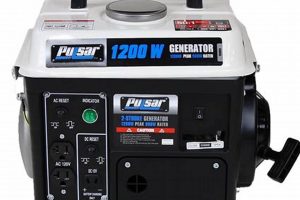
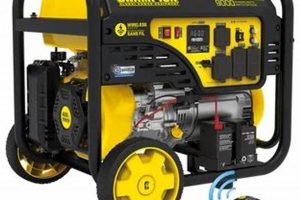
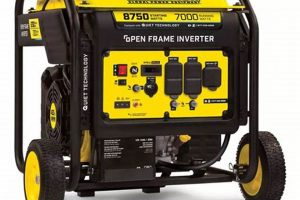
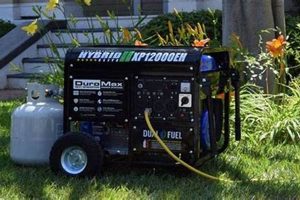
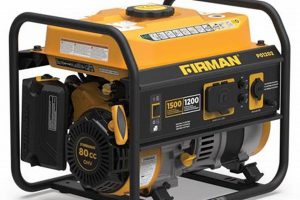
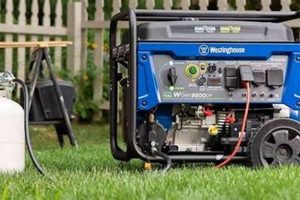
Portable generators transform chemical energy into electrical power. An internal combustion engine, fueled by gasoline, spins a generator, which uses the principle of electromagnetic induction to produce an alternating current (AC) output. This output powers devices plugged into the generator, providing a temporary source of electricity.
Access to electricity is often taken for granted, but in situations like power outages caused by storms or in locations without grid access, a readily available power source becomes crucial. Portable generators fill this need, enabling the operation of essential appliances, tools, and electronic devices, maintaining communication, and preserving safety and comfort. From powering a campsite to providing backup power during emergencies, these generators offer invaluable versatility.
Understanding the underlying mechanisms of these devices involves exploring the specifics of the engine, the generating process, the various components involved, safety considerations, and common operational procedures. Let’s delve into the inner workings of a portable generator, exploring the different stages involved in producing usable electrical power.
Operational Tips for Portable Generators
Safe and efficient operation of a portable generator requires adherence to specific guidelines. The following tips outline essential practices for optimal performance and user safety.
Tip 1: Operate Outdoors Only: Never operate a portable generator indoors, including garages, sheds, or partially enclosed spaces. Exhaust fumes contain carbon monoxide, a colorless, odorless, and lethal gas.
Tip 2: Proper Grounding: Ensure the generator is properly grounded to prevent electrical shock. Consult the owner’s manual for specific grounding instructions.
Tip 3: Fuel Handling Safety: Allow the engine to cool completely before refueling. Store fuel in approved containers and away from ignition sources.
Tip 4: Dry Operation: Never operate a generator in wet or damp conditions. Use a canopy or other protective covering to shield the unit from rain or snow, ensuring adequate ventilation.
Tip 5: Load Management: Avoid overloading the generator. Calculate the total wattage of the devices to be connected and ensure it does not exceed the generator’s rated capacity.
Tip 6: Regular Maintenance: Adhere to the manufacturer’s recommended maintenance schedule, including oil changes, air filter cleaning, and spark plug replacement.
Tip 7: Carbon Monoxide Detectors: Install carbon monoxide detectors in areas near generator operation as an additional safety precaution.
Tip 8: Proper Connection: Use heavy-duty, outdoor-rated extension cords to connect appliances to the generator. Ensure cords are not damaged or frayed.
Following these guidelines promotes safe and effective generator operation, ensuring a reliable power source when needed while mitigating potential hazards.
By understanding these operational tips, users can maximize the benefits of portable generators while prioritizing safety and responsible usage. Let’s conclude by reviewing some key takeaways.
1. Fuel (Gasoline)

Gasoline plays a critical role in the operation of a portable gas generator, serving as the primary energy source. The generator’s engine, an internal combustion engine, relies on the controlled burning of gasoline to produce the mechanical energy required for electricity generation. This combustion process involves the rapid oxidation of gasoline, releasing energy in the form of heat and expanding gases. These expanding gases exert force on the engine’s pistons, initiating the rotational motion that ultimately drives the generator.
The quality and type of gasoline used directly impact the generator’s performance and longevity. Using gasoline with the correct octane rating, as specified by the manufacturer, is crucial for preventing engine damage and ensuring optimal efficiency. Furthermore, stale or contaminated gasoline can lead to starting difficulties, reduced power output, and potential damage to the fuel system. For instance, using gasoline containing ethanol can attract moisture, leading to corrosion and fuel degradation over time. In remote locations or during emergencies, access to fresh, appropriate fuel becomes paramount for reliable generator operation.
Understanding the role of gasoline, ensuring its proper handling and storage, and using the correct fuel type are essential for safe and effective generator operation. Neglecting these aspects can compromise the generator’s performance, lifespan, and even pose safety hazards. Selecting appropriate fuel and managing fuel storage are therefore integral to comprehending how a portable gas generator functions and ensuring its reliable operation when needed.
2. Internal Combustion Engine

The internal combustion engine (ICE) forms the heart of a portable gas generator, serving as the prime mover that converts chemical energy into mechanical work. Understanding its operation is crucial to grasping the overall functionality of the generator. The ICE drives the rotating component of the generator, which in turn produces electricity.
- Four-Stroke Cycle:
Most portable generators employ four-stroke gasoline engines. The four strokes intake, compression, combustion, and exhaust represent a complete cycle of fuel intake, energy conversion, and waste expulsion. During the intake stroke, the engine draws in a mixture of air and fuel. The compression stroke compresses this mixture, increasing its temperature and pressure. Ignition initiates combustion, forcing the piston downwards and generating power. Finally, the exhaust stroke expels the burned gases. This cyclical process provides a continuous source of rotational power.
- Engine Components:
Key components of the ICE include the cylinder, piston, crankshaft, valves, and spark plug. The piston moves within the cylinder, driven by the expanding gases during combustion. The piston’s linear motion is converted into rotational motion by the crankshaft. Valves control the intake of the air-fuel mixture and the exhaust of combustion gases. The spark plug ignites the compressed air-fuel mixture, initiating the combustion process. The coordinated operation of these components is essential for smooth and efficient engine performance.
- Cooling System:
Internal combustion engines generate substantial heat during operation. Portable generators typically utilize air-cooled engines, relying on a system of fins and a fan to dissipate heat. The fins increase the surface area of the engine, allowing for greater heat transfer to the surrounding air. The fan, driven by the engine, circulates air over the fins, further enhancing cooling. Effective cooling is critical for maintaining optimal engine temperature and preventing overheating.
- Governor System:
The governor regulates the engine speed, ensuring consistent performance under varying load conditions. When the electrical load increases, the governor automatically adjusts the engine throttle to maintain a stable speed and output frequency. Conversely, when the load decreases, the governor reduces the throttle to conserve fuel and minimize engine wear. This automatic regulation ensures a stable supply of electricity regardless of the power demands.
The internal combustion engine plays a pivotal role in the functionality of a portable generator. By converting the chemical energy stored in gasoline into rotational mechanical energy, the ICE drives the generator, ultimately producing usable electrical power. The efficiency and reliability of the ICE directly influence the generator’s overall performance, making it a critical component in understanding how portable generators function.
3. Mechanical Energy
Mechanical energy represents a crucial intermediary stage in the operation of a portable gas generator, bridging the gap between the chemical energy of the fuel and the electrical energy delivered as output. The internal combustion engine, fueled by gasoline, converts the chemical energy released during combustion into rotational mechanical energy. This rotational motion, specifically the spinning of the engine’s crankshaft, is the key link in the energy conversion process. Without this mechanical energy, the generator component would remain static, unable to produce electricity.
The importance of mechanical energy in this context becomes evident when considering the principle of electromagnetic induction. The generator, essentially an alternator, utilizes a rotating magnetic field within a stationary coil of wire to induce an electromotive force, creating the alternating current (AC) electricity. This rotational movement of the magnetic field is directly driven by the mechanical energy provided by the engine’s rotating crankshaft. The speed of this rotation directly influences the frequency of the AC output, highlighting the critical relationship between mechanical energy and the characteristics of the generated electricity. For instance, a higher engine speed translates to a higher rotational speed of the magnetic field, leading to a higher frequency of the AC output. This connection is fundamental to the generator’s ability to provide stable and usable electrical power. Consider a construction site where a generator powers electric saws and drills; the consistent mechanical energy provided by the engine ensures a steady supply of electricity, enabling continuous operation of these tools.
Understanding the role of mechanical energy provides essential insights into the functionality of portable generators. The conversion of chemical energy to mechanical energy and subsequently to electrical energy is a fundamental principle underlying the operation of these devices. Appreciating this sequence provides a more comprehensive understanding of how these generators supply power during outages, in remote locations, or wherever a readily available power source is required. Addressing potential mechanical issues, such as lubricating the rotating components or ensuring proper engine maintenance, directly impacts the reliability and efficiency of the generator, reinforcing the practical significance of this understanding.
4. Generator (Alternator)

The generator, specifically an alternator, constitutes the final stage of energy conversion within a portable gas generator. It transforms the mechanical energy supplied by the engine into electrical energy, providing the AC power output that makes the generator useful. Understanding the generator’s operation is fundamental to comprehending the overall functionality of the portable gas generator.
- Electromagnetic Induction:
The generator operates on the principle of electromagnetic induction, where a changing magnetic field induces a voltage in a conductor. Within the alternator, a rotating magnetic field, created by the engine-driven rotor, interacts with stationary coils of wire in the stator. This relative motion between the magnetic field and the conductors induces an alternating current (AC) voltage in the stator windings. This AC voltage is the electrical output provided by the generator.
- Rotor and Stator:
The rotor is the rotating component of the alternator, containing electromagnets or permanent magnets that generate the magnetic field. The stator is the stationary component, housing the coils of wire in which the voltage is induced. The rotational motion of the rotor, driven by the engine, creates the changing magnetic field necessary for electromagnetic induction to occur within the stator. The configuration of the rotor and stator windings determines the characteristics of the generated AC power.
- Voltage Regulation:
Maintaining a stable output voltage is critical for the proper operation of connected devices. Voltage regulation mechanisms within the generator ensure a consistent voltage level despite variations in engine speed or load. Automatic voltage regulators (AVRs) adjust the excitation current supplied to the rotor, thereby controlling the strength of the magnetic field and ultimately the output voltage. This regulation provides a stable and reliable power supply even under fluctuating load conditions, such as when multiple appliances are connected or disconnected.
- AC Output:
The output of the generator is alternating current (AC) electricity, typically at a specific frequency (e.g., 60 Hz in North America, 50 Hz in many other regions). This AC power is compatible with most household appliances and electronic devices. The generators output terminals provide the connection point for delivering this power to the devices, enabling their operation during power outages or in off-grid locations. Understanding the characteristics of the AC output, including voltage, frequency, and wattage capacity, is crucial for safe and effective utilization of the generator.
The generator’s operation, based on electromagnetic induction, represents the culmination of the energy conversion process within a portable gas generator. By transforming mechanical energy into electrical energy, the generator provides the AC power that enables the operation of various devices. Understanding the interplay of the rotor, stator, voltage regulation, and the characteristics of the AC output contributes significantly to comprehending how a portable gas generator provides power in diverse situations.
5. Electrical Output (AC Power)
Electrical output, specifically alternating current (AC) power, represents the culmination of the energy conversion process within a portable gas generator. This AC output is the desired product, the reason for the generator’s existence. Tracing its creation reveals a chain of interconnected steps, each essential to understanding how a portable gas generator works. Chemical energy within gasoline transforms into mechanical energy through the engine’s combustion process. This mechanical energy, in the form of rotational motion, drives the generator (alternator). The generator, using the principle of electromagnetic induction, converts this rotational mechanical energy into electrical energy, manifesting as AC power. The flow of this AC power, measured in watts, provides the capability to operate electrical devices.
The characteristics of the AC output are crucial for practical application. Voltage, typically 120V or 240V in household generators, and frequency, standardized at 60 Hz in North America and 50 Hz in many other regions, must match the requirements of connected devices. Consider a scenario requiring power for a refrigerator during a power outage. The generator’s AC output must align with the refrigerator’s electrical specifications for proper function. The generator’s wattage capacity determines the total load it can handle. Attempting to power devices exceeding this capacity leads to overload, potentially damaging the generator and connected equipment. Therefore, understanding the relationship between wattage capacity and the combined power requirements of intended devices is essential. For example, simultaneously powering a refrigerator, a sump pump, and several lights requires calculating their combined wattage to ensure it falls within the generator’s safe operating capacity.
Practical application of this understanding ensures safe and effective generator utilization. Matching the generator’s AC output characteristics to the connected devices safeguards equipment and prevents malfunctions. Careful load management, considering the wattage demands of individual devices, optimizes generator performance and longevity. Recognizing the entire energy conversion process, from fuel to AC output, enables informed decisions regarding generator selection, operation, and maintenance. Failure to consider these factors can lead to equipment damage, safety hazards, and inefficient power delivery, underscoring the importance of understanding the complete picture of how a portable gas generator delivers AC power.
6. Power Delivery
Power delivery represents the final stage, the practical application of a portable gas generator’s operation. After the chemical energy of gasoline transforms into mechanical energy within the engine, and subsequently into electrical energy within the generator, the resulting AC power must reach the intended devices. This crucial step, power delivery, links the generator’s internal workings to its external utility. Understanding power delivery involves understanding the components and considerations that ensure safe and efficient transmission of electricity from the generator’s output terminals to the devices requiring power. The generator’s output terminals provide the connection point for transferring the generated AC power. These terminals, often equipped with different receptacles to accommodate various plug types, are the starting point of the power delivery pathway.
Several factors influence the effectiveness of power delivery. The type and gauge of extension cords used play a critical role. Heavy-duty, outdoor-rated extension cords with appropriate wire gauge for the intended load are essential for preventing voltage drops and overheating. Consider a scenario where a generator powers a construction site. Using undersized extension cords can lead to significant voltage drops, reducing the performance of power tools and potentially damaging them. Overloading the generator by exceeding its wattage capacity also disrupts effective power delivery. The generator’s protective mechanisms may trip, interrupting power flow to prevent damage. For instance, attempting to power a large air conditioner and a welding machine simultaneously from a generator with insufficient capacity will likely result in an overload. Careful load management, considering the wattage requirements of each device, ensures efficient and safe power delivery. Proper connection of devices to the generator’s output terminals is equally important. Using appropriate adapters and ensuring secure connections prevents electrical hazards and ensures consistent power flow.
Understanding power delivery completes the picture of how a portable gas generator works. It connects the internal processes of energy conversion to the practical application of powering devices. Appropriate cable selection, load management, and proper connection procedures are crucial aspects of safe and efficient power delivery. Neglecting these aspects compromises the generator’s effectiveness and poses potential safety risks, highlighting the practical significance of understanding this final stage in the generator’s operation. From powering essential appliances during a power outage to providing electricity in remote locations, effective power delivery ensures that the generated power reaches its intended destination, fulfilling the generator’s purpose. This understanding allows users to maximize the benefits of portable generators while mitigating potential hazards, ensuring reliable and safe power delivery in various situations.
Frequently Asked Questions
This FAQ section addresses common inquiries regarding the operation and functionality of portable gas generators.
Question 1: How does a portable generator produce electricity?
Portable generators utilize an internal combustion engine fueled by gasoline to drive an alternator. The engine converts the chemical energy of gasoline into rotational mechanical energy, which the alternator then transforms into electrical energy via electromagnetic induction, producing alternating current (AC) power.
Question 2: What is the difference between a two-stroke and a four-stroke engine?
Two-stroke engines complete a power cycle with two strokes (one piston up and down movement), while four-stroke engines require four strokes. Four-stroke engines are generally more fuel-efficient and produce fewer emissions, while two-stroke engines are typically simpler and lighter.
Question 3: What type of fuel should be used in a portable generator?
Use the fuel type and octane rating recommended by the manufacturer. Using the incorrect fuel can damage the engine and affect performance. Fresh, clean gasoline is essential for optimal operation. Be mindful of ethanol content, as it can attract moisture and cause issues over time.
Question 4: How is a portable generator safely operated?
Always operate a generator outdoors in a well-ventilated area, away from doors, windows, and vents. Never operate a generator indoors, including garages, due to the risk of carbon monoxide poisoning. Ensure proper grounding and follow manufacturer safety guidelines.
Question 5: What is the wattage capacity of a generator and how is it determined?
Wattage capacity indicates the maximum power a generator can produce. Determine the wattage requirements of the devices intended for connection and select a generator with sufficient capacity. Running wattage represents the continuous power output, while starting wattage accounts for the surge required to start some appliances, like refrigerators or air conditioners.
Question 6: How is a generator connected to household appliances?
Never connect a generator directly to household wiring. This can create a dangerous backfeed, endangering utility workers. Use approved transfer switches installed by qualified electricians or connect appliances directly to the generator using heavy-duty, outdoor-rated extension cords.
Understanding these fundamental aspects of generator operation contributes to safe and effective utilization. Consulting the owner’s manual for model-specific information and adhering to safety guidelines ensures reliable performance and mitigates potential hazards.
Beyond these FAQs, further exploration of generator maintenance, long-term storage procedures, and troubleshooting common issues will enhance understanding and promote responsible generator usage.
Understanding Portable Gas Generator Operation
Exploration of portable gas generator functionality reveals a carefully orchestrated conversion of energy. Chemical energy stored within gasoline transforms into mechanical energy through the internal combustion engine’s controlled combustion process. This mechanical energy, manifested as rotational motion, drives the generator component, an alternator. Within the alternator, the principle of electromagnetic induction governs the conversion of mechanical energy into electrical energy, ultimately delivering alternating current (AC) power. Understanding these stagesfuel, engine, mechanical energy, generator, electrical output, and power deliveryprovides a comprehensive view of the system’s operation.
Effective and safe generator operation necessitates a thorough understanding of these underlying principles. Careful consideration of fuel type, engine maintenance, load management, and proper connection procedures ensures reliable performance and mitigates potential hazards. Appreciating the complexities of portable gas generator functionality empowers informed decision-making, fostering responsible usage and maximizing the benefits of this versatile power source.