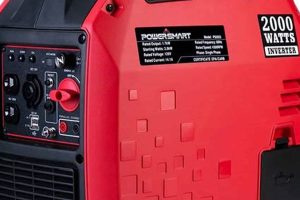
Compact, fuel-powered devices capable of producing electricity are a valuable resource for homeowners. These units offer a range of power outputs suitable for running essential appliances and electronics during power outages caused by severe weather, grid failures, or other unforeseen circumstances. A typical example might power refrigerators, lights, and small heating or cooling units, depending on its capacity.
Access to backup power provides crucial peace of mind and can ensure safety and comfort during emergencies. Historically, reliance on noisy, less efficient models was commonplace. Advancements in technology have led to quieter, more fuel-efficient, and environmentally friendly options. This evolution has expanded their practicality for a wider range of needs, from recreational activities to essential home backup power.
The following sections will delve deeper into selecting the right size unit, safe operating procedures, essential maintenance tasks, and a comparison of various fuel types available.
Operating and Maintaining Backup Power Solutions
Proper operation and maintenance are crucial for ensuring the safe and effective use of backup power. The following tips offer guidance on maximizing performance and longevity.
Tip 1: Calculate Power Requirements: Determine the wattage required to run essential appliances. This information informs proper unit sizing, preventing overload and ensuring sufficient power during outages.
Tip 2: Proper Ventilation: Operate units outdoors in well-ventilated areas to prevent carbon monoxide buildup, a serious health hazard. Adequate airflow is essential for safe operation.
Tip 3: Regular Maintenance: Adherence to a regular maintenance schedule, including oil changes, air filter cleaning, and spark plug replacement, ensures optimal performance and prolongs the lifespan of the unit.
Tip 4: Dry Storage: Store units in a dry, protected location to prevent rust and damage. Proper storage extends the lifespan and maintains reliability.
Tip 5: Fuel Stability: Utilize fuel stabilizer to prevent fuel degradation during storage, ensuring reliable starting and minimizing potential carburetor issues.
Tip 6: Professional Inspection: Periodic professional inspections can identify potential problems and ensure the unit is operating safely and efficiently.
Tip 7: Grounding: Ensure the unit is properly grounded to prevent electrical shock and protect sensitive electronics.
Following these guidelines enhances safety, maximizes performance, and extends the lifespan of the unit. This proactive approach minimizes potential issues and ensures reliable power during critical situations.
Careful consideration of these factors contributes to informed decision-making regarding the selection, installation, and long-term operation of a backup power solution.
1. Power Output

Power output, measured in watts, represents a critical specification for portable generators. This metric directly determines the number and type of appliances a unit can power simultaneously. Understanding power requirements is essential for avoiding overload, which can damage both the generator and connected devices. For instance, a generator with a 3000-watt output might suffice for powering essential appliances like a refrigerator, a few lights, and a small fan during a power outage. Conversely, running power-hungry appliances like air conditioners or electric heaters necessitates a significantly higher output. A mismatch between generator output and appliance demand can lead to inadequate power supply or generator damage.
Accurately calculating power requirements involves summing the wattage of all intended appliances. This total wattage informs the minimum power output required from the generator. Furthermore, considering starting wattage, which can be significantly higher than running wattage for certain appliances like refrigerators and air conditioners, is crucial. Failure to account for starting wattage can lead to the generator tripping its breaker or failing to start the appliance altogether. Practical application of this understanding involves creating a prioritized list of appliances, calculating their combined wattage, and selecting a generator with sufficient output to meet those needs, including surge demands.
Careful consideration of power output ensures appropriate generator selection, preventing operational issues and maximizing effectiveness during power outages. This knowledge empowers consumers to make informed decisions, optimizing performance and reliability based on individual needs and circumstances. Matching power output to specific requirements ultimately contributes to the safe and effective utilization of portable generators for emergency backup power.
2. Fuel Type

Fuel type is a critical consideration when selecting a portable generator, impacting availability, cost, environmental impact, and operational requirements. Different fuel types offer distinct advantages and disadvantages, influencing the suitability of a generator for specific applications and environments.
- Gasoline
Gasoline is a widely available and readily accessible fuel option. Generators using gasoline generally offer a good balance of cost and performance. However, gasoline has a limited shelf life and can degrade over time, requiring the use of stabilizers. Furthermore, gasoline-powered generators produce emissions and contribute to air pollution.
- Propane
Propane offers a longer shelf life than gasoline, eliminating concerns about fuel degradation during storage. Propane burns cleaner than gasoline, reducing environmental impact. Propane generators often operate more quietly than gasoline counterparts. However, propane requires specialized storage tanks and may not be as readily available as gasoline in certain areas.
- Diesel
Diesel generators are known for their durability and fuel efficiency, often providing a longer runtime per gallon compared to gasoline or propane. Diesel fuel also has a longer shelf life than gasoline. However, diesel generators can be more expensive initially and tend to be louder than other options. Diesel exhaust also contains particulate matter, raising environmental concerns.
- Dual Fuel
Dual fuel generators offer the flexibility of operating on either gasoline or propane, providing versatility in fuel choice depending on availability and cost. This adaptability can be advantageous during emergencies or in areas where one fuel type might be more readily accessible than another. However, dual fuel generators often require separate fuel tanks and switching mechanisms, adding complexity to operation and maintenance.
The selection of an appropriate fuel type depends on individual needs and priorities. Factors such as fuel availability, cost, environmental concerns, runtime requirements, and noise tolerance influence the optimal choice. Careful evaluation of these factors ensures the selection of a generator that aligns with specific operational needs and environmental considerations. Understanding the nuances of each fuel type empowers informed decision-making, contributing to the safe and efficient utilization of portable generators.
3. Runtime
Runtime represents a crucial operational parameter for portable home generators, defining the duration a unit can operate continuously on a single fuel tank. This duration directly impacts the practical utility of a generator during extended power outages. Understanding the factors influencing runtime is essential for selecting a generator that meets specific power backup needs.
- Fuel Tank Capacity
The size of the fuel tank directly correlates with potential runtime. Larger tanks generally provide longer operation before refueling is necessary. A larger fuel tank can be crucial for overnight power outages or situations where refueling is difficult or unsafe. For example, a generator with a 10-gallon tank will typically run longer than one with a 5-gallon tank, assuming similar fuel consumption rates.
- Load
The power demand placed on the generator significantly impacts runtime. Higher loads consume fuel more rapidly, shortening the operational duration. Running fewer appliances or opting for energy-efficient alternatives can extend runtime. For instance, powering a refrigerator and a few lights will consume less fuel and extend runtime compared to simultaneously powering a refrigerator, a microwave, and multiple lights.
- Generator Efficiency
The efficiency of the generator’s engine plays a significant role in fuel consumption and therefore runtime. More efficient engines extract more power from the same amount of fuel, extending operational duration. Technological advancements continuously improve engine efficiency, leading to longer runtimes with smaller fuel tanks.
- Fuel Type
The type of fuel used also influences runtime. Diesel generators are generally more fuel-efficient than gasoline counterparts, resulting in longer runtimes for the same fuel tank size. However, the actual runtime will depend on the specific engine and load conditions. Propane offers a clean-burning alternative, but runtime can vary based on the BTU content of the propane and the generator’s design.
Careful consideration of these interconnected factorsfuel tank capacity, load, generator efficiency, and fuel typeinforms selection based on specific power backup requirements. Matching runtime expectations with actual operational needs ensures adequate power supply during outages, maximizing the effectiveness of the portable generator as a reliable backup power solution.
4. Noise Levels

Noise levels represent a significant consideration when evaluating portable home generators. Operating noise can impact both the user and the surrounding environment, influencing generator placement and operational practicality. Understanding the factors contributing to noise levels and available mitigation strategies is essential for minimizing disruption and maintaining peaceful coexistence.
- Decibel Ratings
Decibel (dB) ratings quantify generator noise output. Lower dB ratings indicate quieter operation. Manufacturers typically provide dB ratings at specific distances, allowing for comparisons between models. For instance, a generator rated at 60 dB at 23 feet will be significantly quieter than one rated at 75 dB at the same distance. Understanding dB ratings facilitates informed decision-making regarding noise impact.
- Engine Design and Construction
Engine design and construction significantly influence noise levels. Modern, enclosed designs with advanced muffling systems generally produce less noise than older, open-frame models. Build quality and materials also play a role in noise reduction. For example, generators with robust enclosures and vibration-dampening mounts tend to operate more quietly.
- Load and Operating Speed
The load placed on the generator impacts engine speed and consequently noise output. Higher loads generally result in increased engine speed and noise. Operating the generator at lower loads, when possible, can reduce noise levels. Furthermore, some generators feature variable speed technology, automatically adjusting engine speed to match the load, minimizing unnecessary noise and fuel consumption.
- Mitigation Strategies
Various strategies can mitigate generator noise. Placing the generator on a sound-dampening mat or enclosing it within a purpose-built sound-reducing enclosure can significantly reduce noise propagation. Strategic placement away from living areas and windows also minimizes noise impact. Furthermore, maintaining proper generator maintenance, including muffler inspection and replacement, ensures optimal noise reduction.
Careful consideration of noise levels, including dB ratings, engine design, load management, and mitigation strategies, facilitates the selection and operation of a portable generator with minimal noise disruption. Minimizing noise pollution enhances user comfort and maintains positive relationships with neighbors, particularly during extended power outages. Balancing power needs with noise considerations ensures the practical and considerate utilization of portable generators as backup power solutions.
5. Portability
Portability is a defining characteristic of these generators, directly influencing their practical applications and overall utility. This characteristic encompasses factors such as weight, size, and integrated features that facilitate movement and transportation. The portability of a unit determines its suitability for various applications, ranging from emergency home backup power to recreational use in remote locations. For instance, a lightweight, compact unit with integrated handles and wheels allows easy transport from storage to the desired operational location, while a larger, heavier unit might require multiple individuals or specialized equipment for movement.
The degree of portability influences the practical use cases of a generator. A highly portable unit might be ideal for camping trips, tailgating, or powering small tools at remote job sites. Conversely, a less portable, higher-output unit might be better suited for providing backup power to a home during extended outages. Consider a scenario where a homeowner needs to power essential appliances during a power outage. A portable unit allows placement outside, away from living spaces, minimizing noise and exhaust fumes while delivering power through extension cords to critical appliances indoors. This scenario highlights the practical significance of portability, enabling safe and convenient access to backup power.
Understanding the portability of a unit requires considering its physical dimensions, weight, and integrated features like wheels, handles, and lifting points. These factors determine the ease of transport and the logistical requirements for moving and positioning the generator. A comprehensive assessment of portability, alongside other factors like power output and runtime, ensures the selection of a unit that aligns with specific needs and intended applications. Choosing a generator with appropriate portability maximizes its usability and effectiveness, whether for recreational activities or critical emergency power supply.
6. Safety Features
Safe operation of portable generators is paramount, requiring careful consideration of integrated safety features and adherence to recommended operational guidelines. These safety features play a crucial role in mitigating potential hazards associated with generator use, protecting both users and connected equipment. Understanding and utilizing these features is essential for responsible and safe operation.
- Carbon Monoxide (CO) Detectors and Shutoff
Carbon monoxide (CO) poisoning presents a serious risk associated with generator operation. CO is an odorless, colorless, and potentially lethal gas produced during fuel combustion. Many modern portable generators incorporate CO detectors that automatically shut down the unit if unsafe CO levels are detected. This feature provides a critical safeguard against CO poisoning, particularly in enclosed or poorly ventilated areas. Integrating CO detectors within the generator itself enhances safety by automatically mitigating this invisible hazard, protecting users from potential harm.
- Overload Protection
Overloading a generator by exceeding its rated power output can damage the unit and connected appliances. Overload protection features, such as circuit breakers, automatically shut down the generator in overload situations, preventing damage and potential electrical hazards. This feature acts as a safeguard, preventing excessive current draw from damaging sensitive electronic components within both the generator and connected devices. For example, attempting to power a high-wattage appliance like an air conditioner with a small generator can trigger the overload protection, preventing potential damage.
- Low Oil Shutdown
Insufficient oil levels can cause severe engine damage. Low oil shutdown features automatically stop the generator when oil levels drop below a critical threshold, protecting the engine from damage and extending its lifespan. This automated safeguard prevents costly repairs and ensures reliable operation. Neglecting regular oil level checks and relying solely on this feature is not advisable, but its presence adds an important layer of protection against accidental engine damage. For instance, if a user forgets to check the oil level before starting the generator, the low oil shutdown feature will prevent catastrophic engine failure if the oil level is critically low.
- Grounded Outlets
Grounded outlets protect users from electrical shock by providing a path for fault currents to flow safely to the ground. These outlets are essential for preventing electrical hazards, particularly in damp or wet conditions. The grounding system ensures that any electrical leakage or fault is directed away from the user, minimizing the risk of electric shock. Using grounded outlets and extension cords is crucial for maintaining electrical safety during generator operation. For example, if a fault occurs within a connected appliance, the grounding system will prevent the user from receiving an electric shock when touching the appliance or the generator.
These safety features, when combined with responsible operating practices, significantly reduce the risks associated with portable generator use. Understanding and utilizing these features, coupled with adherence to safety guidelines, contributes to safe and effective power generation during outages or in remote locations. Prioritizing safety ensures the reliable and protective operation of portable generators, maximizing their utility as backup power sources without compromising user well-being.
7. Maintenance

Regular maintenance is essential for reliable and safe operation of portable home generators. Neglecting maintenance can lead to decreased performance, increased fuel consumption, and potentially hazardous malfunctions. A well-maintained generator provides consistent power during outages, while a poorly maintained unit can fail when needed most. This proactive approach ensures the generator remains a dependable power source, maximizing its lifespan and minimizing the risk of unexpected failures. For instance, neglecting regular oil changes can lead to engine damage, reducing the generator’s operational lifespan and potentially causing sudden failure during an outage.
Several key maintenance tasks contribute to optimal generator performance. Regular oil changes, air filter cleaning or replacement, spark plug inspection and replacement, and fuel system maintenance are crucial. The frequency of these tasks depends on the manufacturer’s recommendations and the generator’s usage. Adhering to a documented maintenance schedule ensures timely attention to these critical components, preventing premature wear and tear and maximizing operational reliability. For example, a generator used frequently during power outages will require more frequent maintenance than one used only occasionally for recreational purposes. Similarly, operating the generator in dusty environments necessitates more frequent air filter cleaning or replacement.
Preventive maintenance minimizes the likelihood of unexpected failures, extends the generator’s operational life, and ensures safe and reliable power delivery during critical situations. A comprehensive maintenance schedule, combined with proper storage practices, safeguards the generator investment and maximizes its value as a dependable backup power solution. This proactive approach not only enhances reliability but also contributes to fuel efficiency and reduces environmental impact. Addressing maintenance needs proactively transforms the generator from a simple appliance into a dependable asset, ensuring consistent performance when power is most needed.
Frequently Asked Questions
Addressing common inquiries regarding portable generators clarifies key considerations for selection, operation, and maintenance, facilitating informed decisions and promoting safe and effective power generation.
Question 1: How is the correct size generator determined for specific needs?
Calculating the total wattage required to run essential appliances determines the appropriate generator size. Consider both running wattage and starting wattage, which can be significantly higher for some appliances.
Question 2: What are the primary fuel options for portable generators?
Common fuel types include gasoline, propane, diesel, and dual-fuel options (gasoline/propane). Each fuel type presents distinct advantages and disadvantages regarding cost, availability, storage, and environmental impact.
Question 3: Where should a portable generator be operated?
Generators should always be operated outdoors in well-ventilated areas, away from windows and doors, to prevent carbon monoxide buildup. Never operate a generator indoors or in enclosed spaces.
Question 4: How frequently should maintenance be performed on a portable generator?
Adhere to the manufacturer’s recommended maintenance schedule. Typical maintenance includes regular oil changes, air filter cleaning or replacement, spark plug inspection and replacement, and fuel system maintenance. Frequency depends on usage and operating conditions.
Question 5: What safety precautions should be observed when operating a generator?
Essential safety precautions include never refueling a hot generator, allowing the unit to cool down before refueling, and storing fuel safely in approved containers. Always operate the generator on a level surface and avoid contact with water or moisture.
Question 6: What is the significance of grounding a portable generator?
Proper grounding is crucial for preventing electrical shock hazards. Ensure the generator is properly grounded according to the manufacturer’s instructions and local electrical codes. Use grounded extension cords for connecting appliances.
Understanding these fundamental aspects of generator operation and maintenance contributes to safe and effective power generation during outages. Prioritizing safety and adherence to recommended guidelines ensure reliable performance and minimize potential hazards.
The subsequent section explores various models and their respective features in greater detail, enabling informed selection based on individual power requirements and budgetary considerations.
Portable Home Generators
Careful consideration of factors such as power output, fuel type, runtime, noise levels, portability, safety features, and maintenance requirements is crucial for selecting and operating portable home generators effectively. Understanding these interconnected elements ensures appropriate generator sizing for intended applications, safe operation during outages, and proactive maintenance for reliable performance. Balancing power needs with environmental considerations and noise mitigation strategies contributes to responsible generator use, minimizing disruption while maximizing utility.
Investing in a portable generator represents a significant step towards ensuring power resilience during unforeseen events. Informed decision-making based on thorough research and a comprehensive understanding of operational requirements empowers individuals and families to maintain essential services and enhance safety during power disruptions. Proactive planning and preparedness are key to navigating power outages effectively, minimizing disruption, and maximizing safety and comfort. The evolving landscape of portable generator technology promises further advancements in efficiency, noise reduction, and environmental impact, underscoring the importance of staying informed about ongoing developments in this critical area of power resilience.