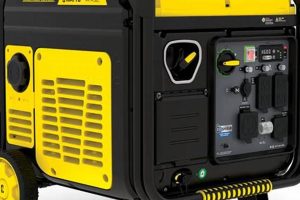
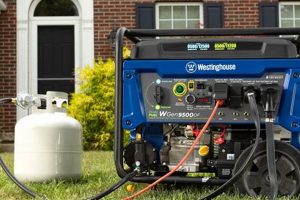
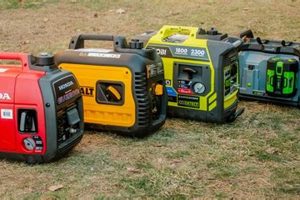
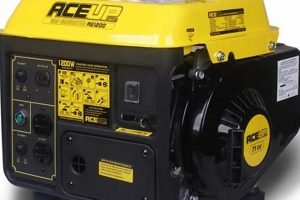
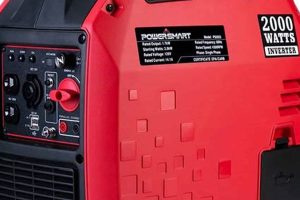
Compact, fuel-powered devices capable of generating electricity are crucial for homeowners and businesses. These units provide backup power during outages caused by severe weather, grid failures, or other unforeseen circumstances. A typical unit consists of an engine, an alternator, a fuel tank, and various outlets for connecting appliances and electronics. Different fuel sources, such as gasoline, propane, and diesel, offer varying runtimes and power outputs.
Access to a reliable backup power source offers significant advantages, including the continued operation of essential appliances like refrigerators, sump pumps, and medical equipment. This capability mitigates food spoilage, potential flooding, and interruptions to necessary medical care. Historically, reliance on backup power has increased alongside the growing dependence on electricity for everyday life. Advancements in technology have led to smaller, quieter, and more fuel-efficient models, making them a practical solution for a wider range of users.
The following sections delve deeper into specific aspects of these devices, covering topics such as choosing the right size unit, various fuel options and their implications, proper maintenance procedures, and essential safety considerations.
Operating Backup Power Units Safely and Effectively
Proper usage and maintenance are essential for maximizing the lifespan and ensuring the safe operation of backup power sources. Careful consideration of the following tips will contribute to a positive user experience.
Tip 1: Calculate Power Requirements: Accurately assess power needs before purchasing a unit. Sum the wattage requirements of essential appliances intended for backup power. Overloading a generator can lead to damage and safety hazards.
Tip 2: Proper Ventilation is Crucial: Operate units outdoors in well-ventilated areas, away from windows and doors. Exhaust fumes contain carbon monoxide, a colorless, odorless, and potentially lethal gas.
Tip 3: Safe Refueling Practices: Allow the unit to cool completely before refueling. Spilled fuel on a hot engine presents a serious fire hazard. Store fuel in approved containers, away from ignition sources.
Tip 4: Regular Maintenance is Key: Adhere to the manufacturer’s recommended maintenance schedule. Regular oil changes, air filter cleaning, and spark plug replacement contribute to reliable operation and extended lifespan.
Tip 5: Dry Run Testing: Conduct periodic test runs to verify proper function and identify potential issues before an outage occurs. This proactive approach ensures readiness when backup power is needed.
Tip 6: Professional Installation for Permanent Connections: Consult a qualified electrician for permanent connections to a home’s electrical system. Improper installation can create dangerous backfeeding situations, posing risks to utility workers.
Tip 7: Grounding for Safety: Ensure the generator is properly grounded to prevent electrical shock. Consult the owner’s manual for grounding instructions.
Tip 8: Weather Protection: Protect the unit from the elements. Exposure to rain, snow, or excessive heat can damage components and reduce operational lifespan. Consider a generator cover or shelter for outdoor storage.
Following these guidelines ensures efficient operation, prolongs the lifespan of the equipment, and most importantly, prioritizes the safety of users and those around them.
This information serves as a practical guide for optimizing the use of backup power. The concluding section will summarize key takeaways and offer additional resources for further research.
1. Portability

Portability represents a defining characteristic of these generators, directly influencing their practicality and usability. This characteristic enables users to readily move the units to the desired location, whether that be powering a campsite, providing backup electricity during a home outage, or supporting operations at a remote work site. The compact design and manageable weight of portable models differentiate them from larger, stationary standby generators, which require professional installation and are not easily relocated. This mobility expands the range of applications, making them valuable tools in diverse scenarios. For example, contractors might utilize a portable unit to power tools on a construction site lacking grid access, while homeowners might rely on one during a power outage to maintain essential appliances. The portability factor becomes particularly significant in disaster relief efforts, where access to reliable power is crucial in affected areas.
Further enhancing portability are features like integrated handles, wheels, and compact dimensions. These design elements contribute to effortless maneuverability and convenient storage when not in use. Consider a family using a portable generator for a weekend camping trip. The units portability allows them to easily transport it in their vehicle and set it up at their campsite. Conversely, a stationary generators lack of portability restricts its use to fixed locations, limiting its adaptability to varying power needs. This distinction highlights portability as a crucial element determining the suitability of a generator for specific situations. The practical implications extend to emergency preparedness, allowing individuals to quickly deploy backup power when and where it is most needed.
In summary, portability significantly impacts the versatility and usability of these generators. This attribute expands their application across various settings, from recreational activities to emergency preparedness and professional work environments. Understanding the implications of portability empowers users to select a unit that aligns with their specific needs and ensures they can effectively harness the benefits of on-demand power generation, regardless of location.
2. Power Output

Power output, measured in watts, represents a critical specification for portable home electric generators. This metric directly dictates the number and type of appliances or devices a generator can power simultaneously. Understanding power output is essential for selecting a unit that effectively meets specific needs, whether for backup power during outages or for powering equipment in off-grid locations.
- Starting vs. Running Watts
Electrical devices often require a surge of power to start, known as starting watts, which significantly exceeds their continuous operating power requirement, or running watts. For example, a refrigerator might require 2,000 starting watts but only 700 running watts. A generator must accommodate both the starting and running wattage demands of intended devices. Failure to account for starting wattage can lead to overloaded circuits and potential damage to both the generator and connected appliances.
- Wattage Calculation for Appliance Selection
Accurately determining the combined wattage requirements of all devices intended for simultaneous operation is crucial for selecting a generator with adequate power output. This involves summing the running watts of each device and factoring in the highest starting wattage of any single appliance. For instance, simultaneously powering a 1,500-watt space heater, a 700-watt refrigerator, and a 500-watt television requires a generator with a minimum running wattage output of 2,700 watts and a starting wattage capacity sufficient to handle the refrigerator’s initial power surge.
- Impact of Power Output on Generator Size and Cost
Power output directly influences a generator’s physical size, weight, and cost. Higher power output typically translates to larger, heavier, and more expensive units. Consumers must balance their power requirements with practical considerations like portability and budget constraints. Opting for a significantly higher power output than necessary can result in unnecessary expenditure and increased fuel consumption.
- Power Output and Fuel Consumption
Power output directly correlates with fuel consumption. Generators operating at higher power outputs consume fuel more rapidly than those operating at lower outputs. Understanding this relationship is essential for estimating runtime and planning for fuel availability, especially during extended power outages. Users can optimize fuel efficiency by only powering essential devices and avoiding unnecessary loads.
Selecting a generator with appropriate power output is paramount for ensuring safe and effective operation. Careful consideration of starting and running watts, accurate load calculations, and an understanding of the relationship between power output, size, cost, and fuel consumption empower consumers to choose a unit that effectively balances their power needs with practical considerations.
3. Fuel Type

Fuel type represents a crucial consideration in the selection and operation of portable home electric generators. The choice of fuel directly impacts several key factors, including cost, availability, runtime, environmental impact, and storage requirements. Understanding the characteristics of different fuel types empowers consumers to make informed decisions aligned with their specific needs and circumstances.
Common fuel types for portable generators include gasoline, propane, and diesel. Gasoline offers widespread availability and generally lower upfront generator cost. However, it has a shorter shelf life than other fuels and requires more frequent refueling. Propane, stored in readily available tanks, offers extended runtimes and cleaner emissions compared to gasoline. Its longer shelf life makes it ideal for emergency preparedness. Diesel provides exceptional fuel efficiency and long runtimes, making it suitable for continuous operation. However, diesel generators tend to be more expensive and produce louder noise levels. Choosing the appropriate fuel involves balancing these factors against specific requirements. For instance, a homeowner concerned about long-term storage might opt for propane, while a contractor needing maximum runtime for a project could choose diesel. A remote cabin owner might rely on gasoline due to its ease of acquisition in areas with limited propane or diesel access. Understanding these trade-offs is paramount for selecting a generator that effectively meets specific power generation needs.
The choice of fuel type significantly influences the operational logistics and environmental footprint of portable generators. Gasoline requires more frequent refueling, necessitating readily available fuel supplies, especially during extended outages. Propane’s extended runtimes reduce refueling frequency, offering greater convenience. Diesel’s high efficiency minimizes fuel consumption, lowering operating costs and environmental impact. Furthermore, fuel storage requirements vary significantly. Gasoline requires approved containers and careful handling due to its flammability. Propane tanks necessitate proper storage and secure connections. Diesel fuel also demands careful handling and appropriate storage containers to prevent spills and contamination. Ultimately, understanding these practical implications of fuel type selection empowers users to optimize generator operation and minimize potential environmental impact while ensuring a reliable power source aligned with individual needs and circumstances. Careful consideration of these factors contributes to a more informed and responsible approach to portable power generation.
4. Runtime

Runtime represents a critical factor influencing the practical utility of portable home electric generators. Defined as the duration a generator can operate continuously on a single fuel tank, runtime directly impacts the generator’s ability to provide power during outages or in off-grid scenarios. Several factors influence runtime, including the generator’s fuel capacity, power output, and the load placed upon it. A generator operating at a higher power output, powering more devices, will deplete its fuel supply more rapidly than a generator operating under a lighter load. Understanding the interplay of these factors is crucial for effectively utilizing portable generators. For instance, a homeowner anticipating an extended power outage might prioritize a generator with a large fuel tank and efficient engine to maximize runtime, ensuring essential appliances remain operational for a longer period. Conversely, a camper using a generator for short periods to power lighting and small electronics might prioritize portability over extended runtime.
The practical significance of runtime becomes particularly evident during extended power outages caused by severe weather events or natural disasters. In such situations, a generator with a longer runtime can provide essential power for critical needs, such as refrigeration, heating, or medical equipment, mitigating the impact of the outage. Consider a scenario where a family relies on a generator to power a sump pump during a heavy rainstorm that causes a widespread power outage. A generator with insufficient runtime could leave the family vulnerable to basement flooding. Conversely, a generator with ample runtime provides continuous protection, preventing potential property damage. This underscores the importance of runtime as a key consideration in emergency preparedness planning.
Effective management of runtime involves understanding the generator’s fuel consumption rate at various loads and planning accordingly. Calculating the required power output for essential appliances and choosing a generator with sufficient fuel capacity to meet those needs for the desired duration is essential. Further extending runtime can be achieved through careful load management, prioritizing essential appliances, and avoiding unnecessary power consumption during outages. This proactive approach ensures the available power lasts as long as needed, maximizing the generator’s effectiveness as a reliable backup power source. Careful consideration of runtime during the generator selection process and implementing strategies for efficient power management are essential for maximizing the practical benefits and ensuring reliable power availability when needed most.
5. Safety Features
Safe operation of portable home electric generators is paramount. These devices, while providing crucial backup power, present potential hazards if not used responsibly. Incorporating essential safety features mitigates these risks, protecting both users and connected equipment. Understanding and utilizing these features is crucial for responsible generator operation.
- Automatic Shut-Off for Low Oil Levels
This critical safety feature protects the generator’s engine from damage caused by insufficient lubrication. When oil levels drop below a safe threshold, the generator automatically shuts down, preventing costly repairs and extending the engine’s lifespan. This automatic safeguard reduces the risk of user negligence leading to engine failure.
- Overload Protection
Overloading a generator by exceeding its wattage capacity can lead to overheating and potential damage. Overload protection circuits automatically shut down the generator in overload situations, safeguarding both the generator and connected appliances. This prevents electrical fires and equipment damage caused by excessive current draw. For instance, if a user attempts to power too many devices simultaneously, exceeding the generator’s rated wattage, the overload protection will activate, preventing potential hazards.
- Carbon Monoxide (CO) Detectors and Shut-Off
Generators produce carbon monoxide, a colorless, odorless, and highly toxic gas. CO detectors integrated into some portable generators monitor CO levels during operation. If dangerous levels are detected, the generator automatically shuts off, preventing potential CO poisoning. This feature is particularly crucial for safe operation in enclosed or poorly ventilated areas. This automated safety measure significantly mitigates the risks associated with CO exposure.
- Covered Outlets and Ground Fault Circuit Interrupters (GFCI)
Covered outlets protect against moisture and debris entering the electrical connections, reducing the risk of electrical shock. GFCI outlets further enhance safety by detecting ground faults, which occur when electricity takes an unintended path, such as through a person. Upon detecting a ground fault, the GFCI instantly cuts off power, preventing potentially fatal electrical shocks. These features are particularly important for outdoor operation where exposure to the elements increases electrical hazards.
Prioritizing safety features in portable generator selection significantly reduces operational risks. These integrated safeguards protect both users and equipment from potential harm, including engine damage, electrical fires, and carbon monoxide poisoning. Understanding the function and importance of these safety features empowers users to operate portable generators responsibly and effectively, ensuring a reliable power source while minimizing potential hazards. Diligent attention to these aspects contributes to a safer and more secure power generation experience.
Frequently Asked Questions
This section addresses common inquiries regarding portable home electric generators, providing concise and informative responses to facilitate informed decision-making and safe operation.
Question 1: How is the appropriate generator size determined?
Generator size selection depends on the intended usage. Calculate the total running watts of appliances planned for simultaneous operation, adding the highest starting wattage of any single appliance. This total determines the minimum required generator wattage.
Question 2: What are the primary fuel options for portable generators?
Common fuel options include gasoline, propane, and diesel. Each fuel type presents advantages and disadvantages regarding cost, availability, runtime, and storage requirements.
Question 3: Where should portable generators be operated?
Operate generators outdoors in well-ventilated areas, away from doors, windows, and enclosed spaces. This precaution prevents carbon monoxide buildup, a significant safety hazard.
Question 4: How frequently should generator maintenance be performed?
Adherence to the manufacturer’s recommended maintenance schedule is essential. Regular maintenance typically includes oil changes, air filter cleaning, and spark plug replacement to ensure optimal performance and longevity.
Question 5: Can a portable generator be connected directly to a home’s electrical system?
Direct connection to a home’s electrical system requires professional installation by a qualified electrician. Improper connection can lead to dangerous backfeeding, posing risks to utility workers.
Question 6: What safety precautions should be observed during generator operation?
Essential safety precautions include allowing the generator to cool before refueling, storing fuel in approved containers, and never operating a generator indoors or in poorly ventilated areas.
Careful consideration of these frequently asked questions equips individuals with essential knowledge for safe and effective portable generator operation. Addressing these common concerns proactively promotes responsible usage and minimizes potential hazards.
The following section offers a concluding summary and additional resources for further exploration of portable home electric generators.
Conclusion
Portable home electric generators offer a crucial solution for backup power needs, ensuring essential services remain operational during outages. Careful consideration of factors such as power output, fuel type, runtime, and safety features is vital for selecting an appropriate unit. Adherence to proper operating procedures, including safe refueling practices, adequate ventilation, and regular maintenance, ensures efficient performance and mitigates potential hazards.
Reliable access to backup power provides peace of mind and safeguards against disruptions to daily life caused by unforeseen power outages. Investing in a portable home electric generator represents a proactive measure to ensure continuity of essential services and enhance preparedness for emergencies. Thorough research and informed decision-making empower individuals to select the right generator to meet specific needs, promoting safety and resilience in the face of power disruptions.