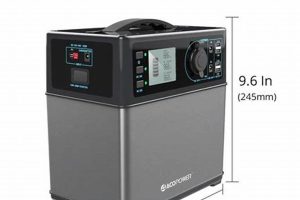
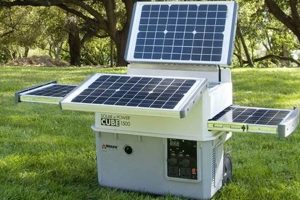
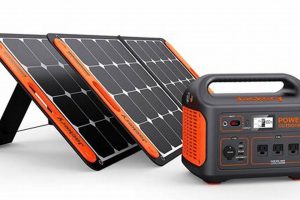
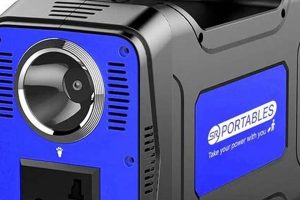
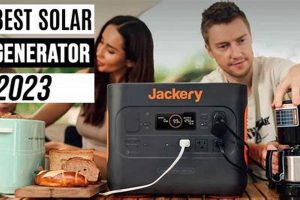
A top-tier, mobile solar power system designed for refrigerator use provides independent, sustainable energy for refrigeration, crucial for various situations. Imagine a camper parked off-grid, keeping food fresh with power generated entirely by the sun, or a homeowner maintaining refrigeration during a power outage. This technology integrates solar panels, a battery, and an inverter to capture, store, and convert sunlight into usable electricity specifically tailored for the power demands of a refrigerator.
Reliable off-grid refrigeration is essential for food preservation in remote locations, emergency preparedness, and reducing reliance on traditional power sources. This capability offers significant advantages for recreational activities, disaster relief, and sustainable living practices. Historically, off-grid refrigeration has relied on generators powered by fossil fuels, presenting noise, environmental, and logistical challenges. Advancements in solar technology and battery storage capacity now provide a cleaner, quieter, and more convenient alternative.
Factors influencing the optimal choice of a solar-powered system for refrigeration include refrigerator size and power consumption, required runtime, solar panel efficiency, battery capacity, and inverter power rating. Exploring these elements provides a comprehensive understanding for selecting a suitable system to meet specific needs.
Tips for Selecting a Solar Generator for Refrigerator Use
Choosing an appropriate solar-powered generator to reliably power a refrigerator requires careful consideration of several key factors. The following tips offer guidance for making an informed decision.
Tip 1: Calculate Refrigerator Power Requirements: Determine the refrigerator’s running wattage and surge wattage (the initial power draw upon startup). This information is typically found on a label inside or on the back of the appliance.
Tip 2: Consider Refrigerator Runtime Needs: Estimate the required hours of refrigeration per day. This will influence the necessary battery capacity.
Tip 3: Evaluate Solar Panel Wattage and Efficiency: Higher wattage solar panels generate more power, potentially reducing charging time. Panel efficiency affects the amount of sunlight converted into electricity.
Tip 4: Assess Battery Capacity and Type: Battery capacity, measured in ampere-hours (Ah) or watt-hours (Wh), dictates how long the refrigerator can run on stored power. Different battery types (e.g., lithium-ion, lead-acid) offer varying lifespans and performance characteristics. Lithium-ion batteries generally offer longer lifespans and higher energy density.
Tip 5: Verify Inverter Power Rating: The inverter converts DC power from the battery to AC power for the refrigerator. Ensure the inverter’s continuous power rating exceeds the refrigerator’s running wattage and its surge rating handles the startup surge.
Tip 6: Factor in Portability Needs: If portability is crucial, consider the weight and dimensions of the solar generator and its associated components (solar panels, cables).
Tip 7: Explore Additional Features: Some solar generators offer features such as multiple outlets, USB ports, built-in charge controllers, and LCD screens for monitoring power usage.
Careful consideration of these factors ensures the selection of a system capable of reliably powering a refrigerator, whether for recreational use, emergency preparedness, or sustainable living.
By following these guidelines, consumers can confidently choose a system tailored to their specific refrigeration needs and circumstances.
1. Capacity (Watt-hours)

Capacity, measured in watt-hours (Wh), represents the total amount of energy a solar generator can store. This metric proves crucial when selecting a system for refrigerator use, directly influencing the duration a refrigerator can operate without recharging. A higher capacity translates to a longer runtime, essential for maintaining consistent refrigeration, particularly in off-grid or emergency scenarios. For instance, a refrigerator consuming 100 watts powered by a 500Wh solar generator could theoretically run for 5 hours. Understanding this relationship between capacity and runtime enables informed decision-making based on specific refrigeration needs.
Consider a scenario where a portable refrigerator is needed during a camping trip. A higher capacity solar generator ensures food stays fresh for the duration of the trip without requiring frequent recharging, enhancing convenience and reliability. Conversely, in an emergency power outage scenario, a larger capacity system can provide extended refrigeration, preserving essential perishables for a longer period. Capacity considerations extend beyond simple runtime calculations. Factors like refrigerator startup surge wattage, ambient temperature, and refrigerator efficiency also influence actual usage, highlighting the importance of selecting a generator with ample capacity to accommodate these variables.
In summary, capacity plays a pivotal role in selecting a suitable solar generator for powering a refrigerator. Accurate assessment of power requirements, runtime needs, and potential influencing factors ensures a reliable and effective solution. Balancing capacity with other crucial factors like portability and cost allows users to select the best system tailored to their individual circumstances, be it recreational, emergency preparedness, or sustainable living applications.
2. Portability (Weight/Size)
Portability, encompassing both weight and size, represents a critical factor in determining the suitability of a solar generator for powering a refrigerator, especially in contexts requiring mobility. The optimal balance between power capacity and portability depends heavily on the intended application. A compact, lightweight system proves advantageous for camping or hiking trips, enabling easy transport and setup in remote locations. Conversely, applications like powering a refrigerator in a recreational vehicle (RV) or providing backup power during emergencies might prioritize a larger capacity system, potentially accepting a trade-off in portability for extended runtime.
Consider a scenario where a solar generator is required for a backpacking expedition. A heavier, bulkier unit would impede movement and limit overall practicality. A lighter, more compact system, even with potentially lower capacity, allows for greater mobility and ease of use. In contrast, when providing backup power for a home refrigerator during a power outage, portability becomes less critical. A larger, higher-capacity unit, albeit less portable, offers a longer runtime to preserve perishable goods. This trade-off between portability and capacity underscores the importance of aligning system characteristics with specific application requirements.
Selecting a solar generator necessitates careful evaluation of portability needs alongside capacity requirements and other relevant factors. This balance ensures the chosen system effectively meets the demands of the intended use case. The ideal portable solar generator for a refrigerator balances sufficient power output for reliable refrigeration with manageable weight and size for convenient transport and setup, tailored specifically to the user’s individual needs and the anticipated operating environment.
3. Power Output (Watts)

Power output, measured in watts, signifies a solar generator’s ability to deliver electricity to connected devices. This metric holds critical importance when selecting a system to power a refrigerator, as insufficient output can lead to inadequate cooling or even system failure. A thorough understanding of power output requirements ensures reliable refrigerator operation and prevents potential damage to appliances.
- Running Wattage vs. Surge Wattage
Refrigerators exhibit two key power consumption metrics: running wattage and surge wattage. Running wattage represents the continuous power required during normal operation, while surge wattage signifies the significantly higher power draw upon startup. A suitable solar generator must possess a continuous power output exceeding the refrigerator’s running wattage and a surge capacity handling the initial surge. Failing to meet these requirements may result in the refrigerator failing to start or the generator overloading. For example, a refrigerator with a running wattage of 100W and a surge wattage of 300W requires a generator capable of sustaining at least 100W continuously and handling a 300W surge.
- Impact of Inverter Rating on Power Output
The inverter, a component within the solar generator, converts direct current (DC) electricity from the battery to alternating current (AC) electricity used by most appliances. The inverter’s power rating directly limits the maximum AC power output the generator can deliver. Choosing a generator with an inverter rating exceeding the refrigerator’s power requirements is crucial for ensuring proper operation. An undersized inverter can lead to performance issues or even damage to both the refrigerator and the generator.
- Power Output and Refrigerator Size/Type
Refrigerator size and type significantly influence power consumption. Larger refrigerators typically require higher power output compared to smaller models. Similarly, different refrigerator technologies, such as conventional compressors versus more efficient inverter compressors, affect power demands. Understanding the specific power requirements of the intended refrigerator is essential for selecting a generator with adequate power output.
- Power Output and Additional Loads
If the solar generator will power devices beyond the refrigerator, the cumulative power draw of all connected devices must be considered. The generator’s power output must be sufficient to handle the combined load of the refrigerator and other appliances. For example, simultaneously running a refrigerator and a small fan requires a generator with a power output exceeding the sum of the individual power requirements of both devices. Failing to account for additional loads can result in insufficient power delivery and potential operational problems.
Careful consideration of power output, encompassing running wattage, surge wattage, inverter rating, refrigerator specifications, and potential additional loads, is paramount for selecting the best portable solar generator for refrigerator use. Adequate power output ensures reliable refrigeration, prevents equipment damage, and facilitates consistent performance across various scenarios, whether recreational, emergency preparedness, or off-grid living.
4. Recharge Time (Sunlight/AC)

Recharge time, encompassing both solar and AC charging, represents a crucial performance characteristic influencing the practicality and effectiveness of portable solar generators for refrigerator use. Rapid recharge capabilities minimize downtime, ensuring consistent refrigeration, particularly in off-grid or emergency scenarios. Understanding the factors affecting recharge time facilitates informed decision-making, aligning system capabilities with specific usage requirements.
- Solar Recharge Rate
Solar recharge rate depends primarily on solar panel wattage, solar irradiance (sunlight intensity), and the generator’s internal charging circuitry. Higher wattage solar panels generate more power, potentially reducing solar recharge time. Optimal sunlight conditions are essential for maximizing solar charging efficiency. For instance, a 100W solar panel in full sunlight could theoretically recharge a 500Wh battery in 5 hours, assuming 100% efficiency. However, real-world conditions, including panel angle, cloud cover, and temperature, often impact actual recharge times. Generators with advanced Maximum Power Point Tracking (MPPT) technology optimize solar energy capture, minimizing recharge durations even under less-than-ideal sunlight.
- AC Recharge Rate
AC recharge rate, referring to recharging from a standard wall outlet, depends on the generator’s AC charging circuitry and the power source’s amperage. Generators with higher AC input ratings typically recharge faster. This capability proves valuable when sunlight is unavailable or insufficient, enabling swift replenishment of battery power. AC recharge time is usually specified in hours, indicating the time required to fully recharge a depleted battery. For example, a generator capable of accepting a 10A AC input might recharge a 500Wh battery in approximately 5 hours, assuming 100V input voltage.
- Impact of Battery Chemistry on Recharge Time
Battery chemistry influences both recharge time and overall lifespan. Lithium-ion batteries generally offer faster recharge times and longer lifespans compared to lead-acid batteries. The battery management system (BMS) within the generator also plays a role in regulating charging, optimizing battery health and longevity. Choosing a generator with a suitable battery chemistry aligned with usage needs ensures optimal recharge performance and prolonged battery life.
- Recharge Time Considerations for Different Applications
Recharge time considerations vary based on the specific application. For camping or short-term off-grid use, prioritizing rapid solar recharge capabilities might be crucial. In contrast, for emergency backup power, access to AC recharging becomes more critical. Understanding the typical usage scenarios helps prioritize recharge performance characteristics. For extended off-grid use, both efficient solar recharging and AC recharging options provide flexibility and reliability.
Recharge time, encompassing both solar and AC charging capabilities, directly influences the practical usability of portable solar generators for powering refrigerators. Balancing recharge speed with other crucial factors like capacity, power output, and portability ensures the chosen system aligns precisely with individual needs and anticipated usage patterns. Selecting a generator with optimized recharge capabilities minimizes downtime, maximizing the reliability and convenience of off-grid refrigeration across various applications, from recreational activities to emergency preparedness.
5. Durability (Lifespan/Warranty)

Durability, encompassing lifespan and warranty, constitutes a crucial factor influencing the long-term value and reliability of a portable solar generator intended for refrigerator use. A durable system minimizes replacement costs and ensures consistent performance over extended periods, proving particularly important for off-grid living, emergency preparedness, or frequent recreational use. Evaluating durability requires consideration of component lifespans, build quality, and warranty coverage.
- Battery Lifespan
Battery lifespan, often measured in charge cycles (one full charge and discharge), significantly impacts the overall longevity of a solar generator. Different battery chemistries offer varying lifespans, with lithium-ion batteries generally outlasting lead-acid batteries. A longer battery lifespan translates to reduced replacement costs and sustained performance over time. For example, a lithium-ion battery rated for 2000 cycles could potentially provide several years of service, while a lead-acid battery rated for 500 cycles might require more frequent replacement.
- Solar Panel Durability
Solar panel durability encompasses resistance to environmental factors like rain, hail, and UV radiation. Robust panel construction ensures sustained power generation over extended periods, minimizing performance degradation. High-quality solar panels typically feature tempered glass, anodized aluminum frames, and waterproof junction boxes, enhancing resilience and longevity. For instance, panels designed to withstand high wind loads and impact resistance are more suitable for challenging environments.
- Inverter Reliability and Lifespan
Inverter reliability directly impacts the generator’s ability to consistently convert DC power to AC power for the refrigerator. A durable inverter minimizes potential operational issues and ensures sustained performance. Features like over-temperature protection and surge protection further enhance inverter longevity and reliability. Selecting a generator with a proven track record of inverter reliability is crucial for long-term dependable operation.
- Overall Build Quality and Warranty
The overall build quality of the generator, including housing materials, wiring, and connectors, influences its ability to withstand regular use and potential environmental stresses. A robust construction enhances durability and longevity. Warranty coverage provides an additional layer of assurance, protecting against manufacturing defects and premature failures. A comprehensive warranty demonstrates the manufacturer’s confidence in the product’s quality and durability. For example, a generator with a longer warranty period typically signifies a higher level of expected reliability.
Durability, encompassing lifespan and warranty, represents a critical investment consideration when selecting a portable solar generator for powering a refrigerator. A durable system ensures long-term reliability, minimizes replacement costs, and provides consistent performance over extended periods. Careful evaluation of battery lifespan, solar panel durability, inverter reliability, overall build quality, and warranty coverage informs purchasing decisions and ensures the chosen system aligns with long-term operational expectations. Prioritizing durability ultimately contributes to a more cost-effective and dependable solution for off-grid refrigeration needs.
Frequently Asked Questions
This section addresses common inquiries regarding portable solar generators designed for refrigerator use, providing concise and informative responses.
Question 1: What size solar generator is needed to power a refrigerator?
The required generator size depends on the refrigerator’s power consumption (running wattage and surge wattage) and the desired runtime. Calculating daily watt-hour needs and considering startup surge requirements helps determine the appropriate generator capacity.
Question 2: How long can a portable solar generator power a refrigerator?
Runtime depends on the generator’s capacity (watt-hours), the refrigerator’s power consumption, and external factors like ambient temperature. A higher capacity generator and a more energy-efficient refrigerator extend runtime.
Question 3: Can a portable solar generator run a refrigerator continuously?
Continuous operation is possible with sufficient generator capacity, adequate solar panel input for recharging, or access to AC power for supplemental charging.
Question 4: What type of battery is best for a solar generator powering a refrigerator?
Lithium-ion batteries are generally preferred for their longer lifespan, higher energy density, and faster recharge rates compared to lead-acid batteries.
Question 5: What are the maintenance requirements for a portable solar generator used with a refrigerator?
Regularly checking battery charge levels, cleaning solar panels, and storing the generator properly contribute to optimal performance and extended lifespan.
Question 6: Are portable solar generators for refrigerators safe to use indoors?
Solar generators designed for indoor use are generally safe, but adequate ventilation is crucial. Generators utilizing lithium-ion batteries offer enhanced safety features compared to those using lead-acid batteries.
Careful consideration of these frequently asked questions empowers informed decisions regarding selecting and utilizing a portable solar generator for reliable refrigerator operation, whether for recreational purposes, emergency preparedness, or sustainable living practices.
Further exploration of specific generator models and features allows for refined selection based on individual needs and priorities.
Best Portable Solar Generator for Refrigerator
Optimal selection of a best portable solar generator for refrigerator use necessitates careful consideration of several intertwined factors. Capacity dictates operational duration, influencing the length of time a refrigerator can function without recharging. Portability balances power requirements with convenient transport and setup. Sufficient power output ensures reliable refrigerator operation, accommodating both running and surge wattage demands. Efficient recharge times, both solar and AC-powered, minimize downtime. Durability, reflected in lifespan and warranty, ensures long-term value and dependable performance. Balancing these considerations empowers informed decisions aligned with specific application needs, whether for recreational use, emergency preparedness, or sustainable off-grid living.
As technology advances, portable solar generators continue to evolve, offering enhanced performance, increased efficiency, and expanded functionality. Careful evaluation of these advancements empowers consumers to make informed decisions, selecting the best portable solar generator for refrigerator use tailored to individual circumstances. Investing in a high-quality system ensures reliable refrigeration, reduces reliance on traditional power sources, and promotes sustainable practices, ultimately contributing to greater energy independence and environmental responsibility.