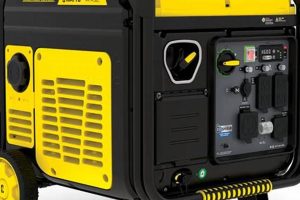
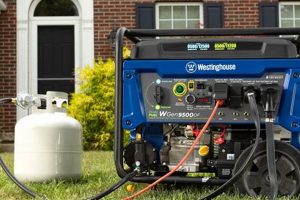
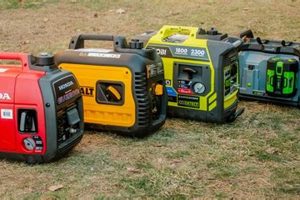
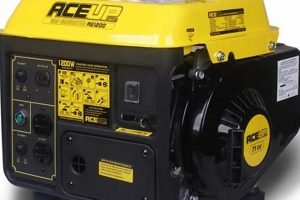
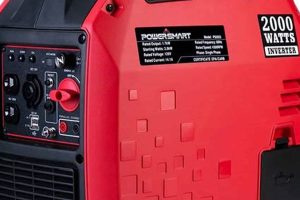
Compact, mobile power sources offer a convenient way to supply electricity to an entire residence during outages. These units can typically be wheeled into position and connected to a home’s electrical system through a transfer switch, providing backup power for essential appliances and systems like refrigerators, HVAC units, and lighting. Unlike permanently installed standby generators, these mobile options offer flexibility in placement and storage.
Loss of electricity can disrupt daily life, causing inconvenience and potentially jeopardizing safety and comfort. Backup power ensures critical systems remain operational, mitigating the impact of blackouts caused by severe weather, grid failures, or other unforeseen events. The ability to maintain comfortable living conditions and preserve food, especially during extended outages, represents a significant advantage. Historically, homeowners relied on smaller, less powerful portable generators for limited backup power, but advancements in technology have led to more robust and convenient mobile solutions capable of powering an entire house.
This discussion will further explore key considerations for selecting and operating such systems, including power output, fuel type, connection methods, safety precautions, and maintenance requirements.
Tips for Utilizing Mobile Whole-House Power Solutions
Careful planning and execution are essential for maximizing the effectiveness and safety of mobile whole-house power sources. The following tips offer valuable guidance for homeowners considering such systems.
Tip 1: Accurate Power Needs Assessment: Calculate the wattage required to run essential appliances and systems simultaneously. This assessment ensures the selected unit provides adequate power, preventing overload and potential damage.
Tip 2: Professional Installation of Transfer Switch: A qualified electrician should install the transfer switch, which safely connects the unit to the home’s electrical system. Improper installation can pose significant safety risks.
Tip 3: Adherence to Manufacturer’s Instructions: Consult the manufacturer’s guidelines for safe operation, maintenance, and fuel requirements. Ignoring these instructions could void warranties and create hazardous conditions.
Tip 4: Proper Ventilation: Operate the unit outdoors in a well-ventilated area to prevent carbon monoxide buildup. Never operate indoors or in enclosed spaces.
Tip 5: Routine Maintenance: Regular maintenance, including oil changes, filter replacements, and system checks, ensures optimal performance and prolongs the unit’s lifespan.
Tip 6: Fuel Storage Safety: Store fuel in approved containers in a safe, well-ventilated location away from ignition sources. Proper storage practices minimize fire hazards.
Tip 7: Dry Run Testing: Periodically test the system to verify functionality and familiarize oneself with the operation procedures. Regular testing ensures readiness during actual power outages.
Implementing these precautions ensures safe and effective operation, maximizing the benefits of backup power during outages. Preparation and proactive maintenance are crucial for minimizing disruptions and protecting one’s investment.
By understanding the importance of proper planning, installation, and maintenance, homeowners can confidently rely on these power solutions when needed most.
1. Portability

Portability is a defining characteristic of these generators, distinguishing them from permanently installed standby units. This feature offers significant advantages in terms of flexibility, storage, and potential use beyond residential applications. Understanding the nuances of portability is crucial for maximizing the benefits of these power solutions.
- Physical Dimensions and Weight
The physical size and weight of the unit directly impact its maneuverability. Compact designs and lighter materials enhance portability, allowing for easier movement and storage. For example, a unit with integrated wheels and handles simplifies transport, while a heavier, bulkier model may require assistance or specialized equipment for relocation. Consider the typical storage location and the pathway to the connection point when evaluating these factors.
- Wheel Design and Mobility
The type and quality of wheels significantly influence ease of movement across various terrains. Large, rugged wheels facilitate movement over uneven surfaces, while smaller wheels may be suitable for paved surfaces only. Consider the terrain between the storage location and the operational area. A generator intended for use on a construction site, for instance, would benefit from more robust wheels than one intended solely for residential use.
- Storage Requirements
The unit’s size and shape determine the necessary storage space. Compact designs minimize storage footprint, while larger units may require dedicated storage areas. Evaluate available storage space and consider factors like climate control to prevent damage during periods of non-use. For example, storing a generator in a cramped shed versus a spacious garage presents different considerations for accessibility and protection from the elements.
- Alternative Applications
Portability extends the unit’s usability beyond the home. These generators can provide power for recreational activities, remote work sites, or emergency situations in other locations. This versatility adds value and expands the potential applications beyond primary residential use. Consider scenarios like camping trips, powering tools at a remote cabin, or providing temporary power during community events.
The portability of these generators offers significant advantages for homeowners and other users seeking flexible power solutions. Careful consideration of the unit’s physical attributes, mobility features, and storage requirements ensures optimal usability and convenience. By understanding the various facets of portability, individuals can select the most appropriate generator to meet their specific needs and maximize its potential applications.
2. Power Output

Power output, measured in watts or kilowatts (kW), represents a critical factor in selecting a portable whole-home generator. Sufficient power is essential for operating necessary appliances and systems during an outage. Understanding power output requirements ensures the selected generator meets household demands effectively.
- Starting vs. Running Watts
Appliances require a higher wattage surge to start, known as starting watts, compared to the wattage needed to maintain operation, known as running watts. A refrigerator, for example, might require 2,000 starting watts but only 700 running watts. Generators must accommodate both starting and running wattage demands to prevent overload. Accurately assessing these requirements is crucial for preventing system failures and ensuring smooth operation of essential appliances.
- Calculating Total Power Needs
Determining the total power output required involves summing the running watts of all intended appliances and factoring in the highest starting wattage among them. This calculation ensures the generator can handle peak demand without overloading. Online calculators or consultation with electricians can assist in accurately assessing household power needs. Underestimating requirements can lead to insufficient power during outages, while overestimating can result in unnecessary expense.
- Power Output and Fuel Consumption
Higher power output typically correlates with increased fuel consumption. Generators with larger engines consume more fuel per hour. Balancing power needs with fuel efficiency is essential for cost-effective operation and minimizing refueling frequency. Understanding this relationship allows for informed decisions regarding generator sizing and fuel budgeting.
- Impact on Appliance Operation
Insufficient power output can lead to appliance malfunctions, reduced performance, or even damage. Attempting to operate appliances exceeding the generator’s capacity can cause voltage fluctuations and potential harm to sensitive electronics. Selecting a generator with adequate power output is essential for protecting appliances and ensuring reliable operation during outages.
Matching power output to specific household needs is crucial for successful generator utilization. Careful consideration of starting and running watts, accurate calculation of total power requirements, and understanding the relationship between power output and fuel consumption ensures optimal generator performance, prevents appliance damage, and maximizes efficiency during power outages. A properly sized generator provides reliable power, minimizing disruptions and maintaining essential services during unforeseen events.
3. Fuel Type

Fuel type significantly influences the practicality and operational characteristics of portable whole-home generators. The choice of fuel impacts availability, cost, storage requirements, and environmental impact. Understanding these factors is essential for selecting a generator that aligns with individual needs and circumstances.
Common fuel types include gasoline, propane, and diesel. Gasoline offers wide availability but requires more frequent refueling and poses storage challenges due to its flammability and limited shelf life. Propane, while requiring larger storage tanks, offers extended run times, cleaner combustion, and longer shelf life. Diesel provides excellent fuel efficiency and long run times but can be more expensive and may require additional maintenance. Selecting a fuel type depends on factors such as anticipated outage duration, budget, storage capacity, and environmental concerns. For instance, a homeowner in a region prone to extended power outages might prioritize propane for its longer run time and shelf life, while someone seeking a more cost-effective option for occasional short-term outages might opt for gasoline.
Careful consideration of fuel type ensures reliable operation during outages. Evaluating factors like fuel cost, storage practicality, and environmental impact allows for informed decisions that align with individual requirements and priorities. The interplay between fuel type and generator performance underscores the importance of understanding these nuances for effective power management during unforeseen events.
4. Safety Features
Safety features are paramount in portable whole-home generators, mitigating potential hazards associated with power generation. These features protect users, property, and connected appliances from various risks, including carbon monoxide poisoning, fire, and electrical shock. A crucial safety feature is an automatic shutoff triggered by high carbon monoxide levels. This mechanism prevents dangerous buildup of this odorless, colorless gas by halting operation when concentrations exceed safe limits. For instance, a generator operating too close to a home could inadvertently expose occupants to carbon monoxide without this critical safety feature. Low-oil shutoff systems prevent engine damage by automatically turning off the generator when oil levels drop below safe operating thresholds, preventing costly repairs and ensuring longevity.
Overload protection prevents damage to the generator and connected appliances by automatically shutting down the system when electrical demand exceeds capacity. This safeguards sensitive electronics and prevents fires caused by overloaded circuits. For example, attempting to run a high-wattage appliance like an air conditioner simultaneously with multiple other devices might overload the generator, potentially damaging internal components and connected devices without overload protection. Outlets equipped with ground fault circuit interrupters (GFCIs) provide additional protection against electrical shock. These outlets detect imbalances in electrical current and quickly interrupt the flow of electricity, preventing potentially fatal shocks. This is particularly crucial in outdoor environments where moisture increases the risk of electrocution. A generator used to power tools during damp conditions, for example, would greatly benefit from GFCI protection.
Understanding and utilizing these safety features is crucial for responsible generator operation. Automatic shutoff systems for carbon monoxide and low oil levels, overload protection, and GFCI outlets contribute significantly to safe and reliable power generation. Ignoring or disabling these features can lead to severe consequences, including property damage, injury, or even death. Prioritizing safety features ensures the benefits of portable power are realized without compromising well-being or property.
5. Maintenance

Regular maintenance is essential for ensuring the reliable and long-lasting performance of portable whole-home generators. Neglecting routine upkeep can lead to decreased efficiency, malfunctions, and potentially hazardous operating conditions. A well-maintained generator provides consistent power during outages, maximizing its value and protecting the investment.
- Regular Oil Changes
Engine oil lubricates moving parts, reducing friction and wear. Regular oil changes, as specified in the manufacturer’s guidelines, maintain optimal engine performance and prolong its lifespan. Failing to change the oil can lead to increased engine wear, overheating, and eventual failure. For instance, a generator used frequently during extended outages requires more frequent oil changes than one used sparingly.
- Air Filter Replacement
Clean air filters ensure proper airflow to the engine, optimizing combustion and fuel efficiency. Clogged air filters restrict airflow, reducing power output and increasing fuel consumption. Regular replacement, typically after a specific number of operating hours or as indicated by visual inspection, maintains engine performance and prevents damage. A generator operating in dusty environments, for example, requires more frequent air filter replacements.
- Spark Plug Maintenance
Spark plugs ignite the fuel-air mixture in the engine. Worn or fouled spark plugs can lead to difficulty starting, rough running, and reduced fuel efficiency. Periodic inspection and replacement, as recommended by the manufacturer, ensures reliable ignition and optimal engine performance. For instance, a generator experiencing difficulty starting might benefit from new spark plugs.
- Fuel System Care
Proper fuel storage and system maintenance prevent fuel-related issues. Using fresh, stabilized fuel and periodically draining the fuel tank and carburetor prevent gum and varnish buildup, ensuring reliable starting and smooth operation. Failing to maintain the fuel system can lead to starting problems, reduced performance, and potential damage to fuel system components. A generator stored for extended periods, for example, requires fuel stabilization to prevent degradation.
Consistent adherence to a maintenance schedule ensures the reliable operation and longevity of portable whole-home generators. Addressing these key maintenance tasks proactively minimizes the risk of malfunctions, optimizes performance, and protects the investment, providing peace of mind during power outages. Neglecting these tasks can result in costly repairs, reduced efficiency, and potentially hazardous operating conditions.
6. Cost
Cost represents a significant factor influencing the acquisition and operation of portable whole-home generators. Understanding the various cost componentsinitial purchase price, ongoing maintenance expenses, and fuel costsallows for informed decision-making and effective budgeting. The initial investment varies significantly based on power output, features, and brand. Higher power output typically commands a higher price, as do advanced features like automatic transfer switches and remote monitoring capabilities. Choosing a generator with appropriate power output for essential needs balances performance with affordability. Oversizing a generator for non-essential appliances increases upfront costs unnecessarily.
Ongoing maintenance contributes to the total cost of ownership. Regular oil changes, air filter replacements, and spark plug maintenance incur expenses over the generator’s lifespan. Adhering to a preventative maintenance schedule minimizes the risk of costly repairs stemming from neglect. For example, neglecting regular oil changes can lead to engine damage, resulting in significant repair or replacement costs. Fuel consumption constitutes a recurring operational expense. Fuel costs depend on the generator’s fuel type (gasoline, propane, or diesel), engine efficiency, and usage frequency. Generators with higher power output generally consume more fuel per hour. Calculating estimated fuel costs based on anticipated usage helps determine the long-term affordability of operating a specific generator. For instance, prolonged power outages necessitate greater fuel consumption, increasing operational expenses. Choosing a fuel-efficient generator or exploring alternative fuel sources, like propane, might mitigate these costs.
In summary, understanding the various cost components associated with portable whole-home generators facilitates informed purchasing decisions and effective budget planning. Balancing initial investment with ongoing maintenance and fuel expenses ensures the chosen generator aligns with both power requirements and financial constraints. Factoring in these costs comprehensively maximizes the long-term value and affordability of owning and operating a portable whole-home generator.
Frequently Asked Questions
This section addresses common inquiries regarding portable whole-home generators, providing concise and informative responses to facilitate informed decision-making.
Question 1: What differentiates a portable whole-home generator from a standby generator?
Portability distinguishes these units from permanently installed standby generators. Portable generators offer flexibility in placement and usage, while standby generators offer automatic operation during outages but require professional installation.
Question 2: How is the necessary generator size determined?
Calculating the total wattage required to run essential appliances simultaneously determines the appropriate generator size. Consider both running watts and starting watts to ensure adequate power supply.
Question 3: What fuel types are commonly used?
Gasoline, propane, and diesel are commonly used fuel types. Each presents advantages and disadvantages regarding cost, availability, storage, and environmental impact.
Question 4: What safety precautions are essential?
Operating the generator outdoors in a well-ventilated area is crucial to prevent carbon monoxide poisoning. Proper fuel storage and adherence to manufacturer guidelines are also essential safety practices.
Question 5: How frequently should maintenance be performed?
Regular maintenance, including oil changes, air filter replacements, and spark plug checks, should be performed according to the manufacturer’s recommendations to ensure optimal performance and longevity.
Question 6: What is the typical lifespan of a portable whole-home generator?
Lifespan varies depending on usage, maintenance, and generator quality. Regular maintenance and proper storage can significantly extend the operational life of these units.
Careful consideration of these frequently asked questions enhances understanding of portable whole-home generators, enabling individuals to make informed choices regarding power solutions for their specific needs.
The subsequent section will delve further into advanced features and technological advancements in portable whole-home power solutions.
Portable Whole Home Generators
Portable whole home generators represent a significant advancement in residential power solutions, offering a crucial safeguard against power disruptions. This exploration has highlighted key aspects of these devices, encompassing portability considerations, power output requirements, fuel type variations, essential safety features, maintenance necessities, and associated costs. Understanding these facets empowers informed selection and effective utilization of these power sources.
Reliable access to electricity is paramount in modern life. Portable whole home generators provide a critical bridge during outages, ensuring continuity of essential services and mitigating the impact of unforeseen power disruptions. Careful consideration of the factors discussed herein enables individuals to select the most appropriate generator, safeguarding their homes and families against the challenges posed by power loss. Preparedness through the acquisition and proper maintenance of portable whole home generators ensures resilience in the face of future power outages.