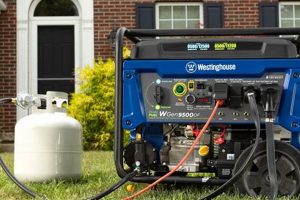
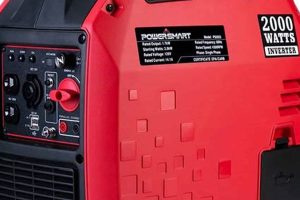
Supplying a portable generator with fuel from a residential propane supply offers a convenient and reliable power solution during outages or off-grid activities. This involves establishing a safe and regulated flow of propane from a stationary tank, typically installed for home heating or other appliances, to the generator’s fuel intake. Specialized connection kits, including hoses and regulators designed for this purpose, are essential components for this setup.
Integrating a home propane system with a portable generator provides significant advantages. It eliminates the need for frequent refueling with gasoline, offering extended run times, particularly beneficial during prolonged power disruptions. Propane also burns cleaner than gasoline, reducing emissions and minimizing environmental impact. Furthermore, the stable nature of stored propane eliminates the fuel degradation issues associated with gasoline storage. This integration can represent substantial cost savings over time and enhance preparedness for emergencies. Historically, reliance on gasoline-powered generators has been common, but growing awareness of propane’s benefits and advancements in connection technology are driving the adoption of propane-fueled solutions.
The following sections will cover essential topics including selecting the appropriate equipment, safety considerations, installation procedures, and maintenance recommendations for effectively and safely powering portable generators using a home propane supply.
Tips for Connecting a Portable Generator to Home Propane
Safe and efficient operation requires careful consideration of several factors when drawing propane from a residential supply to power a portable generator.
Tip 1: Select Appropriate Equipment: Ensure compatibility between the generator, propane tank, and connecting components. Utilize purpose-built propane conversion kits designed for the specific generator model. Verify regulator compatibility with both the generator’s fuel requirements and the propane tank’s output pressure.
Tip 2: Prioritize Safety: Propane is a flammable gas; therefore, safety is paramount. Perform all connections in a well-ventilated area away from ignition sources. Conduct leak tests using soapy water to identify any potential leaks before operation.
Tip 3: Consult Local Codes and Regulations: Adhere to all applicable local codes and regulations governing propane installations and generator operation. Secure necessary permits if required.
Tip 4: Employ Qualified Professionals: If unsure about any aspect of the installation process, consult a qualified propane technician or electrician. Professional expertise ensures a safe and compliant setup.
Tip 5: Maintain Proper Ventilation: Operate the generator outdoors in a well-ventilated location to prevent carbon monoxide buildup. Position the generator away from open windows, doors, and vents.
Tip 6: Conduct Regular Inspections: Periodically inspect the entire propane supply system, including hoses, connections, and the regulator, for signs of wear, damage, or leaks. Replace any worn or damaged components promptly.
Tip 7: Implement Emergency Shutdown Procedures: Familiarize oneself with the generator’s emergency shutdown procedures and ensure easy access to the shutoff valves on both the generator and the propane tank.
Adherence to these guidelines promotes safe and reliable operation, maximizing the benefits of utilizing residential propane for portable generator power.
By following these precautions and recommendations, users can establish a dependable backup power solution, ensuring preparedness for unforeseen power outages.
1. Safety First

Prioritizing safety is paramount when connecting a portable generator to a home propane supply. Propane, a highly flammable gas, presents significant risks if handled improperly. Negligence can lead to fires, explosions, and gas leaks, endangering lives and property. A “safety first” approach mandates meticulous attention to every step of the connection process. This includes understanding propane’s properties, using appropriate equipment, and following established safety procedures. For example, performing connections in a well-ventilated area away from ignition sources is crucial to prevent accidental ignition. Using leak detection solutions, such as soapy water, to identify and address potential leaks before operation is another critical safety measure.
The practical significance of prioritizing safety extends beyond immediate risk mitigation. A safe installation ensures reliable generator operation, reducing the likelihood of malfunctions and accidents during power outages. This reliability is especially crucial during emergencies when dependable power is essential. Moreover, adherence to safety protocols contributes to a longer lifespan for the equipment, minimizing the need for repairs and replacements. For instance, correctly installing and maintaining the propane regulator prevents damage to the generator and ensures a consistent fuel supply. Investing time in a safe and proper setup safeguards both individuals and the long-term functionality of the power supply system.
In conclusion, while establishing a propane-fueled generator connection offers a valuable backup power solution, safety must remain the foremost consideration. Meticulous adherence to safety procedures, combined with a thorough understanding of propane’s characteristics, ensures a secure and reliable power source during emergencies. Ignoring safety protocols not only jeopardizes lives and property but also undermines the very purpose of having a backup power system. A proactive “safety first” mindset is indispensable for a successful and secure propane generator installation.
2. Appropriate Equipment
Establishing a safe and functional connection between a portable generator and a home propane supply hinges on utilizing appropriate equipment. Selecting incompatible or substandard components can compromise safety, impede performance, and potentially damage the generator. Understanding the necessary equipment and its role is crucial for a successful installation.
- Conversion Kits
Propane conversion kits, designed for specific generator models, facilitate the transition from gasoline to propane. These kits typically include a propane regulator, hose assembly, and necessary fittings. Using a kit designed for a different generator model can result in improper fuel delivery, affecting performance and potentially causing damage. For instance, a kit designed for a smaller generator may not supply sufficient propane to a larger generator, leading to power fluctuations or engine stalling. Conversely, an oversized kit could oversupply fuel, creating a safety hazard.
- Regulators
The regulator plays a vital role in reducing the high pressure from the propane tank to a level suitable for the generator. Regulators are rated for specific pressure outputs and flow capacities, and selecting an incorrect regulator can result in either insufficient fuel delivery or dangerous overpressure. A low-pressure regulator might starve the generator of fuel, while a high-pressure regulator could damage internal components. For example, using a regulator designed for a grill on a generator could lead to inadequate fuel supply, whereas a regulator designed for a large appliance might overpressure the generator’s fuel system.
- Hoses and Fittings
Specialized propane hoses and fittings are essential for creating a secure, leak-free connection. Using standard garden hoses or improper fittings can lead to leaks, posing a significant fire hazard. Propane hoses are designed to withstand the pressure and chemical properties of propane, ensuring safe and reliable operation. Fittings must be compatible with both the hose and the connections on the generator and propane tank to prevent leaks. Using incorrect fittings, such as those designed for natural gas, could result in dangerous leaks due to material incompatibility and pressure discrepancies.
- Safety Devices
Essential safety devices include an overfill prevention device (OPD) on the propane tank and a carbon monoxide detector near the generator’s operating area. The OPD prevents overfilling the propane tank, mitigating the risk of leaks. Carbon monoxide detectors provide early warning of dangerous carbon monoxide buildup, a byproduct of incomplete combustion. For instance, an OPD shuts off the propane flow when the tank reaches its safe fill level, preventing potentially dangerous overpressure. A carbon monoxide detector alerts individuals to the presence of this odorless, colorless gas, allowing for prompt evacuation and preventing potential health issues.
Selecting the correct equipment ensures a safe and efficient connection between the portable generator and the home propane supply. Utilizing inappropriate equipment compromises safety, affects generator performance, and can lead to costly repairs or even dangerous accidents. Investing in proper, purpose-built components ensures a reliable backup power solution, providing peace of mind during power outages.
3. Proper Connections
Secure and leak-free connections are paramount when integrating a portable generator with a residential propane supply. Improper connections represent a significant safety hazard, potentially leading to propane leaks, which can result in fires or explosions. Beyond the immediate safety implications, faulty connections can also compromise the generator’s performance, causing malfunctions or even damage. The integrity of these connections directly influences the reliability and safety of the entire system. For example, a loose connection at the propane tank or generator could allow propane to escape, creating a flammable atmosphere. An incorrectly installed regulator might fail to maintain the appropriate pressure, impacting the generator’s ability to function correctly. Therefore, understanding and implementing proper connection procedures are essential for safe and efficient operation.
Establishing proper connections requires attention to several key aspects. Using appropriate fittings designed specifically for propane is crucial. These fittings ensure a tight seal, preventing leaks. Thread sealant, specifically designed for gas connections, should be applied to threaded connections to further enhance leak prevention. Overtightening fittings can damage components, while under-tightening can lead to leaks. Therefore, applying the correct torque, often specified by the manufacturer, is essential. Furthermore, regular inspection of connections for signs of wear, damage, or leaks is vital for maintaining a safe and functional system. For instance, using Teflon tape instead of proper propane sealant on threaded connections might create a seemingly tight seal initially but could degrade over time, leading to leaks. Regularly inspecting hoses for cracks or abrasions and promptly replacing damaged components are proactive measures that contribute to long-term safety and reliability.
The importance of proper connections underscores the inherent risks associated with handling propane. Minimizing these risks through careful attention to connection integrity is crucial for ensuring both personal safety and the generator’s effective operation. While other aspects of the integration process are important, the potential consequences of improper connectionsranging from equipment malfunction to catastrophic accidentshighlight the critical nature of this aspect. Understanding the potential hazards associated with improper connections, combined with diligent adherence to proper procedures, ensures a safe and reliable power solution. Ultimately, prioritizing proper connection techniques provides peace of mind, knowing that the propane system is operating safely and efficiently.
4. Leak Testing

Leak testing constitutes a critical safety procedure when connecting a portable generator to a home propane supply. Propane, being a highly flammable gas, poses significant fire and explosion risks if leaks occur. Leak testing identifies and mitigates these risks before operation, preventing potentially catastrophic consequences. The process involves checking all connections between the propane tank, regulator, hose, and generator for any escaping gas. A common and effective method employs a soapy water solution applied to these connection points. The formation of bubbles indicates a leak, signifying the need for immediate corrective action, such as tightening connections or replacing faulty components. For instance, a leak at the connection between the propane hose and the generator could create a flammable cloud, ignitable by a spark from the appliance. Neglecting leak testing amplifies these risks substantially.
The practical significance of leak testing extends beyond immediate hazard prevention. Regular leak testing contributes to long-term system integrity and efficient operation. Undetected leaks, even minor ones, can lead to significant propane loss over time, increasing fuel costs and environmental impact. Moreover, continuous leaks can stress system components, potentially leading to premature failure and requiring costly repairs or replacements. For example, a slow leak at a fitting could, over time, corrode the connection, eventually requiring replacement of the entire hose assembly. Conversely, diligent leak testing identifies and addresses these issues early, preserving the system’s integrity and optimizing performance. Furthermore, the environmental implications of releasing propane into the atmosphere underscore the importance of leak testing as a responsible practice.
In conclusion, leak testing is an indispensable component of safely connecting a portable generator to a home propane system. It represents a proactive safety measure, preventing potentially hazardous situations by identifying and addressing leaks before operation. Beyond immediate safety, regular leak testing contributes to the system’s longevity, efficiency, and environmental responsibility. Neglecting this critical step not only jeopardizes safety but also compromises the reliability and sustainability of the propane-powered generator solution. Therefore, integrating leak testing into the connection procedure is not merely a recommended practice but a fundamental requirement for responsible and safe operation.
5. Local Regulations
Connecting a portable generator to a home propane supply necessitates careful consideration of local regulations. These regulations, established to ensure public safety and environmental protection, vary by jurisdiction and cover aspects like permitting, installation requirements, and operational limitations. Non-compliance can result in penalties, invalidate insurance coverage, and create safety hazards. Understanding and adhering to these regulations are essential for a legal, safe, and compliant installation.
- Permitting Requirements
Many localities require permits for installing or modifying propane systems, including connections for generators. Permits ensure compliance with safety standards and provide oversight by qualified inspectors. Failure to obtain necessary permits can result in fines and necessitate costly rework. For instance, some jurisdictions mandate inspections of propane connections before issuing permits, ensuring adherence to safety protocols.
- Installation Codes
Local building codes often dictate specific requirements for propane system installations, encompassing aspects like pipe sizing, material specifications, and connection procedures. These codes aim to prevent leaks, ensure proper ventilation, and minimize fire hazards. For example, codes might specify the minimum distance between a propane tank and a building, or the required type of pressure relief valves. Ignoring these codes can compromise safety and invalidate insurance policies.
- Operational Restrictions
Regulations may restrict generator operation based on factors such as noise levels, permitted hours of use, and proximity to neighboring properties. These restrictions aim to minimize noise pollution and ensure community harmony. For instance, some areas prohibit generator operation during nighttime hours, while others impose limits on noise output levels. Non-compliance can result in fines and legal action.
- Emergency Management Ordinances
Some jurisdictions have specific regulations regarding generator use during emergencies, including guidelines for fuel storage, connection procedures, and operational limits. These ordinances are designed to ensure safe and efficient power generation during critical events. For example, regulations might stipulate the maximum amount of propane that can be stored on a residential property, or the required safety features for emergency generator installations. Understanding these requirements is crucial for preparedness during power outages.
Navigating local regulations is essential for successfully and safely connecting a portable generator to home propane. Ignoring these regulations jeopardizes safety, creates legal liabilities, and can undermine the effectiveness of the backup power solution. Consulting local authorities or qualified professionals provides clarity on specific requirements, ensuring a compliant and secure installation that adheres to all applicable codes and ordinances. This proactive approach ensures both personal safety and community well-being, maximizing the benefits of a propane-powered generator while minimizing potential risks and liabilities.
6. Professional Consultation

Engaging a qualified professional for guidance when connecting a portable generator to a home propane supply offers significant advantages, mitigating potential risks and ensuring a compliant, efficient, and safe installation. Propane’s inherent flammability necessitates expert oversight to prevent hazardous situations arising from improper installation or operation. Professional consultation bridges the knowledge gap for individuals lacking technical expertise in propane systems, ensuring adherence to safety standards and regulatory requirements. For instance, a licensed propane technician possesses the knowledge to assess the existing propane system’s capacity, determine appropriate connection points, and select compatible components, preventing potential overpressure or under-supply issues. Similarly, a qualified electrician can advise on safe electrical connections between the generator and the home’s electrical panel, minimizing risks of electrocution or fire hazards. This specialized knowledge significantly reduces the likelihood of accidents stemming from improper installations.
The practical value of professional consultation extends beyond immediate safety considerations. Professionals offer insights into system optimization, ensuring efficient fuel usage and maximizing generator performance. They can recommend appropriate generator sizing based on individual power needs, preventing overloading and ensuring long-term equipment reliability. Furthermore, professional installers are often familiar with local codes and permitting requirements, streamlining the installation process and ensuring compliance with regulations. For example, a professional can determine whether the existing propane piping is sufficient for the generator’s fuel demands or if upgrades are necessary. They can also advise on proper placement of the generator to comply with noise ordinances and safety regulations. This comprehensive approach not only enhances safety but also optimizes the long-term functionality and cost-effectiveness of the propane-powered generator solution.
In conclusion, while connecting a portable generator to home propane might seem feasible for experienced DIY enthusiasts, professional consultation remains a prudent investment. The complexities associated with propane systems, coupled with the potential safety hazards, necessitate expert guidance. Professional involvement ensures compliance with local regulations, optimizes system performance, and, most importantly, mitigates risks associated with improper installation and operation. This proactive approach ultimately contributes to a safer, more reliable, and efficient backup power solution, providing peace of mind during power outages while safeguarding against potential hazards.
Frequently Asked Questions
Addressing common inquiries regarding connecting portable generators to home propane supplies provides clarity and promotes safe practices. These responses aim to offer practical guidance for individuals considering this backup power solution.
Question 1: What type of propane conversion kit is required for a specific generator model?
Conversion kits are model-specific. Consulting the generator’s documentation or contacting the manufacturer ensures selection of the correct kit. Utilizing an incompatible kit can lead to performance issues and safety hazards.
Question 2: Is professional installation necessary, or can a homeowner undertake the connection process?
While some experienced individuals may possess the necessary skills, professional installation is generally recommended. Qualified technicians ensure adherence to safety protocols and local regulations, mitigating potential risks associated with improper installation.
Question 3: What safety precautions are essential when connecting a generator to a home propane supply?
Essential safety measures include performing connections in a well-ventilated area, ensuring all ignition sources are extinguished, and conducting thorough leak tests using soapy water to detect any escaping propane.
Question 4: How does one determine the appropriate regulator for a specific generator and propane tank configuration?
Regulator selection depends on both the generator’s fuel requirements and the propane tank’s output pressure. Consulting the generator’s documentation or a qualified propane technician ensures proper regulator selection.
Question 5: What permits or inspections are required for connecting a portable generator to a home propane system?
Permitting and inspection requirements vary by jurisdiction. Consulting local authorities or a qualified installer provides clarity on specific local regulations and ensures compliance.
Question 6: What are the potential risks of improper connection or operation of a propane-powered generator?
Improper connection or operation can lead to propane leaks, posing fire and explosion hazards. Incorrect regulator selection can cause performance issues or damage the generator. Non-compliance with local codes can result in fines and invalidate insurance coverage.
Careful consideration of these frequently asked questions, combined with consultation of professional resources and local regulations, ensures a safe and compliant propane generator installation, providing a reliable backup power solution.
The next section will provide a step-by-step guide to connecting a portable generator to a home propane supply.
Connecting a Portable Generator to Home Propane
Establishing a connection between a portable generator and a home propane supply offers a reliable backup power solution, but requires careful consideration of several key factors. Safe and efficient operation hinges on selecting appropriate equipment, including model-specific conversion kits, correct regulators, and propane-rated hoses and fittings. Prioritizing safety through rigorous leak testing, adherence to local regulations, and potentially consulting qualified professionals mitigates inherent risks associated with propane’s flammability. Understanding proper connection procedures, conducting regular inspections, and implementing emergency shutdown procedures are crucial for ensuring both personal safety and the generator’s long-term functionality.
Harnessing home propane for portable generator power presents a viable solution for mitigating power disruptions. However, the process necessitates a comprehensive understanding of safety protocols, equipment compatibility, and regulatory compliance. Diligent adherence to these guidelines ensures a secure and reliable backup power source, contributing to preparedness and resilience in the face of power outages. The potential benefits of this approach are significant, but realizing those benefits requires a commitment to informed decision-making and responsible implementation.