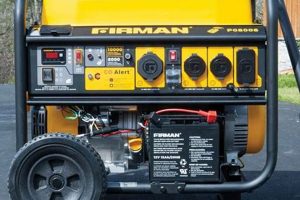
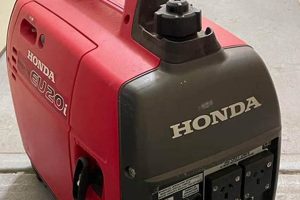
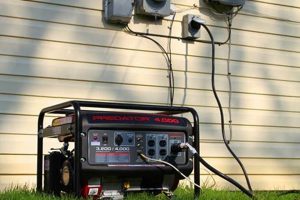
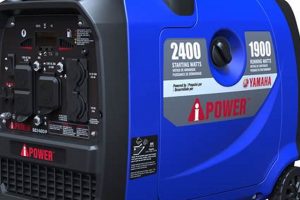
Matching a power source to a home’s needs involves careful consideration of various factors. This includes calculating the wattage required to run essential appliances and electronics during a power outage. For example, a smaller unit might suffice for powering a refrigerator, a few lights, and a furnace fan, while a larger capacity is necessary for running a central air conditioning system or multiple power tools simultaneously.
Choosing the correct capacity ensures uninterrupted operation of critical systems, prevents damage to sensitive electronics from power fluctuations, and provides peace of mind during emergencies. Historically, homeowners relied on noisy, less efficient gasoline-powered units, but technological advancements have led to quieter, more fuel-efficient options like inverter generators, expanding the practical applications and overall convenience. Understanding the power needs of a typical household has become increasingly important with the growing dependence on electronic devices and the rising frequency of extreme weather events.
Determining the appropriate unit capacity involves assessing individual household requirements, considering budgetary constraints, and evaluating available fuel types. The following sections will delve deeper into calculating power needs, exploring different generator types, and outlining key features to consider when making a purchase.
Tips for Selecting the Right Generator Capacity
Choosing the appropriate generator capacity is crucial for ensuring sufficient power during outages. Careful planning and consideration of power needs are essential for avoiding underpowering or overspending.
Tip 1: Calculate Power Requirements: Create a comprehensive list of essential appliances and devices, noting their wattage requirements. Sum these wattages to determine the minimum running watts needed.
Tip 2: Account for Starting Wattage: Appliances with electric motors, such as refrigerators and air conditioners, require a surge of power upon startup. Factor in the highest starting wattage of any single appliance to prevent overloading.
Tip 3: Consider Future Needs: Anticipate potential future appliance additions or changes in power consumption when selecting a unit. Opting for slightly higher capacity can provide flexibility for future needs.
Tip 4: Evaluate Fuel Options: Different fuel types offer various advantages and disadvantages. Gasoline is readily available but requires proper storage. Propane offers longer shelf life and cleaner emissions.
Tip 5: Prioritize Inverter Technology: Inverter generators produce cleaner power, ideal for sensitive electronics. They also adjust engine speed based on load, resulting in greater fuel efficiency.
Tip 6: Assess Noise Levels: Generators vary significantly in noise output. Consider quieter options, especially if living in close proximity to neighbors.
Tip 7: Research Run Time: Evaluate the run time at various loads. Longer run times offer extended operation during outages, reducing the need for frequent refueling.
Properly sizing a generator provides uninterrupted power for essential appliances and electronics, contributing to safety and comfort during outages. Investing time in planning and research ensures a reliable power source tailored to specific needs.
By following these tips, homeowners can confidently select a generator that meets their power requirements, budget, and desired features, ultimately ensuring peace of mind during unforeseen power disruptions. The next section will discuss maintenance and safety considerations.
1. Wattage Requirements

Accurately assessing wattage requirements is paramount when selecting a portable generator. Understanding power demands ensures the generator can handle the anticipated load during an outage, preventing overloads and ensuring the continuous operation of essential appliances and devices.
- Running Wattage
Running wattage represents the continuous power needed to operate appliances after they have started. For example, a refrigerator might require 150 running watts while a laptop might need 50. Calculating the sum of running watts for all intended devices provides the baseline power requirement for the generator.
- Starting Wattage (Surge Wattage)
Starting wattage, often significantly higher than running wattage, is the brief surge of power required to start appliances with electric motors. A refrigerator requiring 150 running watts might demand 600 starting watts. The generator must accommodate the highest starting wattage of any single appliance to prevent tripping the breaker during startup. Neglecting starting wattage can lead to an underpowered generator.
- Calculating Total Wattage Needs
Determining total wattage needs involves summing the running watts of all intended devices and factoring in the highest starting wattage of any single appliance. This calculation provides the minimum generator capacity necessary to power the desired load. Adding a safety margin of 20-30% to the calculated wattage is advisable to accommodate unforeseen power fluctuations or future appliance additions.
- Wattage and Generator Size
Wattage requirements directly correlate to generator size and cost. Higher wattage demands necessitate larger, more expensive generators. Accurately assessing needs helps avoid purchasing an oversized, unnecessarily expensive unit or an underpowered generator incapable of handling the required load. The generator’s rated wattage must exceed the calculated total wattage needs for reliable performance.
Precisely calculating wattage requirements ensures the selected portable generator adequately powers essential devices during a power outage. This careful consideration of power demands is critical for maximizing generator effectiveness and ensuring uninterrupted operation of critical systems during emergencies.
2. Fuel Type

Fuel type significantly influences portable generator selection for home use. Various fuel options offer distinct advantages and disadvantages, impacting generator size, runtime, cost, and environmental considerations. Understanding these trade-offs is crucial for selecting a generator that aligns with individual needs and circumstances.
Gasoline offers widespread availability and generally lower upfront generator costs. However, gasoline has a limited shelf life and requires proper storage to prevent degradation. Gasoline-powered generators tend to be more affordable in smaller sizes, suitable for powering essential appliances. Larger gasoline generators can provide substantial power output but consume fuel more quickly, requiring frequent refueling during extended outages. For example, a homeowner might choose a gasoline-powered generator for its affordability and ease of refueling during short-term outages, accepting the trade-off of more frequent refueling compared to other fuel types.
Propane offers a longer shelf life than gasoline, eliminating concerns about fuel degradation during storage. Propane also burns cleaner, producing fewer emissions. Propane-powered generators often come in larger sizes, suitable for whole-house power backup. While propane generators might have higher upfront costs, the extended runtime and cleaner emissions can be advantageous for longer outages. A homeowner anticipating frequent or prolonged outages might opt for a propane-powered generator for its extended runtime and cleaner operation, despite the higher initial investment.
Diesel offers excellent fuel efficiency and long engine life, making diesel-powered generators suitable for extended operation. However, diesel generators tend to be larger, heavier, and more expensive than gasoline or propane counterparts. Diesel also produces more noise and emissions compared to propane. A homeowner prioritizing long-term reliability and extended runtime during emergencies might choose a diesel-powered generator, accepting the trade-offs of higher cost, size, and noise levels. Choosing the appropriate fuel type requires careful consideration of power needs, outage duration expectations, budget, storage capabilities, and environmental impact. Each fuel type presents a unique set of advantages and disadvantages that influence the optimal generator size and overall suitability for a specific application.
3. Portability
Portability is a critical factor influencing the practicality and usability of generators for home use. Balancing power output with manageable size and weight is essential for convenient transport, storage, and deployment during power outages. Understanding the nuances of portability helps homeowners select a generator that aligns with their physical capabilities and storage limitations.
- Weight and Dimensions
The physical size and weight of a generator directly impact its portability. Smaller, lighter generators are easier to move and maneuver, while larger, heavier units might require assistance or specialized equipment for transport. A compact, lightweight generator proves advantageous for single individuals or those with limited physical strength. Conversely, homeowners comfortable handling heavier equipment might prioritize larger capacity over compact size. Weight and dimensions also influence storage requirements, with smaller generators occupying less space.
- Wheel Kits and Handles
Integrated wheel kits and ergonomic handles significantly enhance generator portability. Larger generators often incorporate wheel kits and handles to facilitate movement, compensating for increased weight. The presence and design of these features should be carefully considered, especially for heavier units. Features like never-flat wheels or telescoping handles further enhance portability and ease of use. For example, a homeowner with limited storage space might prioritize a generator with a compact, foldable handle design.
- Placement and Maneuverability
Portability influences generator placement during operation. Lighter generators offer greater flexibility in placement, allowing operation on decks, patios, or uneven terrain. Heavier generators might require a stable, level surface for safe and efficient operation. Maneuverability also affects ease of connecting the generator to the home’s electrical system. A more portable generator simplifies the connection process, especially in challenging or confined spaces.
- Transportation and Storage
Consideration of transport and storage requirements is crucial when assessing generator portability. Homeowners with limited storage space benefit from compact, easily stored generators. Transportation needs also influence generator selection. Those requiring frequent transport to different locations, such as recreational vehicles or remote cabins, prioritize smaller, lighter units. For instance, a homeowner with a small shed might opt for a compact, stackable generator to maximize storage space.
Portability significantly impacts the overall practicality and ease of use of a portable generator. Careful evaluation of weight, dimensions, and features like wheel kits and handles ensures homeowners select a generator that aligns with their physical capabilities, storage limitations, and intended usage scenarios. Balancing power output with manageable portability optimizes the generator’s effectiveness and ensures convenient deployment during power outages.
4. Noise Levels

Noise levels represent a crucial factor in portable generator selection for home use. Generator noise can disrupt daily life, irritate neighbors, and even violate local noise ordinances. Understanding the relationship between generator size, technology, and noise output enables informed decisions that balance power needs with peaceful operation.
- Decibel Ratings and Perceived Loudness
Decibel (dB) ratings quantify generator noise output. Lower dB ratings indicate quieter operation. Perceived loudness doubles approximately every 10 dB increase. A 70 dB generator is perceived as twice as loud as a 60 dB unit. Manufacturers typically provide dB ratings at a specific distance, usually 7 meters. Comparing dB ratings across different models aids in selecting a quieter generator. For instance, a homeowner living in a densely populated area might prioritize a generator with a lower dB rating to minimize noise disturbance to neighbors.
- Generator Technology and Noise Output
Generator technology significantly influences noise levels. Conventional generators typically operate at a fixed speed, resulting in consistent noise output regardless of load. Inverter generators adjust engine speed based on power demand, reducing noise during periods of lower power consumption. Inverter technology generally produces quieter operation compared to conventional generators, making them suitable for noise-sensitive environments. A homeowner prioritizing quiet operation might opt for an inverter generator, accepting the potential trade-off of higher cost for reduced noise.
- Enclosure Design and Noise Reduction
Generator enclosures play a crucial role in mitigating noise. Specially designed enclosures with sound-dampening materials absorb and deflect sound waves, reducing overall noise output. Some generators feature advanced muffler systems or strategically placed vents to minimize noise pollution. Evaluating enclosure design and noise reduction features contributes to selecting a quieter generator. A homeowner seeking enhanced noise reduction might prioritize a generator with a well-designed, sound-dampening enclosure.
- Placement and Noise Mitigation Strategies
Strategic generator placement further minimizes noise impact. Positioning the generator away from living areas and neighboring properties reduces noise disturbance. Placing the generator on a sound-absorbing surface, such as a rubber mat, further dampens noise. Constructing noise barriers or utilizing natural barriers like shrubs or fences can also mitigate noise propagation. Careful placement and thoughtful noise mitigation strategies enhance peaceful coexistence with a portable generator. For example, positioning a generator behind a shed or a dense hedge can significantly reduce noise reaching neighboring properties.
Noise levels significantly impact the suitability of a portable generator for home use. Careful consideration of dB ratings, generator technology, enclosure design, and placement strategies empowers homeowners to select a generator that balances power needs with acceptable noise output. Minimizing noise pollution contributes to a more peaceful environment for both the homeowner and the surrounding community. Choosing a quieter generator enhances the overall quality of life during power outages, fostering positive relationships with neighbors and ensuring compliance with local noise regulations.
5. Runtime

Runtime represents a crucial consideration when selecting a portable generator for home use. The duration a generator can operate on a single fuel tank directly impacts its practicality during extended power outages. Balancing power needs with desired runtime influences fuel tank capacity and overall generator size.
- Fuel Tank Capacity and Runtime
Fuel tank capacity directly correlates with runtime. Larger fuel tanks provide longer operation before refueling becomes necessary. A larger tank reduces the frequency of refueling, especially crucial during extended outages or when refueling is inconvenient or hazardous. However, larger tanks increase generator size and weight, impacting portability. For example, a generator with a 10-gallon fuel tank will typically run longer than a comparable model with a 5-gallon tank, assuming similar fuel consumption rates. Choosing an appropriate fuel tank size involves balancing desired runtime with practical considerations of generator size and weight.
- Load and Fuel Consumption
The load placed on the generator significantly influences fuel consumption and, consequently, runtime. Higher power demands result in increased fuel consumption, reducing runtime. Operating the generator at a lower load extends runtime. Understanding the relationship between load and fuel consumption aids in accurately estimating runtime under various operating conditions. For instance, powering only essential appliances like a refrigerator and a few lights will consume less fuel and extend runtime compared to powering an entire house, including energy-intensive appliances like air conditioners.
- Fuel Efficiency and Runtime
Generator fuel efficiency plays a vital role in determining runtime. More fuel-efficient generators extract more energy from the same amount of fuel, extending runtime. Inverter generators generally offer better fuel efficiency compared to conventional generators, particularly at lower loads. Inverter technology adjusts engine speed based on demand, optimizing fuel consumption. Choosing a fuel-efficient generator maximizes runtime and minimizes fuel costs during extended operation. For example, an inverter generator running at 25% load might offer significantly longer runtime compared to a conventional generator operating at the same load.
- Runtime and Outage Duration Expectations
Anticipated outage duration significantly influences the importance of runtime. For short-term outages, a generator with a shorter runtime might suffice. However, during extended outages, longer runtime becomes crucial for maintaining essential services and comfort. Assessing historical outage data and considering potential future scenarios helps determine the desired runtime for a portable generator. A homeowner living in an area prone to prolonged power outages due to severe weather might prioritize a generator with a longer runtime to ensure continued operation of critical systems.
Runtime directly impacts the practical utility of a portable generator during power outages. Balancing fuel tank capacity, load management, fuel efficiency, and anticipated outage duration guides the selection of a generator that meets specific power needs and provides adequate runtime to ensure continued operation of essential appliances and devices. Understanding the interplay of these factors optimizes generator performance and provides peace of mind during unforeseen power disruptions. Careful consideration of runtime ensures uninterrupted power for essential needs, enhancing safety and comfort during outages.
Frequently Asked Questions
Addressing common inquiries regarding appropriate generator capacity for residential applications clarifies crucial aspects of power provision during outages. Understanding these frequently asked questions empowers homeowners to make informed decisions, ensuring adequate power for essential needs.
Question 1: How is the necessary generator size determined for a specific house?
Determining the appropriate generator size requires calculating the total wattage of essential appliances and devices intended for use during an outage. This includes both running wattage and starting wattage, with the latter often significantly higher for appliances with electric motors. A safety margin of 20-30% is recommended to accommodate unforeseen power fluctuations.
Question 2: What are the implications of selecting an undersized or oversized generator?
An undersized generator risks overloads, potentially damaging appliances and the generator itself. An oversized generator consumes more fuel than necessary, increasing operating costs. Precisely matching generator capacity to power requirements optimizes performance and efficiency.
Question 3: What role does fuel type play in generator selection?
Fuel type influences generator runtime, storage requirements, and environmental impact. Gasoline offers widespread availability but degrades over time. Propane offers longer shelf life and cleaner emissions. Diesel provides high efficiency but typically comes in larger, more expensive units. Choosing the appropriate fuel type depends on individual needs and priorities.
Question 4: How do inverter generators differ from conventional generators?
Inverter generators produce cleaner power, ideal for sensitive electronics. They also adjust engine speed based on load, leading to greater fuel efficiency and quieter operation compared to conventional generators. However, inverter generators typically come at a higher price point.
Question 5: What safety considerations are associated with portable generator operation?
Safe generator operation requires proper ventilation to prevent carbon monoxide poisoning. Generators should never be operated indoors or in enclosed spaces. Connecting a generator directly to household wiring requires a transfer switch installed by a qualified electrician to prevent backfeeding, which poses a serious danger to utility workers.
Question 6: How does generator maintenance impact its longevity and performance?
Regular maintenance, including oil changes, air filter cleaning, and spark plug replacement, ensures optimal generator performance and prolongs its lifespan. Following manufacturer recommendations for maintenance intervals is essential for reliable operation during emergencies.
Understanding these key aspects of generator selection and operation ensures homeowners can choose the correct unit size, fuel type, and operational procedures to meet their specific power needs while prioritizing safety and efficiency.
For further guidance on selecting and operating a portable generator, consult resources like consumer reports, manufacturer specifications, and qualified electricians. The next section delves into specific generator models and comparisons.
Conclusion
Careful consideration of power requirements, fuel type, portability, noise levels, and runtime is essential when selecting a portable generator. Accurately assessing wattage needs, including both running and starting wattage, prevents overloads and ensures sufficient power for essential appliances during outages. Evaluating fuel options involves balancing availability, cost, storage requirements, and environmental impact. Portability considerations influence ease of use and storage. Minimizing noise levels through technology choices and strategic placement enhances peaceful operation. Understanding runtime expectations relative to anticipated outage durations ensures uninterrupted power for critical systems. Each factor plays a crucial role in determining the optimal portable generator size for a specific residence.
Investing time in research and planning empowers informed decisions, ensuring a reliable power source tailored to individual needs and circumstances. A properly sized portable generator provides essential backup power during outages, safeguarding comfort, safety, and peace of mind. Proactive generator selection transforms a potential crisis into a manageable inconvenience, contributing to resilience and preparedness in the face of power disruptions.