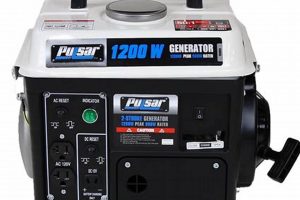
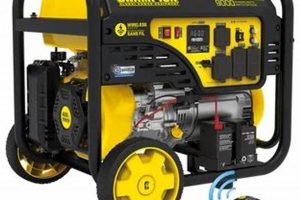
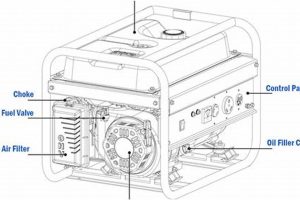
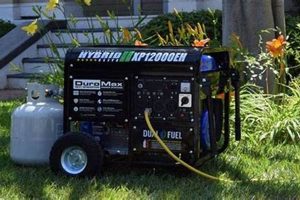
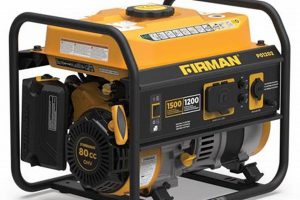
The amount of fuel a portable generator uses over a given period is a crucial factor for users. This usage, typically measured in gallons per hour (GPH) or liters per hour (LPH), depends on factors such as the generator’s size, load, and engine efficiency. For instance, a small generator powering a few essential appliances will consume less fuel than a larger generator running at full capacity.
Understanding fuel usage is essential for budgeting operational costs, planning for extended outages, and minimizing environmental impact. Historically, generator efficiency has steadily improved, leading to lower fuel consumption for comparable power output. This progress is driven by advancements in engine technology and a growing focus on sustainable energy solutions.
The following sections will delve deeper into the factors influencing a generator’s fuel usage, offering practical tips for maximizing efficiency and minimizing expenses. Topics covered will include load management, proper maintenance, and the different fuel types available for portable generators.
Tips for Efficient Fuel Use
Optimizing fuel efficiency in portable generators involves understanding operational practices and applying appropriate strategies. The following tips offer practical guidance for minimizing fuel usage without compromising power needs.
Tip 1: Right-Size the Generator: Selecting a generator that appropriately matches power requirements is crucial. Overly large generators consume more fuel even when operating below capacity. Accurately assess power needs before purchasing or renting a generator.
Tip 2: Operate at Optimal Load: Generators typically achieve peak efficiency at around 75% of their rated capacity. Avoid consistently running the generator at maximum load. Distributing power usage across time can also help optimize efficiency.
Tip 3: Regular Maintenance: A well-maintained generator operates more efficiently. Adhere to the manufacturers recommended maintenance schedule, including oil changes, air filter replacements, and spark plug inspections.
Tip 4: Use the Economy Mode (if available): Many modern generators feature an “eco” or “economy” mode. This setting adjusts engine speed based on the load, reducing fuel consumption during periods of lower power demand.
Tip 5: Fuel Quality Matters: Use fresh, clean fuel of the recommended octane rating. Stale or contaminated fuel can negatively impact engine performance and fuel efficiency.
Tip 6: Minimize Idle Time: Avoid letting the generator run unnecessarily. Turn it off when not in use to conserve fuel.
Tip 7: Proper Storage: When storing the generator for extended periods, follow manufacturer recommendations for fuel stabilization and storage procedures. This helps prevent fuel degradation and ensures optimal performance upon restarting.
By implementing these strategies, users can significantly reduce fuel consumption, extending run times and minimizing operating costs. This results in more efficient and sustainable power generation.
These practical tips provide a foundation for maximizing the efficiency of portable generators. The concluding section will reiterate key takeaways and emphasize the broader implications of responsible generator usage.
1. Generator Size

Generator size is intrinsically linked to fuel consumption. Larger generators, while capable of powering more devices, inherently consume more fuel than smaller units. Understanding this relationship is crucial for selecting the right generator for specific needs and managing operating costs.
- Wattage and Fuel Consumption:
A generator’s wattage rating indicates its power output capacity. Higher wattage generators, designed for heavier loads, demand more fuel. A 10,000-watt generator will invariably consume more fuel per hour than a 2,000-watt generator, even under no load. This baseline fuel consumption increases proportionally with the load applied.
- Engine Displacement and Fuel Demand:
Engine displacement, often measured in cubic centimeters (cc) or liters (L), directly correlates with fuel consumption. Larger engines, necessary for higher wattage generators, require more fuel to operate. This relationship is fundamental to internal combustion engine principles.
- Load Capacity and Efficiency:
While larger generators consume more fuel overall, they often operate more efficiently at higher loads compared to smaller generators struggling to meet similar demands. Matching the generator size to the anticipated load is critical for optimal fuel efficiency. Oversizing a generator for a small load can lead to inefficient fuel usage.
- Practical Implications for Selection:
Choosing the appropriate generator size involves balancing power needs with fuel efficiency goals. Accurately assessing the required wattage and anticipated runtime is essential for minimizing unnecessary fuel consumption. Opting for a slightly larger generator than immediately necessary provides a safety margin but should be weighed against the increased fuel costs.
Careful consideration of generator size relative to power requirements is paramount for responsible and cost-effective operation. Selecting a generator that is too large results in excessive fuel consumption, while selecting one that is too small risks overloading and potential damage. A balanced approach ensures optimal performance and minimizes fuel usage.
2. Load

Load, representing the amount of power drawn from a portable generator, directly influences fuel consumption. This relationship is fundamental to understanding and managing operating costs. Increased load results in higher fuel consumption; conversely, decreased load leads to lower fuel consumption. This principle stems from the generator’s engine having to work harder to produce more power, thus requiring more fuel. For example, a generator powering a single lightbulb consumes significantly less fuel than the same generator powering multiple appliances and power tools. The wattage of each connected device contributes to the total load, cumulatively impacting the generator’s fuel demand.
Understanding the load-consumption dynamic is crucial for optimizing generator efficiency. Operating a generator consistently at its maximum rated load results in higher fuel consumption and increased wear and tear. Conversely, under-loading a generator, while reducing fuel consumption, may not be the most efficient use in terms of fuel efficiency per watt generated. Generators typically operate most efficiently at around 75% of their rated capacity. Practical applications of this principle include prioritizing essential appliances during power outages and staggering usage to avoid peak loads. For instance, running a refrigerator and a few lights simultaneously places a smaller load on the generator than running these items concurrently with a microwave or a space heater. Strategically managing the load minimizes fuel consumption and extends the generator’s operational lifespan.
Effective load management is central to efficient portable generator operation. Recognizing the direct correlation between load and fuel consumption allows users to make informed decisions about power usage during outages or off-grid activities. This awareness translates to practical strategies for minimizing fuel costs and maximizing the generator’s operational life, thereby contributing to a more sustainable and economical approach to power generation.
3. Runtime
Runtime, signifying the duration a portable generator operates continuously, is inextricably linked to fuel consumption. Longer runtimes necessitate greater fuel volumes, directly impacting operational costs and logistical considerations. Understanding this relationship is crucial for efficient generator management and preparedness during extended power outages.
- Fuel Tank Capacity and Runtime:
The generator’s fuel tank capacity dictates the maximum potential runtime. Larger tanks allow for extended operation without refueling, but also contribute to the unit’s size and weight. A larger tank does not inherently equate to lower fuel consumption; it simply allows for longer operation before refueling is necessary. Calculating estimated runtime based on tank capacity and estimated fuel consumption rate is essential for planning extended usage.
- Load and Runtime Interplay:
The load placed on the generator significantly impacts runtime. Higher loads demand increased fuel consumption, thereby reducing the runtime for a given fuel tank capacity. Conversely, lighter loads extend the potential runtime. This dynamic highlights the importance of load management for maximizing runtime, particularly during extended power outages. Prioritizing essential appliances and staggering usage can significantly extend the operational duration on a single tank of fuel.
- Fuel Efficiency and Extended Runtimes:
A generator’s fuel efficiency, often expressed in gallons per hour (GPH) or liters per hour (LPH), plays a crucial role in determining runtime. More fuel-efficient generators can operate for longer periods on the same amount of fuel compared to less efficient models. Investing in a fuel-efficient generator can significantly extend runtime, reducing the frequency of refueling and minimizing operational costs.
- Practical Planning for Extended Operation:
Planning for extended runtimes involves considering fuel storage and availability. Storing adequate fuel reserves, while adhering to safety guidelines, ensures uninterrupted operation during prolonged outages. Accurately estimating fuel needs based on anticipated load and desired runtime allows for proactive planning and avoids disruptions. This preparation is particularly critical in emergency situations or off-grid scenarios.
Runtime considerations are essential for effective portable generator management. Balancing load demands, fuel tank capacity, and fuel efficiency optimizes runtime and minimizes operational costs. Careful planning and prudent fuel management ensure reliable power generation during extended outages or off-grid operations, enhancing preparedness and operational sustainability.
4. Fuel Type

The type of fuel a portable generator uses significantly impacts its operational costs, environmental footprint, and maintenance requirements. Selecting the appropriate fuel type requires careful consideration of these factors alongside practical aspects like availability and storage.
- Gasoline:
Gasoline is the most common fuel for portable generators, offering wide availability and generally lower upfront generator costs. However, gasoline has a limited shelf life and requires proper storage to prevent degradation. Its combustion produces emissions that contribute to air pollution. Gasoline-powered generators typically offer a balance between cost, convenience, and performance.
- Propane:
Propane offers a cleaner-burning alternative to gasoline, producing fewer emissions. It also has a longer shelf life, reducing storage concerns. Propane-powered generators often require a separate propane tank, adding to the overall cost and logistical considerations. While propane might offer environmental advantages, its availability can be less consistent than gasoline, particularly in remote areas.
- Diesel:
Diesel-powered generators are known for their durability and fuel efficiency, particularly under heavy loads. Diesel fuel has a longer shelf life than gasoline and provides higher energy density, leading to longer runtimes for the same fuel volume. However, diesel generators tend to have higher initial purchase costs and can produce more noise and vibration.
- Dual Fuel/Tri-Fuel:
Dual-fuel or tri-fuel generators offer flexibility by operating on multiple fuel types, typically gasoline and propane, or gasoline, propane, and natural gas. This versatility allows users to adapt to fuel availability and price fluctuations. While offering adaptability, these generators can be more complex mechanically, potentially increasing maintenance requirements.
The choice of fuel type significantly influences a portable generator’s operational characteristics and cost-effectiveness. Matching the fuel type to specific needs and circumstances ensures optimal performance and minimizes environmental impact. Factors such as runtime requirements, fuel availability, budget constraints, and environmental concerns should all be considered when selecting the appropriate fuel type for a portable generator. Understanding the nuances of each fuel type empowers users to make informed decisions and maximize the efficiency and utility of their portable generators.
5. Efficiency
Efficiency, in the context of portable generator fuel consumption, represents the ratio of power output to fuel input. A highly efficient generator converts a greater percentage of its fuel energy into usable electricity, minimizing waste and reducing operational costs. This relationship has significant practical implications, influencing both the environmental and economic impact of generator usage. For instance, two generators with identical power output ratings can exhibit different fuel consumption rates due to variations in engine design and overall system efficiency. A more efficient generator will consume less fuel to produce the same amount of power, resulting in lower operating costs and reduced emissions. This translates directly into tangible savings over extended runtimes, particularly during prolonged power outages or off-grid applications.
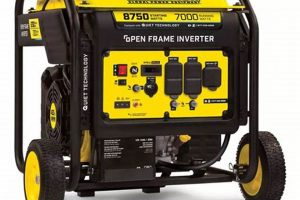
Several factors contribute to a generator’s efficiency. Engine design plays a crucial role, with advancements like inverter technology significantly improving fuel efficiency compared to traditional generator designs. Operating the generator at its optimal load, typically around 75% of rated capacity, also maximizes efficiency. Regular maintenance, including clean air filters and fresh oil, ensures the engine operates at peak performance, further contributing to efficient fuel utilization. Overloading a generator forces the engine to work harder, reducing efficiency and potentially shortening its lifespan. Conversely, under-loading, while consuming less fuel, may not be the most efficient use of the generator’s capacity. Real-world applications highlight the importance of efficiency; a homeowner using a fuel-efficient generator during a power outage will experience lower fuel costs and extended runtimes compared to using a less efficient model. Similarly, professionals relying on portable generators for work benefit from reduced fuel expenses and increased operational efficiency.
Understanding and prioritizing efficiency in portable generator selection and operation are essential for sustainable and cost-effective power generation. Choosing a fuel-efficient model and adhering to proper maintenance practices minimizes both environmental impact and operational expenses. This awareness empowers users to make informed decisions about generator usage, maximizing the return on investment while contributing to responsible resource management. The ongoing development of more efficient generator technologies underscores the importance of this factor in the future of portable power solutions.
Frequently Asked Questions about Fuel Consumption
This section addresses common inquiries regarding portable generator fuel consumption, providing concise and informative responses.
Question 1: How is portable generator fuel consumption measured?
Fuel consumption is typically measured in gallons per hour (GPH) or liters per hour (LPH) and is influenced by factors like load and generator size.
Question 2: What factors influence a portable generator’s fuel consumption rate?
Key factors include the size of the generator, the load it powers, the efficiency of the engine, and the chosen fuel type. Ambient temperature can also play a role.
Question 3: How can one estimate the runtime of a portable generator based on fuel consumption?
Runtime can be estimated by dividing the generator’s fuel tank capacity by its fuel consumption rate at a given load. This provides an approximate duration of operation on a single tank.
Question 4: Does operating a generator at a lower load always result in proportional fuel savings?
While lower loads generally consume less fuel, generators often have an optimal operating load (typically around 75% of capacity) where fuel efficiency is maximized.
Question 5: How does fuel type impact a portable generator’s operating cost and environmental impact?
Different fuel types (gasoline, propane, diesel) have varying costs, energy densities, and emission profiles. These factors influence both the financial and environmental implications of generator usage.
Question 6: What maintenance practices can improve a portable generator’s fuel efficiency?
Regular maintenance, including clean air filters, fresh oil, and spark plug inspection, ensures optimal engine performance, contributing to efficient fuel utilization.
Understanding these factors empowers users to make informed decisions about generator operation, maximizing efficiency and minimizing costs. Careful consideration of load management, fuel type selection, and regular maintenance are essential for responsible and sustainable portable generator usage.
For further information on specific generator models and their respective fuel consumption rates, consult manufacturer specifications and operational guidelines.
Portable Generator Gas Consumption
This exploration of portable generator gas consumption has highlighted its multifaceted nature. Factors influencing fuel usage, including generator size, load, runtime, fuel type, and efficiency, have been examined. Strategies for optimizing fuel consumption, such as load management and regular maintenance, underscore the potential for responsible and cost-effective operation. Understanding the interplay of these elements is crucial for maximizing the utility and lifespan of portable generators.
Portable generator gas consumption remains a critical consideration in both emergency preparedness and off-grid power solutions. As technology advances and fuel efficiency improves, informed decision-making regarding generator selection and operation becomes increasingly vital for sustainable and economical power generation. Careful consideration of fuel consumption empowers users to minimize environmental impact while maximizing the benefits of portable power.