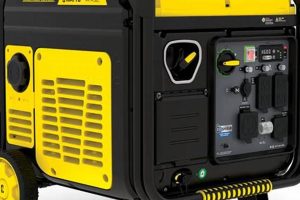
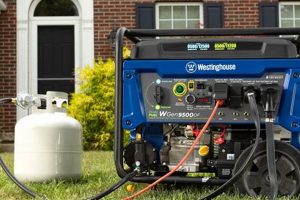
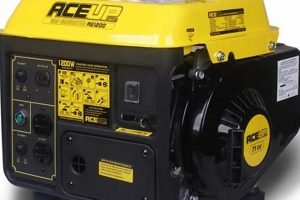
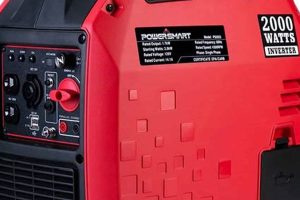
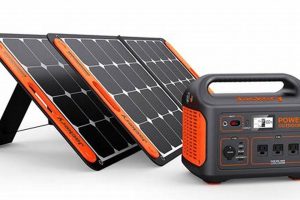
High-capacity portable generators designed for residential use represent the peak of mobile power generation. These units typically offer the highest wattage output available in a portable format, enabling them to power multiple appliances and critical systems during outages or off-grid situations. For example, a large portable generator might be capable of running a refrigerator, air conditioner, sump pump, and several lights simultaneously. This capability distinguishes them from smaller portable generators intended for camping or powering a few essential devices.
Access to substantial portable power offers significant advantages in various scenarios. During prolonged power outages caused by severe weather, a robust power source can maintain essential household functions, ensuring comfort and safety. These units also provide power for remote locations or construction sites lacking grid access. The increasing demand for reliable backup power and the growing popularity of off-grid living have contributed to the development and refinement of these high-output portable generators.
Understanding the power requirements of a household, the various fuel options available, and the safety considerations associated with operating these powerful generators is crucial. Further exploration of these topics will provide consumers with the knowledge necessary to select the most appropriate generator for their specific needs.
Tips for Selecting a High-Capacity Portable Generator
Choosing a high-capacity portable generator requires careful consideration of several factors to ensure the unit meets specific power needs and operates safely and efficiently. The following tips offer guidance through the selection process.
Tip 1: Calculate Power Requirements: Determine the wattage required to run essential appliances and devices. Add the wattage of each item to arrive at a total power requirement. Choose a generator with a running wattage output exceeding this calculated value.
Tip 2: Consider Starting Wattage: Appliances with electric motors, such as refrigerators and air conditioners, require a surge of power upon startup. The generator’s starting wattage must accommodate these surges to prevent overloading.
Tip 3: Evaluate Fuel Options: Generators typically operate on gasoline, propane, or diesel. Each fuel type has advantages and disadvantages related to cost, availability, and storage. Consider these factors when selecting a fuel source.
Tip 4: Assess Runtime: Generators offer varying runtimes depending on fuel tank capacity and load. Select a generator with a runtime suitable for anticipated outage durations or operational needs.
Tip 5: Prioritize Safety Features: Look for safety features such as automatic shut-off for low oil levels and overload protection to prevent damage to the generator and connected appliances.
Tip 6: Explore Inverter Technology: Inverter generators produce cleaner power, making them suitable for sensitive electronics. They also tend to be quieter and more fuel-efficient than conventional generators.
Tip 7: Consider Portability Features: Evaluate features such as wheel kits, handles, and overall weight to ensure the generator can be easily moved and positioned.
Careful consideration of these factors will facilitate the selection of a high-capacity portable generator capable of providing reliable power when and where it is needed.
By understanding power requirements, fuel options, and safety features, consumers can make informed decisions, ensuring their chosen generator provides dependable performance and peace of mind.
1. Power Output (Wattage)

Power output, measured in watts, represents a critical factor when selecting a portable generator, especially for home use. Determining the appropriate wattage necessitates careful consideration of the intended load. Understanding wattage requirements is fundamental to ensuring the generator can adequately power the desired appliances and devices during a power outage or in off-grid scenarios. This section explores the nuances of power output concerning portable generator selection.
- Running Wattage
Running wattage, also known as continuous wattage, refers to the amount of power a generator can consistently produce over an extended period. This value dictates the generator’s capacity to sustain the operation of connected devices. For instance, a refrigerator might require a running wattage of 700 watts, while a sump pump could demand 1,000 watts. Accurately calculating the combined running wattage of all intended appliances is crucial for preventing generator overload.
- Starting Wattage
Starting wattage, or surge wattage, signifies the brief surge of power required to start appliances with electric motors. This value typically exceeds the running wattage, sometimes significantly. A refrigerator requiring 700 running watts might demand a starting wattage of 2,100 watts. Ignoring starting wattage requirements can lead to insufficient power delivery, preventing appliances from starting and potentially damaging the generator.
- Total Wattage Requirements
Determining total wattage requirements involves summing the running wattages of all intended appliances and factoring in the highest starting wattage among them. This calculation ensures the generator possesses sufficient capacity to handle both continuous operation and startup surges. For example, a household aiming to power a refrigerator (700 running watts, 2,100 starting watts), a sump pump (1,000 running watts, 1,500 starting watts), and several lights (200 running watts) would require a generator with a minimum running wattage of 1,900 and a starting wattage of at least 2,100.
- Relationship to Generator Size and Cost
Wattage directly correlates with generator size and cost. Higher wattage generators tend to be larger, heavier, and more expensive. Selecting a generator with excessive wattage adds unnecessary cost and bulk, while selecting a generator with insufficient wattage limits functionality. Careful assessment of power requirements optimizes generator selection, balancing cost and capability. Evaluating power needs carefully leads to a cost-effective and appropriately sized generator, ensuring sufficient power without unnecessary expense.
Understanding these aspects of power output enables informed decisions regarding generator selection. Matching the generator’s wattage capacity to the intended load ensures reliable power delivery, preventing overloads and maximizing efficiency. A thorough wattage assessment is essential for selecting a portable generator capable of meeting specific home power needs.
2. Fuel Type

Fuel type significantly influences the practicality and suitability of high-capacity portable generators for home use. Several fuel options exist, each presenting distinct advantages and disadvantages that must be carefully weighed against specific needs and circumstances. The interplay between fuel type, generator performance, and logistical considerations warrants detailed examination.
Gasoline: Gasoline offers widespread availability and facilitates quick starting. However, gasoline storage poses safety concerns due to flammability and degradation over time. Larger gasoline-powered generators consume fuel relatively quickly, necessitating frequent refueling during extended operation. This can be inconvenient during emergencies.
Propane: Propane offers longer shelf life than gasoline and burns cleaner, reducing emissions. Propane-powered generators typically operate more quietly than gasoline counterparts. However, propane requires larger, heavier tanks, potentially affecting portability. Propane availability might be limited during widespread emergencies.
Diesel: Diesel offers excellent fuel efficiency and extended runtimes, making it suitable for prolonged operation. Diesel-powered generators are known for their durability and reliability. However, diesel engines can be more expensive initially and produce higher noise levels compared to other fuel types.
Dual Fuel/Tri-Fuel: Some generators offer dual-fuel or tri-fuel capabilities, allowing operation on gasoline, propane, or a combination of both. This flexibility enhances fuel source adaptability based on availability. However, dual-fuel/tri-fuel generators might require specific conversion kits or adjustments for optimal performance on different fuels.
Fuel type selection directly impacts generator performance, operational costs, and logistical planning. Gasoline’s availability contrasts with its storage limitations. Propane offers cleaner burning but potentially reduced accessibility. Diesel provides efficiency and durability but at a higher initial cost. Dual fuel/tri-fuel offers adaptability but might entail operational adjustments. Careful consideration of these factors ensures selection of the most appropriate fuel type based on individual needs and anticipated usage scenarios. Choosing the right fuel type contributes significantly to the overall effectiveness and practicality of a high-capacity portable generator for home use.
3. Portability

Portability represents a defining characteristic of generators intended for home use, particularly those categorized as “largest.” While prioritizing maximum power output, portability limitations impose practical constraints. The largest portable generators, while mobile, require significant effort to transport and maneuver. This necessitates careful consideration of physical dimensions, weight, and incorporated mobility features. For instance, integrated wheel kits and sturdy handles become essential for relocating these substantial power sources. The trade-off between power and portability manifests in the physical footprint and weight of these units. Users must evaluate pathways, storage locations, and potential lifting requirements before selecting a high-capacity portable generator.
Maneuverability within a property also influences generator placement during operation. Exhaust fumes necessitate positioning away from windows and air intakes, while cable reach determines proximity to the powered appliances. Heavier, larger generators often possess less flexibility in placement due to their size and the effort required for relocation. In contrast, slightly smaller, lighter models might offer greater placement versatility, despite a potentially reduced power output. Practical considerations such as ground stability and protection from the elements further restrict placement options. Understanding these limitations enables informed decisions regarding generator size and placement strategy, optimizing power delivery while maintaining safe and practical operation.
Ultimately, portability within the context of large portable generators represents a compromise between power capacity and manageable mobility. Effective portability requires evaluating not only stated weight and dimensions but also practical handling characteristics. Users must anticipate transportation challenges, storage constraints, and operational placement limitations. This holistic perspective on portability ensures the chosen generator aligns with real-world usage scenarios, facilitating effective power delivery without sacrificing practical maneuverability within a home environment.
4. Runtime

Runtime, denoting the duration a generator can operate continuously on a single fuel tank, represents a critical factor influencing the practicality of high-capacity portable generators for home use. Extended power outages necessitate sustained operation, making runtime a primary concern. Understanding the factors affecting runtime and their implications for generator selection is crucial for ensuring uninterrupted power delivery during critical situations.
- Fuel Tank Capacity:
Fuel tank capacity directly correlates with potential runtime. Larger tanks hold more fuel, enabling longer operation before refueling. However, increased tank size contributes to greater generator weight and footprint. A balance must be struck between desired runtime and manageable portability. For example, a larger fuel tank might provide a 24-hour runtime but limit portability, while a smaller tank offering an 8-hour runtime enhances maneuverability. The choice depends on the anticipated duration of power outages and the feasibility of refueling.
- Load:
The connected load significantly impacts runtime. Higher power demands deplete fuel more rapidly, shortening the operational duration. Operating a generator at full capacity significantly reduces runtime compared to partial load operation. For instance, powering essential appliances like a refrigerator and a few lights might yield a longer runtime than simultaneously running power-hungry devices like air conditioners and electric heaters. Careful load management optimizes runtime.
- Fuel Efficiency:
Generator engines vary in fuel efficiency. More efficient engines extract more power from a given amount of fuel, extending runtime. Factors like engine design and technology influence fuel efficiency. Inverter generators generally offer better fuel efficiency compared to conventional generators, leading to longer runtimes under similar load conditions. Prioritizing fuel efficiency maximizes operational duration, especially crucial during prolonged outages.
- Fuel Type:
The choice of fuel type (gasoline, propane, diesel) also affects runtime. Diesel typically offers the longest runtime due to its higher energy density. Propane offers a reasonable balance between runtime and storage stability, while gasoline, despite its widespread availability, generally provides shorter runtimes. Fuel type selection should consider runtime requirements alongside availability and storage considerations. Choosing the right fuel type optimizes runtime and ensures fuel accessibility.
These interconnected factors highlight the complexity of runtime considerations for high-capacity portable generators. Balancing fuel tank capacity, load management, fuel efficiency, and fuel type is essential for maximizing operational duration. Understanding these elements empowers informed decisions, ensuring the selected generator meets power delivery needs throughout the anticipated outage duration, contributing significantly to preparedness and peace of mind during critical situations.
5. Noise Level
Noise level represents a significant consideration when selecting a high-capacity portable generator for home use. These generators, by nature of their power output, produce noticeable operational noise. This noise can disrupt household activities, disturb neighbors, and even violate local noise ordinances. Understanding the factors influencing generator noise and the strategies for mitigation is essential for responsible and considerate operation.
Several factors contribute to generator noise. Engine size and type directly influence noise output; larger, more powerful engines generally produce higher decibel levels. Engine speed also plays a role; generators running at higher RPMs tend to be louder. Exhaust systems and generator housing design contribute to noise attenuation or amplification. For example, generators equipped with mufflers and sound-dampening enclosures operate more quietly than those lacking such features. Furthermore, the generator’s load impacts noise; operating at full capacity typically increases noise output compared to partial load operation. Locating the generator on a solid, level surface minimizes vibrations and associated noise.
Practical implications of generator noise extend beyond mere inconvenience. Prolonged exposure to high noise levels can cause hearing damage and stress. Excessive noise can also strain neighborly relations and lead to noise complaints or even legal action in noise-sensitive areas. Therefore, noise mitigation strategies become crucial. Selecting a generator with lower decibel ratings, utilizing sound-dampening enclosures or baffles, positioning the generator away from living spaces and neighboring properties, and adhering to recommended operating guidelines contribute significantly to noise reduction. Careful consideration of noise level during generator selection and implementation of appropriate mitigation strategies ensures responsible and considerate operation, minimizing disruption and fostering a harmonious environment.
6. Safety Features
Safety features represent critical components of high-capacity portable generators, especially concerning home use. Given the substantial power output of these units, potential hazards necessitate robust safety mechanisms to protect users, connected appliances, and the surrounding environment. Careful consideration of integrated safety features is paramount during generator selection, ensuring safe and reliable operation.
- Low-Oil Shutdown:
Low oil levels can cause severe engine damage. Low-oil shutdown automatically stops the engine when oil levels drop below a critical threshold, preventing catastrophic failure. This feature safeguards the generator’s longevity and prevents costly repairs. For instance, during extended operation, oil consumption might gradually deplete reserves. Low-oil shutdown intervenes, preventing damage and ensuring continued safe operation.
- Overload Protection:
Overloading occurs when the connected load exceeds the generator’s rated output. Overload protection mechanisms, such as circuit breakers, automatically interrupt power delivery when overload conditions arise. This prevents damage to the generator’s electrical components and safeguards connected appliances from power surges. For example, attempting to run too many high-wattage appliances simultaneously triggers overload protection, preventing potential electrical fires or equipment damage.
- Carbon Monoxide (CO) Detectors/Shutoff:
Generators produce carbon monoxide, a colorless, odorless, and highly toxic gas. CO detectors integrated into portable generators monitor CO levels during operation. If dangerous CO concentrations are detected, the generator automatically shuts down, preventing potential CO poisoning. This critical safety feature is especially important for generators operated in enclosed spaces or near occupied areas.
- Ground Fault Circuit Interrupter (GFCI) Outlets:
GFCI outlets protect against electrical shock. If a ground fault occurs, meaning electricity flows along an unintended path, the GFCI outlet immediately interrupts power. This feature is particularly important for outdoor use or in environments where moisture might present a shock hazard. For instance, using a generator during rain or near a pool necessitates GFCI outlets to minimize shock risks.
These safety features represent essential considerations when selecting a high-capacity portable generator for home use. Prioritizing generators equipped with robust safety mechanisms ensures user safety, protects connected appliances, and mitigates potential environmental hazards. Investing in a generator with comprehensive safety features offers peace of mind and contributes to responsible and reliable power generation.
7. Outlet Options
Outlet options directly influence the practicality and versatility of high-capacity portable generators, particularly within a home context. The variety and configuration of outlets dictate which appliances and devices can be powered simultaneously and efficiently. Understanding outlet options and their implications for power distribution is crucial for maximizing generator utility.
The number of outlets available determines how many devices can connect directly to the generator. A higher outlet count reduces the need for extension cords and power strips, minimizing potential trip hazards and simplifying power distribution. Outlet type variety further enhances versatility. Standard household outlets (120V) accommodate most common appliances, while dedicated higher-voltage outlets (240V) support power-hungry devices like well pumps or electric ranges. The inclusion of USB ports provides convenient charging capabilities for electronic devices. For example, a generator equipped with multiple 120V outlets, a 240V outlet, and USB ports offers comprehensive power delivery options for diverse devices, from refrigerators and power tools to smartphones and tablets.
Outlet configuration and placement also impact usability. Well-spaced outlets prevent overcrowding and simplify cable management. Covered outlets enhance weather resistance, crucial for outdoor generator operation. Clearly labeled outlets indicating voltage and amperage facilitate safe and appropriate connection of devices. Furthermore, some generators offer twist-lock outlets for secure connections in demanding environments. Careful consideration of these outlet options ensures compatibility with intended loads, streamlines power distribution, and promotes safe operation. Selecting a generator with appropriate outlet options maximizes its value as a reliable power source, meeting diverse power needs effectively.
Frequently Asked Questions
Addressing common inquiries regarding high-capacity portable generators for home use clarifies crucial aspects of selection, operation, and maintenance. These responses provide essential information for informed decision-making.
Question 1: How is generator size determined for home use?
Generator size selection hinges on calculating the total wattage required to power essential appliances. Summing individual appliance wattages yields the minimum generator capacity needed. Incorporating the highest starting wattage among those appliances ensures sufficient power for startup surges.
Question 2: What are the key distinctions between conventional and inverter generators?
Conventional generators produce raw power, while inverter generators refine the output to cleaner, more stable electricity suitable for sensitive electronics. Inverter generators also offer superior fuel efficiency and quieter operation.
Question 3: What safety precautions are essential during generator operation?
Operating a generator outdoors in a well-ventilated area is paramount to prevent carbon monoxide poisoning. Keeping flammable materials away from the generator minimizes fire hazards. Proper grounding procedures protect against electrical shock.
Question 4: How frequently should generator maintenance be performed?
Regular maintenance, including oil changes, air filter cleaning, and spark plug replacement, ensures optimal generator performance and longevity. Adhering to the manufacturer’s recommended maintenance schedule is essential.
Question 5: What fuel storage best practices apply to portable generators?
Storing fuel in approved containers, away from ignition sources and in a well-ventilated area, is crucial for safety. Rotating fuel stock prevents degradation and ensures reliable starting.
Question 6: What considerations apply to generator placement during operation?
Placing the generator on a stable, level surface minimizes vibration and noise. Maintaining adequate clearance from buildings and flammable materials enhances safety. Positioning away from windows and air intakes prevents exhaust fumes from entering occupied spaces.
Careful consideration of these frequently asked questions equips consumers with the knowledge necessary to make informed decisions regarding portable generator selection, operation, and maintenance. Understanding these key aspects ensures safe, efficient, and reliable power delivery during outages or off-grid scenarios.
Exploring available generator models based on individual power requirements and usage scenarios further refines the selection process. Researching specific brands and models provides deeper insights into features, performance, and reliability.
Conclusion
Determining the most suitable high-capacity portable generator for home use requires careful evaluation of several interconnected factors. Power output, measured in wattage, must align with the anticipated load requirements of essential appliances and devices. Fuel type selection involves balancing availability, storage practicality, and runtime expectations. Portability considerations encompass physical dimensions, weight, and maneuverability within the property. Runtime, influenced by fuel tank capacity, load, and fuel efficiency, dictates the duration of uninterrupted power delivery. Noise levels necessitate mitigation strategies to minimize disturbance and ensure harmonious operation. Crucially, robust safety features, including low-oil shutdown, overload protection, and carbon monoxide detection, are paramount for safe and responsible power generation. Finally, the variety and configuration of outlet options influence the practicality and versatility of power distribution.
Careful consideration of these factors empowers informed decision-making, ensuring the selected generator aligns precisely with individual needs and usage scenarios. A thorough assessment of power requirements, operational logistics, and safety considerations leads to a reliable and effective power solution, providing essential backup power during outages and facilitating off-grid living. Investing in a high-capacity portable generator represents an investment in preparedness and resilience, ensuring access to power when and where it is needed most.