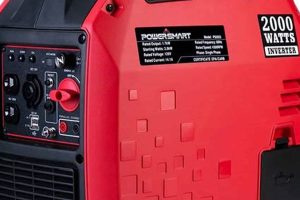
Compact power sources designed for residential use offer a range of functionalities, from emergency backup during outages to powering appliances during outdoor activities. These units typically employ gasoline, propane, or inverter technology, offering varying levels of power output and portability.
The ability to provide electricity independent of the main power grid is invaluable for homeowners. This independence ensures critical systems like refrigerators, lighting, and medical devices remain functional during blackouts. Furthermore, these devices offer convenience for recreational activities like camping and tailgating, providing power for lights, cooking equipment, and entertainment devices. The development of smaller, more efficient engine technology has made these power solutions increasingly accessible and practical for a wider range of users.
This article will explore the various types of compact power sources available, discuss their key features and benefits, and provide guidance on selecting the appropriate unit for specific needs and circumstances. Topics covered will include power output calculations, fuel efficiency comparisons, noise levels, and safety considerations.
Operating Compact Power Sources Safely and Effectively
Proper operation and maintenance are essential for safe and efficient use of compact power sources. The following tips provide guidance on maximizing the lifespan and performance of these devices while minimizing potential risks.
Tip 1: Calculate Power Requirements: Determine the wattage requirements of devices intended for connection. This ensures the selected unit possesses adequate capacity, preventing overload and potential damage.
Tip 2: Proper Ventilation is Crucial: Operate units in well-ventilated areas to prevent carbon monoxide buildup. Never operate indoors or in enclosed spaces.
Tip 3: Grounding for Safety: Proper grounding is essential for electrical safety. Follow manufacturer instructions carefully to ensure proper grounding procedures are followed.
Tip 4: Regular Maintenance: Adhere to the manufacturer’s recommended maintenance schedule. This typically includes oil changes, air filter cleaning, and spark plug replacement.
Tip 5: Fuel Storage Best Practices: Store fuel in approved containers in a well-ventilated area away from ignition sources. Never refuel a hot or running unit.
Tip 6: Dry Storage is Key: Store units in a dry, protected location to prevent corrosion and damage. Cover the unit when not in use.
Tip 7: Exercise the Generator Regularly: Run the unit under load for a short period every few months to ensure it remains operational and to prevent fuel stagnation.
Adhering to these guidelines will help ensure safe, reliable, and efficient operation of compact power sources, providing valuable peace of mind and extended equipment lifespan.
This information offers practical guidance for consumers interested in exploring the world of compact power solutions. Further sections of this article will provide detailed analysis of specific unit types and delve deeper into technical specifications.
1. Power Output

Power output, measured in watts, represents a critical specification for portable home generators. This metric directly determines the number and type of appliances a generator can power simultaneously. Understanding power requirements is crucial for effective generator selection and safe operation. Insufficient power output can lead to overloading, potentially damaging the generator and connected appliances. Conversely, excessive power output translates to unnecessary fuel consumption and higher operating costs.
Consider a scenario involving a refrigerator requiring 700 watts and a sump pump requiring 1000 watts. Operating both simultaneously necessitates a generator with a minimum output of 1700 watts. Attempting to run these appliances on a generator with a lower output would result in an overload. Furthermore, starting wattage, often significantly higher than running wattage, must be considered. For instance, while a refrigerator might require 700 watts to run, its starting wattage could be as high as 2000 watts. This necessitates a generator capable of handling this surge in power demand.
Careful consideration of power output is therefore essential for successful generator integration within a home environment. Accurately assessing appliance power requirements and understanding the difference between running and starting wattage are crucial steps. This knowledge facilitates informed decisions regarding generator selection, ensuring sufficient power provision while avoiding potential overloads and maximizing operational efficiency.
2. Fuel Type

Fuel type significantly influences the practicality and functionality of portable home generators. Common fuel types include gasoline, propane, and diesel. Each presents distinct advantages and disadvantages affecting suitability for specific applications. Gasoline offers widespread availability and generally lower upfront generator cost. However, it possesses a shorter shelf life compared to propane, potentially requiring stabilizer additives and presenting storage challenges. Propane’s longer shelf life and cleaner burning characteristics offer advantages for less frequent usage scenarios, such as emergency backup power. However, propane generators typically require larger fuel tanks for comparable runtime. Diesel offers superior fuel efficiency and longer engine life, making it suitable for extended operation periods. However, diesel generators often command a higher initial investment and produce more noise.
The choice of fuel type directly impacts generator runtime and operational logistics. For instance, a homeowner relying on a gasoline-powered generator during an extended power outage must consider gasoline availability and storage capacity. A propane-powered generator might prove more convenient for infrequent use, eliminating the need for fuel stabilization. The selection process necessitates a comprehensive evaluation of usage patterns, fuel availability, storage limitations, and budget constraints.
Optimal fuel type selection hinges on a thorough assessment of individual needs and circumstances. Factors influencing the decision include frequency of use, desired runtime, local fuel availability, storage practicality, and budgetary considerations. Understanding the trade-offs associated with each fuel type is crucial for maximizing generator effectiveness and aligning with specific operational requirements. This understanding empowers informed decision-making, leading to a more efficient and reliable power solution.
3. Portability
Portability represents a defining characteristic of specific generator types designed for home use, directly influencing their practical applications and overall utility. This characteristic encompasses factors such as weight, dimensions, and the presence of integrated handles or wheels. The degree of portability dictates the ease with which a generator can be transported and positioned, determining its suitability for various scenarios ranging from emergency home backup power to recreational activities. A lightweight, compact unit equipped with wheels facilitates effortless movement, while a heavier, bulkier model might require assistance or specialized transport mechanisms. This distinction significantly impacts usability, particularly in situations demanding rapid deployment, such as during a power outage or when powering equipment at a remote location.
Consider a scenario involving a homeowner needing to power essential appliances during a storm-induced power outage. A highly portable generator allows quick deployment and connection, ensuring critical systems remain operational. Conversely, a less portable model might prove cumbersome to maneuver, potentially delaying power restoration and increasing the risk of damage or injury. In another context, a compact, easily transportable generator enhances convenience during outdoor activities, such as camping or tailgating, providing readily accessible power for lights, cooking equipment, and other devices. The practical implications of portability become evident when considering the physical effort required for transport and the spatial constraints of storage and operation.
The significance of portability within the context of home generators warrants careful consideration during the selection process. Balancing portability with other key factors, such as power output and fuel type, is crucial for optimizing functionality and aligning the generator with specific usage requirements. Understanding the practical implications of portability, coupled with a realistic assessment of anticipated usage scenarios, empowers informed decision-making, ensuring the selected generator effectively serves its intended purpose. This understanding contributes to enhanced user satisfaction and efficient utilization of this essential power solution.
4. Noise Levels

Noise levels represent a crucial consideration when evaluating portable home generators. These units produce varying degrees of sound during operation, ranging from a low hum to a loud roar. The noise output, typically measured in decibels (dB), significantly impacts the generator’s suitability for residential use and its potential effect on surrounding neighbors and the environment. Operating a loud generator can create disturbances, particularly during nighttime hours or in noise-sensitive areas. Understanding the noise levels associated with different generator models is essential for minimizing disruptions and ensuring peaceful coexistence with the surrounding community.
Several factors influence a generator’s noise output, including engine size, load, and muffler design. Larger engines generally produce more noise. Operating a generator at full load typically results in higher noise levels compared to partial load operation. Effective muffler design plays a crucial role in mitigating noise output. Some manufacturers incorporate advanced muffler technologies and sound-dampening enclosures to reduce noise pollution. Furthermore, operational practices, such as placing the generator on a sound-absorbing mat or slightly away from the house, can help minimize noise propagation. For instance, a generator producing 70 dB at a distance of 23 feet might be suitable for most residential applications, while a generator producing 90 dB at the same distance could be excessively loud and disruptive.
Careful consideration of noise levels is essential for responsible generator ownership and operation. Selecting a quieter model or implementing noise-reduction strategies contributes to a more harmonious living environment. Consulting manufacturer specifications for noise level data, researching quieter generator technologies, and adopting mindful operational practices are vital steps in mitigating noise pollution and ensuring the generator’s presence does not negatively impact the quality of life for the user and the surrounding community. This proactive approach demonstrates consideration for others and promotes a more peaceful and respectful environment.
5. Runtime

Runtime, a critical factor for portable home generators, signifies the duration a unit can operate continuously on a single fuel tank. This duration directly influences the generator’s practical utility, especially during extended power outages or off-grid activities. Understanding the factors affecting runtime and accurately estimating power needs ensures appropriate generator selection and effective power management.
- Fuel Tank Capacity
Fuel tank capacity directly correlates with potential runtime. Larger tanks generally provide longer operation periods, reducing the frequency of refueling. However, larger tanks also increase the generator’s overall size and weight, potentially impacting portability. A 5-gallon tank might provide 8 hours of runtime, while a 10-gallon tank could double that duration, assuming similar fuel consumption rates. Careful consideration of fuel tank capacity relative to anticipated power needs and usage duration is crucial for selecting a generator that meets specific requirements.
- Load and Power Consumption
The load placed on the generator, determined by the connected appliances and their power consumption, significantly influences runtime. Higher loads result in increased fuel consumption and reduced runtime. Operating a generator at full capacity significantly shortens its operational duration compared to running it at a lower load. For example, a generator powering a few essential lights will run considerably longer than one powering multiple high-wattage appliances simultaneously. Accurate estimation of power demands and judicious load management are key to maximizing runtime.
- Generator Efficiency
Generator efficiency, often expressed as a percentage, reflects how effectively the unit converts fuel into usable power. More efficient generators consume less fuel for a given power output, extending runtime. Inverter generators generally offer higher efficiency compared to conventional generators, leading to longer runtimes for the same fuel capacity. Choosing an efficient model contributes to fuel savings and reduces the environmental impact. Technological advancements continually improve generator efficiency, offering users extended operation periods.
- External Factors
External factors, such as ambient temperature and altitude, can subtly influence generator runtime. Extreme temperatures can affect engine performance and fuel consumption. High altitudes can reduce engine power output, potentially necessitating adjustments to load management strategies. While these factors might not drastically alter runtime, understanding their potential impact ensures accurate performance expectations and facilitates proactive adjustments to operational practices.
Careful consideration of these factors, alongside realistic assessment of power requirements and usage patterns, allows informed decisions regarding generator selection and efficient power management. Understanding the interplay between fuel tank capacity, load, generator efficiency, and external factors empowers users to maximize runtime, ensuring reliable power delivery for extended periods. This understanding is particularly crucial for emergency preparedness and off-grid applications, where continuous power supply is paramount.
6. Safety Features

Safe operation of portable home generators requires a comprehensive understanding of integrated safety features and adherence to established safety protocols. These features play a crucial role in mitigating potential hazards associated with generator use, protecting both users and the connected equipment. Ignoring safety precautions can lead to serious consequences, including carbon monoxide poisoning, fire hazards, and electrical shocks. A thorough understanding of these safety mechanisms is paramount for responsible generator ownership and operation.
- Carbon Monoxide (CO) Sensors
Carbon monoxide (CO), a colorless, odorless, and highly toxic gas produced during fuel combustion, poses a significant threat to human health. Many portable generators incorporate CO sensors designed to detect elevated CO levels and automatically shut down the unit, preventing potential exposure. This feature is crucial for safe operation, as CO poisoning can occur rapidly and without warning. Regularly testing the functionality of CO sensors and ensuring adequate ventilation during generator operation are essential safety practices.
- Overload Protection
Overloading a generator by exceeding its rated power output can lead to overheating, potentially damaging the generator and connected appliances. Overload protection mechanisms, such as circuit breakers, automatically interrupt the power supply when an overload condition is detected. This prevents damage to the generator and reduces the risk of fire hazards. Accurately calculating power requirements and avoiding exceeding the generator’s rated capacity are crucial for safe operation.
- Low-Oil Shutdown
Insufficient oil levels can cause severe engine damage. Low-oil shutdown systems automatically turn off the generator when the oil level drops below a critical threshold, preventing costly repairs and ensuring safe engine operation. Regularly checking and maintaining proper oil levels is essential for preventing premature engine wear and ensuring reliable generator performance.
- Grounded Outlets
Grounded outlets provide a path for excess electrical current to flow safely to the ground, reducing the risk of electrical shocks. Using grounded outlets and ensuring proper grounding of the generator itself are crucial safety measures. Never bypass grounding mechanisms or operate the generator with damaged or ungrounded outlets. Adherence to proper grounding procedures minimizes electrical hazards and protects users from potential shocks.
Understanding and utilizing these safety features, coupled with adherence to recommended safety guidelines, significantly reduces the risks associated with portable generator operation. Regular maintenance, including inspection and testing of safety systems, further enhances operational safety and ensures reliable performance. Prioritizing safety promotes a secure operating environment, protecting both users and the surrounding community.
Frequently Asked Questions
This section addresses common inquiries regarding portable home generators, providing concise and informative responses to facilitate informed decision-making.
Question 1: How is the appropriate generator size determined?
Generator sizing depends on the combined wattage requirements of the intended appliances. Calculating the sum of running watts and considering the highest starting wattage among those appliances ensures adequate power capacity.
Question 2: What differentiates inverter generators from conventional generators?
Inverter generators produce cleaner, more stable power suitable for sensitive electronics. They also offer improved fuel efficiency and quieter operation compared to conventional generators.
Question 3: What safety precautions are essential during generator operation?
Operating a generator outdoors in a well-ventilated area is crucial to prevent carbon monoxide poisoning. Proper grounding and fuel handling procedures are also essential safety measures.
Question 4: How frequently should generator maintenance be performed?
Adhering to the manufacturer’s recommended maintenance schedule, typically including oil changes, air filter cleaning, and spark plug replacement, ensures optimal performance and longevity.
Question 5: Can a generator be used during inclement weather?
While some generators offer weather-resistant features, protecting the unit from excessive rain or snow is crucial. Consult the manufacturer’s guidelines for safe operation in various weather conditions.
Question 6: What considerations apply to generator fuel storage?
Storing fuel in approved containers in a well-ventilated area away from ignition sources is essential. Gasoline requires stabilizer additives and periodic replacement due to its limited shelf life.
Understanding these frequently asked questions equips consumers with the knowledge necessary to make informed decisions regarding generator selection, operation, and maintenance. Prioritizing safety and adhering to recommended practices ensures reliable performance and mitigates potential risks.
The subsequent section delves into specific generator models and comparative analyses, offering further insights for prospective buyers.
Portable Home Generators
Compact, independent power sources offer significant advantages for homeowners, ranging from critical support during power outages to facilitating outdoor activities. Selection requires careful consideration of power output, fuel type, portability, noise levels, runtime, and essential safety features. Understanding these aspects empowers informed decisions, aligning generator capabilities with specific needs and circumstances. Proper operation and maintenance, including adherence to safety protocols, ensure reliable performance and longevity while mitigating potential risks.
Investment in a portable home generator represents a proactive step towards enhanced preparedness and resilience. This technology empowers homeowners to navigate unforeseen power disruptions, maintain essential services, and enhance the quality of life during challenging circumstances. As power demands evolve and technology advances, portable generators will continue to play a vital role in ensuring continuity and facilitating modern lifestyles.