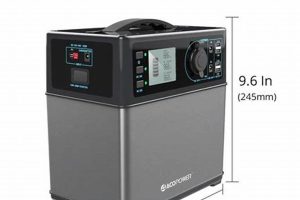
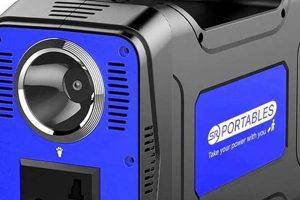
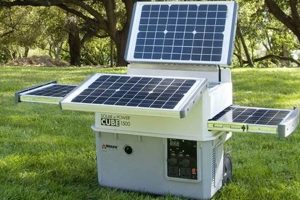
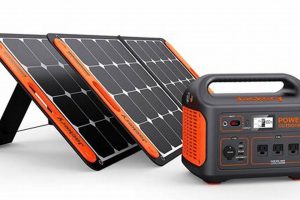
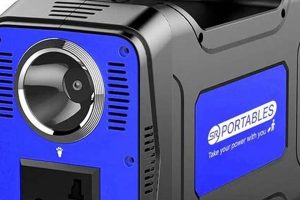
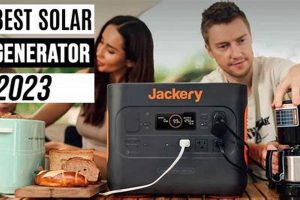
High-capacity, mobile power solutions utilizing photovoltaic technology offer a versatile alternative to traditional fuel-powered generators. These systems typically consist of solar panels, a battery storage unit, and an inverter to convert the stored direct current (DC) electricity into alternating current (AC) usable by common household appliances and electronics. A typical example might involve several interconnected solar panels charging a battery bank capable of powering devices ranging from laptops and smartphones to refrigerators and power tools.
Independent energy access is a significant advantage of these systems, providing power during outages, in remote locations, or for off-grid living. This capability is increasingly crucial for disaster preparedness and contributes to a reduction in reliance on fossil fuels. While smaller portable power stations have existed for some time, advancements in battery technology and solar panel efficiency have led to the development of significantly more powerful and practical mobile units capable of meeting substantial energy demands.
The following sections will delve into the specific components, functionalities, selection criteria, and applications of these independent power systems, providing a comprehensive understanding of their capabilities and potential benefits.
Tips for Utilizing High-Capacity Mobile Solar Power
Effective use of high-capacity mobile solar power systems requires careful planning and consideration of several factors. The following tips offer guidance for maximizing performance and longevity.
Tip 1: Accurate Power Needs Assessment: Calculate the total wattage required to power the intended devices. This involves identifying the wattage of each device and the duration it will be operated. Overestimating power requirements ensures sufficient capacity during peak demand.
Tip 2: Optimal Solar Panel Placement: Position solar panels for maximum sunlight exposure throughout the day. Consider factors such as latitude, time of year, and potential shading from trees or buildings. Adjustable panel mounts can optimize energy collection.
Tip 3: Regular Battery Maintenance: Battery health is crucial for long-term performance. Adhere to manufacturer recommendations for charging cycles and storage temperature. Periodically check for signs of wear and tear.
Tip 4: Understanding Inverter Capacity: Ensure the inverter’s output capacity exceeds the combined wattage of the devices being powered simultaneously. Using devices exceeding the inverter’s rating can lead to system overload and potential damage.
Tip 5: Prioritize Energy Efficiency: Employ energy-efficient appliances and practices to minimize power consumption and extend the system’s runtime. LED lighting and energy-saving settings on electronics can significantly impact usage.
Tip 6: Proper Storage and Transportation: Protect the system from extreme temperatures, moisture, and physical impacts during storage and transport. Use appropriate carrying cases and secure panels during transit.
Tip 7: Safety Considerations: Familiarize oneself with safety precautions regarding electrical systems and solar panels. Avoid contact with exposed wiring and follow manufacturer guidelines for operation and maintenance.
By following these guidelines, users can ensure efficient operation, prolong system lifespan, and maximize the benefits of their investment in mobile solar power.
The concluding section will summarize the key advantages and potential applications of these systems, emphasizing their growing role in a sustainable energy future.
1. Power Output
Power output represents a critical specification for high-capacity mobile solar power systems, directly influencing their suitability for various applications. Understanding power output is essential for matching the system’s capabilities to specific energy demands.
- Rated Power vs. Peak Power
Rated power (continuous power) indicates the sustained output a system can deliver consistently. Peak power, often higher, reflects the maximum short-burst output for handling surge demands. A generator with a 1000W rated power and a 2000W peak power can continuously power a 1000W refrigerator but can also handle the brief surge when the refrigerator’s compressor starts. This distinction is crucial for avoiding overload and ensuring reliable operation.
- Total Wattage and Amperage
Total wattage (volts multiplied by amps) signifies the overall power capacity. Amperage (current) determines the number of devices that can be operated simultaneously. Higher wattage and amperage are necessary for powering multiple devices or energy-intensive equipment. For example, running several power tools simultaneously requires higher total wattage and amperage than charging a single laptop. Careful consideration of these metrics ensures sufficient capacity for intended applications.
- AC Output and DC Output
AC output powers standard household appliances, while DC output typically serves devices like laptops or phones through USB ports. Mobile solar systems usually provide both AC and DC outlets, broadening their utility. The specific amperage and voltage of each output type should align with the devices being powered. For example, using a DC output with sufficient amperage for fast charging a smartphone is more efficient than using an AC adapter. Understanding the distinction between AC and DC output is crucial for device compatibility.
- Inverter Efficiency and Power Factor
The inverter converts DC electricity from the battery to AC. Inverter efficiency represents the effectiveness of this conversion, while the power factor indicates how efficiently the AC power is utilized by the connected devices. Higher efficiency and power factor minimize energy loss, maximizing runtime. For instance, a highly efficient inverter minimizes energy waste during the conversion process, increasing the overall efficiency of the system.
A comprehensive understanding of these facets of power output is essential for selecting a high-capacity mobile solar generator that effectively meets specific power demands, ensuring reliable performance and maximizing the system’s utility across a range of applications, from emergency preparedness to off-grid living.
2. Portability
Portability is a defining characteristic of these power systems, directly influencing their usability and suitability for various applications. While “large” implies substantial power capacity, the portability aspect ensures these systems remain manageable and transportable, expanding their utility beyond stationary power solutions. Balancing size and weight with power output is a critical design consideration.
- Physical Dimensions and Weight
The physical size and weight of the unit directly impact its portability. Compact designs and lighter materials enhance ease of transport, particularly crucial for applications requiring manual handling. For example, a system designed with integrated wheels and handles facilitates movement over uneven terrain, while a lighter unit is easier to lift into a vehicle. The trade-off between power capacity and physical dimensions requires careful consideration depending on the intended use.
- Integrated Handles and Wheels
Incorporated features like handles and wheels significantly enhance portability, particularly for heavier units. Ergonomic handles and durable wheels allow users to move the generator without specialized equipment. For instance, retractable handles and all-terrain wheels enable transport across various surfaces, from gravel paths to indoor settings, expanding the range of potential applications.
- Modular Design for Transport
Some systems feature a modular design, allowing components like solar panels and battery units to be separated for easier transport. This is particularly advantageous for larger systems, distributing the weight for more manageable handling. For example, detachable solar panels reduce the overall bulk during transport and enable flexible placement for optimal sunlight capture upon arrival.
- Transportation Cases and Accessories
Dedicated carrying cases and accessories further enhance portability and protection during transport. Durable cases safeguard components from damage, while custom-fitted compartments ensure secure storage. For instance, a padded case with reinforced corners protects the generator during travel, while compartments for cables and accessories maintain organization and prevent loss.
These facets of portability underscore the versatility of large portable solar generators. The ability to readily transport substantial power capacity to various locations expands their applicability significantly, making them valuable resources for off-grid activities, emergency preparedness, and remote power needs, highlighting the crucial balance between power and portability in these systems.
3. Battery Capacity
Battery capacity is a pivotal factor influencing the runtime and overall utility of large portable solar generators. Expressed in watt-hours (Wh) or ampere-hours (Ah), this metric dictates how much energy the system can store and subsequently deliver. A higher capacity translates to longer operation of connected devices without recharging. This correlation is crucial for applications requiring extended power autonomy, such as off-grid living, remote work, or emergency power supply during prolonged outages. For instance, a generator with a 2000Wh battery capacity could potentially power a 100W refrigerator for approximately 20 hours, while a 500Wh unit might only sustain it for 5 hours, assuming consistent power draw and ideal conditions. This illustrates the direct impact of battery capacity on operational duration.
Several factors influence battery performance beyond nominal capacity. Discharge rate, measured in amps, affects how quickly the stored energy is depleted. Higher discharge rates typically reduce the effective capacity. Temperature also plays a role; extreme heat or cold can negatively impact battery performance and lifespan. Depth of discharge (DoD), representing the percentage of the battery’s total capacity that has been used, also influences longevity. Repeatedly discharging a battery to its maximum depth can shorten its lifespan. Modern battery management systems (BMS) incorporate protective mechanisms to mitigate these effects, preventing over-discharge and optimizing performance within safe operating parameters. For example, a BMS might limit the discharge rate to protect the battery from excessive strain, ensuring longer lifespan and consistent performance.
Understanding battery capacity and its associated factors is essential for effectively utilizing large portable solar generators. Matching capacity to anticipated power demands ensures sufficient runtime for intended applications. Considering factors like discharge rate, temperature sensitivity, and DoD allows for realistic performance expectations and contributes to maximizing battery lifespan, a crucial aspect of the overall system’s value and long-term reliability. This understanding empowers informed decisions regarding system selection and operation, optimizing the benefits of mobile solar power across diverse scenarios.
4. Solar Panel Efficiency
Solar panel efficiency is a critical determinant of a large portable solar generator’s performance, dictating the rate at which sunlight is converted into usable electricity. Higher efficiency panels generate more power from the same surface area, directly impacting charging times and overall system efficacy. This factor becomes particularly significant in portable applications where space is often limited. Choosing highly efficient panels maximizes power generation potential, reducing reliance on grid electricity or fuel-powered generators.
- Panel Type and Technology
Different solar panel technologies exhibit varying efficiency levels. Monocrystalline panels, recognizable by their uniform black appearance, generally offer the highest efficiency, followed by polycrystalline panels, distinguished by their blue hue. Thin-film panels, while flexible and lightweight, typically have lower efficiency. Selecting the appropriate panel type involves balancing efficiency with other factors like cost, weight, and durability. For instance, monocrystalline panels might be preferred for maximizing power output in a limited space, while thin-film panels could be suitable for applications prioritizing flexibility and lightweight construction.
- Impact of Sunlight Intensity and Angle
Panel efficiency is influenced by sunlight intensity and the angle of incidence. Panels perform optimally when perpendicular to direct sunlight. As the angle deviates, or sunlight becomes diffuse due to cloud cover, efficiency decreases. Understanding this relationship underscores the importance of proper panel orientation and adjustable mounting systems to maximize energy capture throughout the day. For example, utilizing a tracking system that adjusts panel angle to follow the sun’s path can significantly improve overall energy harvest.
- Temperature Coefficient
Solar panel efficiency is inversely related to temperature. As panel temperature increases, efficiency decreases. This effect, quantified by the temperature coefficient, highlights the importance of adequate ventilation and cooling strategies, especially in hot climates. For example, incorporating air gaps behind the panels or utilizing specialized cooling coatings can mitigate temperature-related efficiency losses.
- Panel Degradation and Lifespan
Solar panels gradually degrade over time, leading to a slight reduction in efficiency. Reputable manufacturers typically guarantee a certain performance level after a specified period, often 25 years or more. Understanding the expected degradation rate helps assess long-term performance and calculate the overall energy yield over the panel’s lifespan. Choosing panels with a lower degradation rate ensures sustained performance and maximizes the return on investment over the long term.
The efficiency of solar panels directly impacts the overall effectiveness and usability of large portable solar generators. Optimizing panel efficiency through careful selection, proper orientation, and appropriate thermal management ensures maximum energy capture and contributes to the system’s long-term performance. This understanding allows for informed decisions regarding system design and deployment, maximizing the benefits of portable solar power across diverse applications.
5. Durability/Lifespan

Durability and lifespan are paramount considerations for large portable solar generators, directly impacting their long-term value and reliability. These systems are often subjected to varied environmental conditions and handling during transport, necessitating robust construction and component longevity. Investing in a durable and long-lasting system minimizes replacement costs and ensures consistent performance over an extended period. A system’s ability to withstand environmental stresses and maintain performance over time is crucial for maximizing the return on investment and ensuring reliable power availability when needed.
- Environmental Resistance
Resistance to environmental factors like temperature fluctuations, moisture, dust, and UV radiation is crucial for ensuring sustained functionality. Components like solar panels, battery enclosures, and inverters must be designed to withstand exposure to these elements without significant degradation. For example, a system with an IP67 rating signifies its resistance to dust and water ingress, ensuring reliable operation in challenging outdoor environments. This robustness safeguards the system from premature failure and extends its operational lifespan.
- Construction Quality and Materials
The overall construction quality and choice of materials significantly influence a system’s durability. Robust enclosures, reinforced frames, and high-quality components contribute to structural integrity and resistance to physical impacts. For example, using impact-resistant plastics and corrosion-resistant metals protects the system from damage during transport and prolonged use. Investing in a well-constructed system minimizes the risk of failure due to physical stresses.
- Battery Cycle Life and Degradation
Battery lifespan, often measured in charge cycles, is a critical determinant of a solar generator’s longevity. Deep-cycle batteries designed for frequent charging and discharging are essential for maximizing system lifespan. Factors like depth of discharge and operating temperature influence battery degradation. For example, a battery with a cycle life of 2000 cycles could potentially last for several years with proper usage and maintenance. Understanding battery characteristics and implementing appropriate charging practices maximizes battery lifespan and overall system longevity.
- Maintenance and Serviceability
Ease of maintenance and access to replacement parts contribute to a system’s long-term viability. Modular designs, readily available spare parts, and clear maintenance guidelines simplify upkeep and prolong the system’s operational life. For example, a system with easily replaceable battery modules allows for convenient upgrades or replacements as needed, extending the overall lifespan and minimizing downtime. This accessibility simplifies maintenance and ensures continued operation over an extended period.
Durability and lifespan are integral to the value proposition of large portable solar generators. A robust, well-maintained system provides reliable power over an extended period, maximizing the return on investment and ensuring power availability when and where it is needed. Prioritizing these factors during system selection ensures long-term satisfaction and reinforces the reliability of portable solar power solutions.
6. Safety Features

Safety features are paramount in large portable solar generators, mitigating potential hazards associated with electricity generation and storage. These systems integrate various safety mechanisms to protect users, connected devices, and the system itself from harm. The potential for high currents and voltages necessitates robust safety measures to prevent accidents and ensure reliable operation. A failure in safety features could lead to electric shock, fire, or damage to connected equipment, highlighting their critical role in safe and effective operation.
Several key safety features are commonly incorporated into these systems. Battery management systems (BMS) play a crucial role in monitoring and regulating battery charging and discharging, preventing overcharging, over-discharging, and overheating. Overcurrent and short-circuit protection mechanisms automatically interrupt power flow in case of a fault, preventing damage to the system and connected devices. Surge protection safeguards against voltage spikes, protecting sensitive electronics. Grounding features further mitigate the risk of electric shock. Thermal protection mechanisms prevent overheating by regulating temperature and airflow. For example, a BMS might cut off charging if the battery temperature exceeds a safe threshold, preventing potential thermal runaway. Similarly, a short-circuit protection mechanism would immediately interrupt the circuit if a fault is detected, preventing damage to connected devices and the generator itself. These features work in concert to ensure safe and reliable operation under various conditions.
Understanding and verifying the presence and functionality of these safety features is essential for safe operation. Users should consult manufacturer documentation for specific safety guidelines and adhere to recommended operating procedures. Regular inspection and maintenance are crucial for ensuring the continued effectiveness of safety mechanisms. Neglecting safety precautions can compromise the integrity of the system and pose significant risks. Prioritizing safety reinforces responsible usage and contributes to the long-term reliability of large portable solar generators, enabling their safe and effective application in diverse scenarios. This understanding promotes user confidence and underscores the importance of incorporating robust safety measures into the design and operation of these increasingly prevalent power solutions.
7. Cost-Effectiveness

Cost-effectiveness is a crucial factor influencing the adoption and long-term value of large portable solar generators. Evaluating cost-effectiveness requires considering both the initial investment and the potential long-term savings compared to alternative power solutions. While the upfront cost of these systems can be higher than traditional gasoline generators, the absence of fuel costs and reduced maintenance requirements contribute to significant long-term savings. This calculus becomes particularly compelling in scenarios with frequent or extended power needs, such as off-grid living, RV travel, or frequent power outages. For example, a household experiencing regular power outages might recoup the initial investment in a solar generator within a few years through avoided expenses on gasoline, generator maintenance, and potential food spoilage.
Several factors influence the overall cost-effectiveness of these systems. Battery lifespan significantly impacts long-term value, as battery replacement represents a substantial expense. Solar panel efficiency affects the rate of return on investment by influencing the amount of free energy generated. System durability minimizes repair and replacement costs, contributing to long-term savings. Government incentives, such as tax credits or rebates for renewable energy systems, can significantly reduce the initial investment and accelerate the return on investment. Financing options can also make these systems more accessible by spreading the cost over time. Careful consideration of these factors allows for a comprehensive assessment of cost-effectiveness. For instance, opting for a system with a longer-lasting battery and higher-efficiency solar panels might entail a higher upfront cost but ultimately deliver greater long-term value through reduced replacement expenses and increased energy generation.
Understanding the long-term cost implications is crucial for making informed decisions regarding the acquisition and utilization of large portable solar generators. While the initial investment might seem substantial, the potential for long-term savings through eliminated fuel costs, reduced maintenance, and extended lifespan often makes these systems a cost-effective choice, particularly in scenarios with frequent or prolonged power demands. A comprehensive cost-benefit analysis, considering factors such as battery lifespan, solar panel efficiency, and available incentives, enables potential users to assess the long-term financial implications and make informed decisions aligned with individual needs and circumstances. This understanding contributes to the broader adoption of sustainable energy solutions and highlights the growing economic viability of portable solar power.
Frequently Asked Questions
This section addresses common inquiries regarding high-capacity mobile solar power systems, providing concise and informative responses to clarify potential uncertainties.
Question 1: What is the typical lifespan of a large portable solar generator?
Lifespan varies depending on usage, maintenance, and component quality. Batteries typically require replacement after several years, while solar panels can last for decades with minimal degradation. Proper maintenance and adherence to manufacturer guidelines significantly influence overall system longevity.
Question 2: How long does it take to recharge a large portable solar generator using its solar panels?
Recharge time depends on solar panel wattage, battery capacity, and sunlight intensity. Under ideal conditions, a system might recharge fully within several hours. However, factors like cloud cover and panel angle can significantly impact charging time.
Question 3: Can these systems be used in all weather conditions?
While solar panels generate optimal power in direct sunlight, many systems can still charge in cloudy conditions, albeit at a reduced rate. Operating temperature ranges should be considered, as extreme temperatures can impact battery performance. Protection from rain and snow is essential.
Question 4: What are the maintenance requirements for these systems?
Regular inspection of cables, connections, and ventilation is recommended. Battery maintenance, including proper charging practices and storage temperature adherence, is crucial for longevity. Cleaning solar panels periodically maximizes energy capture efficiency.
Question 5: Are these systems safe to use indoors?
While solar panels require sunlight for charging, the generator itself can be safely used indoors to power devices. Adequate ventilation is essential, especially during prolonged use, to prevent heat buildup. Never operate the system in damp or wet environments.
Question 6: What is the warranty coverage for these systems?
Warranty coverage varies by manufacturer and typically covers defects in materials and workmanship. Battery warranties might have shorter durations than warranties for other components. Understanding warranty terms is crucial before purchase.
These responses offer a general overview. Consulting manufacturer documentation and specifications for the specific system of interest provides more detailed and applicable information.
The following section explores real-world applications of these systems, showcasing their versatility and practical benefits.
Large Portable Solar Generators
Large portable solar generators represent a significant advancement in mobile power solutions, offering a versatile and sustainable alternative to traditional fuel-powered generators. This exploration has highlighted key aspects of these systems, including power output considerations, portability features, battery capacity implications, the importance of solar panel efficiency, durability and lifespan factors, essential safety features, and the long-term cost-effectiveness of these investments. Understanding these facets is crucial for informed decision-making and effective utilization of these increasingly prevalent power sources.
As technology continues to advance, large portable solar generators are poised to play an increasingly vital role in meeting diverse power needs, from emergency preparedness and off-grid living to remote work and sustainable recreational activities. The transition towards cleaner and more resilient power solutions underscores the importance of embracing innovative technologies that empower individuals, communities, and industries to achieve greater energy independence and contribute to a more sustainable future.