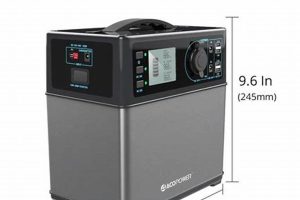
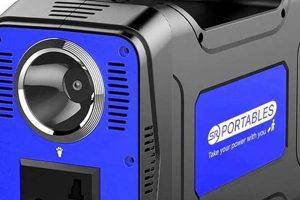
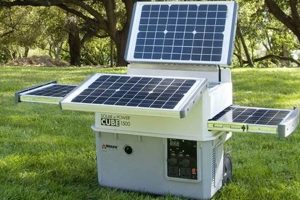
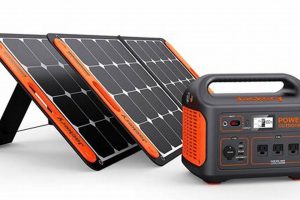
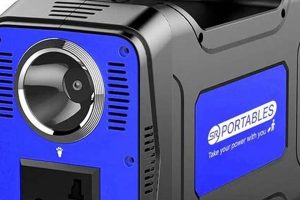
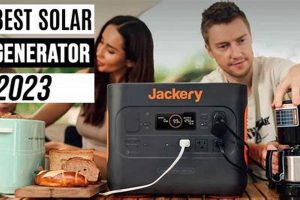
Compact, independent power supplies utilizing photovoltaic panels to convert sunlight into electricity, with a nominal power output of 200 watts, offer a versatile solution for off-grid energy needs. These devices typically incorporate a battery for energy storage, allowing for power availability even in the absence of direct sunlight. An example application includes powering small appliances, electronic devices, or lighting during camping trips, power outages, or in remote locations lacking traditional grid access.
Such power solutions offer significant advantages in terms of portability and sustainability. Their relatively small size and lightweight construction allow for easy transport and deployment. The reliance on renewable solar energy reduces reliance on fossil fuels and minimizes environmental impact. Historically, portable power relied heavily on gasoline generators, but advancements in solar panel and battery technology have enabled quieter, cleaner, and more convenient options to emerge and gain popularity.
This discussion will further explore key aspects of these devices, including various applications, selection criteria, maintenance requirements, and potential future developments in the field of portable solar power generation.
Tips for Utilizing Compact Solar Power Systems (200W)
Effective use of compact solar generators maximizes their benefits and ensures longevity. The following tips offer guidance on optimizing performance and extending the lifespan of these valuable power resources.
Tip 1: Understand Power Needs: Accurately assess power requirements before selecting a system. Calculate the combined wattage of devices intended for simultaneous use to ensure sufficient capacity. Overloading can damage the generator.
Tip 2: Optimize Solar Charging: Position solar panels for maximum sunlight exposure, ideally facing south in the Northern Hemisphere. Keep panels clean and free from obstructions like shade or debris. Regularly check panel connections for secure attachment.
Tip 3: Manage Battery Health: Avoid completely depleting the battery, as this can shorten its lifespan. Monitor the battery’s state of charge and recharge when it reaches a low threshold. Store the battery in a cool, dry place when not in use.
Tip 4: Prioritize Energy Consumption: Use energy-efficient devices whenever possible. Power down equipment when not actively in use to conserve battery power. Consider using DC appliances directly, bypassing the inverter for increased efficiency.
Tip 5: Protect from the Elements: Shield the generator from extreme temperatures, moisture, and direct sunlight when not charging. Use a protective cover or store it in a suitable enclosure. Regularly inspect for any signs of damage or wear.
Tip 6: Maintain Proper Ventilation: Ensure adequate ventilation around the generator during operation, especially when using the inverter. Avoid covering vents, as this can lead to overheating and potential damage.
Tip 7: Monitor Performance: Regularly check the generator’s output and charging performance. Note any significant changes in efficiency or charging times, which could indicate potential issues requiring attention.
Adhering to these guidelines will ensure efficient operation, prolong the lifespan of the equipment, and maximize the benefits of off-grid power availability. Proper care and usage translate to reliable power access for various applications.
These practical tips provide a foundation for successful operation and contribute to the overall understanding of compact solar power systems. The following section will offer a concluding perspective on their role in sustainable energy solutions.
1. Portability

Portability represents a defining characteristic of 200-watt solar generators, directly influencing their usability and application. The compact design and lightweight construction of these units facilitate easy transport and deployment in diverse environments. This inherent portability enables power access in locations beyond the reach of traditional power grids, supporting activities such as camping, remote work, and emergency preparedness. Consider a scenario where a family embarks on a camping trip. A portable solar generator allows them to power essential devices like lights, phones, and small cooking appliances, enhancing both convenience and safety in an off-grid setting. Similarly, during a power outage, such a generator provides a crucial backup power source, maintaining essential services and communication.
The practical implications of portability extend beyond recreational activities. In disaster relief efforts, portable solar generators provide essential power for communication, medical equipment, and lighting in affected areas. Furthermore, they offer a sustainable power solution for remote communities or fieldwork operations lacking grid infrastructure. The ability to readily relocate and deploy these generators enhances their versatility and expands their potential applications across various sectors, from environmental monitoring to construction projects.
In summary, portability significantly enhances the utility of 200-watt solar generators. This feature unlocks opportunities for off-grid power access, supporting both leisure activities and essential services in diverse contexts. While power output and battery capacity remain important considerations, the ease of transport and deployment offered by portability distinguishes these units as valuable power solutions for a range of applications where traditional power sources prove impractical or inaccessible.
2. Solar Charging

Solar charging forms the foundational principle behind portable 200W solar generators, directly impacting their efficacy and environmental footprint. The process involves converting sunlight into electricity via photovoltaic panels integrated into the generator. This conversion provides a sustainable and renewable energy source, eliminating reliance on traditional fossil fuels and reducing greenhouse gas emissions. The effectiveness of solar charging depends on factors such as sunlight intensity, panel angle, and potential obstructions like cloud cover or shade. For instance, optimal charging typically occurs in direct sunlight with panels oriented perpendicular to the sun’s rays. Compromised sunlight exposure directly translates to reduced charging efficiency, impacting the generator’s overall performance.
The integration of solar charging into portable generators offers significant practical advantages. It eliminates the need for external power sources or frequent battery replacements, promoting self-sufficiency and cost-effectiveness. Consider a scenario where such a generator powers a remote monitoring station. Solar charging ensures continuous operation without requiring access to grid electricity or incurring fuel expenses associated with traditional generators. This capability proves particularly valuable in remote locations or during extended power outages where access to conventional power sources remains limited or unavailable. Furthermore, the silent operation of solar charging contributes to minimal noise pollution, benefiting both environmental preservation and user experience.
In summary, solar charging constitutes a critical component of portable 200W solar generators, enabling sustainable and independent power generation. Understanding the factors influencing solar charging efficiency, such as sunlight exposure and panel orientation, proves essential for maximizing generator performance. The practical implications of this technology, including cost-effectiveness, reduced emissions, and silent operation, position portable solar generators as valuable tools across diverse applications, from off-grid power solutions to emergency preparedness and environmental monitoring. Continued advancements in solar panel technology promise further enhancements in charging efficiency and overall generator performance, reinforcing their role in sustainable energy solutions.
3. 200-watt Output

The 200-watt output designation within the context of portable solar generators signifies the maximum power delivery capacity of the unit. This specification directly influences the types and number of devices the generator can simultaneously operate, serving as a critical factor in determining suitability for specific applications. Understanding the implications of this power limitation is crucial for effective utilization and informed purchasing decisions.
- Device Compatibility:
The 200-watt output determines which devices can be effectively powered. Lower-power devices such as smartphones, laptops, and LED lights typically fall well within this range. However, higher-power appliances like electric kettles, microwaves, or power tools may exceed the generator’s capacity, potentially causing overload or insufficient performance. Prior knowledge of device wattage requirements ensures compatibility and prevents operational issues.
- Simultaneous Usage:
Operating multiple devices concurrently requires careful consideration of their combined power consumption. The sum of individual device wattages must remain below the generator’s 200-watt limit to avoid overload. For example, simultaneously running a 60-watt laptop and a 20-watt fan leaves 120 watts available for additional devices. Exceeding this limit can lead to generator shutdown or damage.
- Runtime Limitations:
The 200-watt output, in conjunction with battery capacity, influences the generator’s runtime. Higher power draw from connected devices depletes the battery more rapidly. For instance, a 200Wh battery powering a 100-watt device theoretically provides two hours of runtime. Understanding this relationship allows for effective power management and planning.
- Application Suitability:
The 200-watt output defines the generator’s suitability for various applications. While adequate for powering essential devices during camping trips or providing backup power for small electronics during outages, it may prove insufficient for scenarios requiring higher power demands, such as running power tools for extended periods or operating larger appliances. Careful assessment of power needs relative to the 200-watt limitation is essential for selecting the appropriate generator for a given application.
The 200-watt output of a portable solar generator serves as a critical parameter influencing its overall utility. Understanding its implications concerning device compatibility, simultaneous usage, runtime limitations, and application suitability empowers users to make informed decisions and maximize the effectiveness of these portable power solutions. Balancing power needs with generator capacity ensures optimal performance and prevents operational issues, ultimately contributing to a more reliable and efficient off-grid power experience.
4. Battery Capacity

Battery capacity represents a critical aspect of portable 200W solar generators, directly influencing the duration of power availability. Expressed in watt-hours (Wh), this specification determines the amount of stored energy accessible for powering devices. A higher battery capacity translates to extended operation without requiring recharge, a crucial factor for off-grid applications and emergency preparedness.
- Energy Storage:
Battery capacity determines the total amount of energy the generator can store from solar charging or AC power sources. This stored energy serves as the power reservoir for connected devices. For example, a 500Wh battery can theoretically power a 100W device for five hours. Effective energy management practices, such as minimizing device usage and prioritizing essential loads, can extend operational duration.
- Runtime:
Runtime, the duration a generator can power devices before requiring recharge, directly correlates with battery capacity. Higher capacity extends runtime, crucial for scenarios like extended camping trips, power outages, or remote work where consistent power access proves essential. Understanding the power consumption of connected devices allows for accurate runtime estimations based on the generator’s battery capacity. Factors like temperature and battery age can also influence runtime.
- Charging Time:
Battery capacity influences the time required to fully recharge the generator. Larger batteries generally require longer charging times, whether from solar panels or AC power sources. Factors such as solar panel wattage, sunlight availability, and the charging method employed (solar vs. AC) collectively determine the overall recharge duration.
- Weight and Size:
Battery capacity often correlates with physical size and weight. Higher capacity batteries typically contribute to larger and heavier generator units. This trade-off between portability and runtime necessitates careful consideration based on specific application requirements. If portability is paramount, a smaller, lighter battery might be preferable, while scenarios requiring extended operation prioritize higher capacity despite increased size and weight.
Understanding the interplay between battery capacity, runtime, charging time, and physical characteristics allows for informed selection of a 200W solar generator tailored to specific power needs. Balancing power demands with desired runtime and portability considerations ensures optimal functionality for diverse applications, ranging from recreational activities to emergency preparedness and off-grid power solutions.
5. Powering Devices

The core function of a portable 200W solar generator lies in its ability to power various devices, offering a versatile and independent power source. Understanding device compatibility, power requirements, and effective power management strategies is crucial for maximizing the generator’s utility and ensuring optimal performance across diverse applications.
- Device Compatibility:
Compatibility between the generator and intended devices hinges on the device’s power requirements (wattage) and the generator’s output capacity. Devices with power demands exceeding 200W may not function correctly or could potentially overload the system. Examples of compatible devices include smartphones, laptops, tablets, LED lights, small fans, and certain medical devices. Prior to connecting any device, verifying its power consumption against the generator’s specifications is crucial. Attempting to power incompatible devices risks damaging both the generator and the connected equipment.
- Power Consumption and Runtime:
Device power consumption directly impacts the generator’s runtime. Higher wattage devices deplete the battery more rapidly, shortening the period of operation before recharging becomes necessary. Calculating the cumulative power draw of all connected devices is essential for estimating runtime and planning usage accordingly. For example, a device consuming 50W powered by a 200Wh battery theoretically provides four hours of operation. Practical runtime may vary due to factors like battery age and environmental conditions.
- Power Management Strategies:
Employing effective power management strategies optimizes generator performance and extends runtime. Prioritizing essential devices, minimizing unnecessary power consumption by turning off unused equipment, and utilizing energy-efficient devices contribute to prolonged operation. Understanding device power consumption profiles facilitates informed decisions regarding usage prioritization. For instance, opting for a lower-power laptop or utilizing DC appliances directly can significantly reduce overall power demand.
- Inverter Usage:
Many portable solar generators incorporate inverters to provide AC power, enabling compatibility with standard household appliances. However, inverter usage introduces energy conversion losses, reducing overall efficiency. Whenever feasible, utilizing DC-powered devices directly, bypassing the inverter, can extend runtime. Understanding the power requirements and compatibility of connected devices with the generator’s AC and DC output options informs effective power management.
Effective device powering with a portable 200W solar generator requires careful consideration of device compatibility, power consumption, and power management strategies. Understanding these interconnected factors ensures optimal performance, maximizes runtime, and expands the generator’s versatility across various applications, from emergency preparedness and off-grid power solutions to recreational activities and remote work scenarios.
6. Off-grid Usage
Off-grid usage represents a primary application of portable 200W solar generators, enabling power access in locations beyond the reach of traditional electrical grids. This capability stems from the generator’s self-contained power generation and storage system, utilizing solar panels for renewable energy capture and batteries for energy retention. The absence of grid reliance establishes these generators as valuable resources for remote work, recreational activities, emergency preparedness, and disaster relief efforts. Consider a scenario where researchers conduct fieldwork in a remote wilderness area. A portable solar generator facilitates powering essential equipment like laptops, data loggers, and communication devices, enabling research continuity independent of grid infrastructure. Similarly, during natural disasters or power outages, these generators offer a crucial backup power source, supporting essential communication, lighting, and medical equipment operation.
The practical significance of off-grid usage extends beyond convenience. In developing regions lacking widespread grid access, portable solar generators offer a sustainable and accessible power solution for households and small businesses. This fosters economic development and improves quality of life by enabling access to essential services like lighting, refrigeration, and communication. Furthermore, off-grid usage contributes to environmental sustainability by reducing reliance on fossil fuel-powered generators, mitigating greenhouse gas emissions, and minimizing noise pollution. Applications range from powering remote monitoring stations for environmental conservation to supporting sustainable tourism initiatives in ecologically sensitive areas. The versatility and portability of these generators empower individuals and organizations to operate independently of traditional power infrastructure, facilitating activities across diverse sectors, from scientific research and disaster relief to remote community development and sustainable tourism.
In summary, off-grid usage defines a core functionality of portable 200W solar generators. The ability to operate independently of traditional power grids unlocks opportunities across various fields, supporting essential services, promoting sustainable practices, and enhancing resilience in the face of emergencies or remote location challenges. While technological advancements continue to improve efficiency and capacity, the fundamental value of off-grid power access remains central to the utility and appeal of portable solar generators. Continued development and adoption of this technology promise further expansion of its role in sustainable energy solutions and enhanced access to power for diverse applications globally.
Frequently Asked Questions
This section addresses common inquiries regarding portable 200W solar generators, providing concise and informative responses to facilitate informed decision-making and optimal usage.
Question 1: What types of devices can a 200W solar generator power?
Such generators can typically power small to medium-sized electronic devices and appliances with power consumption up to 200 watts. Examples include smartphones, laptops, tablets, LED lights, small fans, and some CPAP machines. Always check the wattage requirements of specific devices before connecting them to the generator.
Question 2: How long can a 200W solar generator power a device?
Operational duration depends on the generator’s battery capacity (watt-hours) and the power consumption of the connected device(s). A higher battery capacity and lower power draw result in longer runtimes. Consult the generator’s specifications and device wattage requirements to estimate runtime accurately.
Question 3: How long does it take to recharge a 200W solar generator?
Recharge time depends on several factors, including sunlight intensity, solar panel efficiency, and battery capacity. Under optimal sunlight conditions, a 200W solar panel might take several hours to fully recharge a moderately sized battery. Using an AC power source typically results in faster charging times.
Question 4: Can a 200W solar generator be used during a power outage?
Yes, these generators function as excellent backup power sources during power outages, providing electricity for essential devices and appliances. Ensure the generator is adequately charged before an anticipated outage.
Question 5: What are the maintenance requirements for a 200W solar generator?
Maintenance typically involves keeping the solar panels clean for optimal sunlight absorption, periodically checking battery health, and storing the generator in a cool, dry location when not in use. Consult the manufacturer’s instructions for specific maintenance recommendations.
Question 6: Are 200W solar generators environmentally friendly?
Yes, they utilize renewable solar energy, reducing reliance on fossil fuels and minimizing greenhouse gas emissions. They also operate quietly, minimizing noise pollution compared to traditional gasoline-powered generators.
Careful consideration of these frequently asked questions facilitates informed decisions regarding the selection and utilization of a portable 200W solar generator, ensuring optimal performance and maximizing the benefits of this versatile power solution.
The following section explores real-world applications of these generators across diverse scenarios, showcasing their practical utility and versatility.
Portable Solar Generator 200W
Portable solar generators with a 200W power output offer a versatile and sustainable solution for diverse power needs. This exploration has highlighted key aspects, including portability, solar charging capabilities, power output limitations, battery capacity considerations, device compatibility, and the significance of off-grid usage. Understanding these factors empowers informed decision-making regarding generator selection and application. Effective power management practices, coupled with awareness of device power requirements, maximize generator runtime and overall utility.
As technology continues to advance, further improvements in solar panel efficiency, battery technology, and overall generator design are anticipated. Portable solar generators represent a significant step towards sustainable energy independence, offering practical solutions for various applications, from recreational activities and emergency preparedness to remote work and sustainable living. Continued exploration and adoption of these technologies promise enhanced resilience, reduced environmental impact, and expanded access to power for individuals and communities worldwide. The transition towards cleaner and more accessible power solutions underscores the growing importance of portable solar generators in shaping a sustainable energy future.