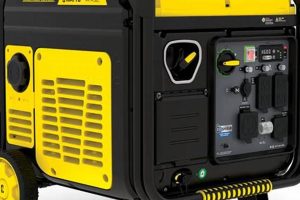
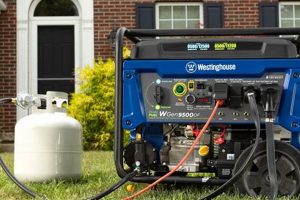
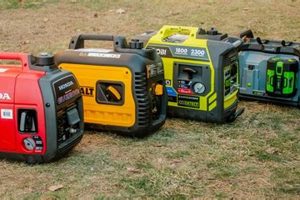
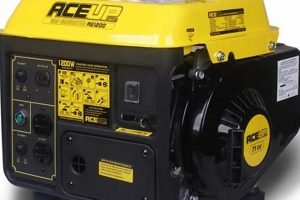
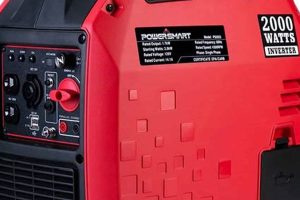
Setting up a backup power source for a residence involves selecting a suitable location, connecting it to the house’s electrical system via a transfer switch, and ensuring proper grounding and fuel supply. A typical setup includes the generator itself, a transfer switch (manual or automatic), wiring, and grounding rods. For example, a homeowner might place a gasoline-powered unit on a gravel pad outside, connecting it to a transfer switch installed near the main electrical panel.
Residential backup power provides crucial support during utility outages, enabling essential appliances like refrigerators, HVAC systems, and sump pumps to continue operating. This capability protects against food spoilage, maintains comfortable living conditions, and prevents potential property damage. Historically, backup power solutions were primarily employed in areas prone to frequent outages, but increasing reliance on electricity and the rising frequency of extreme weather events have expanded the need for reliable backup power across broader geographic regions.
The following sections will delve into the key steps involved in establishing a residential backup power system: site selection and preparation, transfer switch installation, generator connection, grounding procedures, and essential safety considerations.
Tips for Generator Installation
Proper installation is crucial for safe and effective operation of a residential backup power system. These tips provide guidance for a successful installation process.
Tip 1: Consult local regulations. Permitting and inspection requirements vary by jurisdiction. Contact the local building department to ensure compliance with all applicable codes and regulations.
Tip 2: Choose the correct transfer switch. Transfer switches safely isolate the generator from utility power. Select a switch rated for the generator’s output and ensure professional installation.
Tip 3: Prioritize proper grounding. Adequate grounding protects against electrical shock. Follow manufacturer instructions and local codes for grounding procedures.
Tip 4: Select a suitable location. Place the generator outdoors on a stable, level surface, away from windows and doors, to minimize noise and exhaust fumes.
Tip 5: Ensure adequate ventilation. Generators produce carbon monoxide, a colorless, odorless, and deadly gas. Maintain proper ventilation to prevent buildup.
Tip 6: Use appropriately sized wiring. Undersized wiring can overheat and create a fire hazard. Consult an electrician to determine the correct wire gauge for the generator and the distance to the transfer switch.
Tip 7: Perform regular maintenance. Regular maintenance, including oil changes and filter replacements, ensures reliable operation and prolongs the generator’s lifespan. Refer to the manufacturer’s recommendations for maintenance schedules.
Tip 8: Consider professional installation. While some homeowners may choose a DIY approach, professional installation by a qualified electrician is recommended for safety and code compliance.
Adhering to these guidelines promotes a safe and effective installation, ensuring reliable backup power during outages and maximizing the lifespan of the equipment.
By following these tips and prioritizing safety, homeowners can establish a dependable backup power system that provides peace of mind during utility disruptions.
1. Location

Generator placement significantly impacts safety and performance. Careful consideration of proximity to structures, prevailing winds, and noise levels is essential for optimal installation.
- Proximity to Structures
Generators exhaust carbon monoxide, a colorless, odorless, and lethal gas. Locating the generator away from doors, windows, and vents prevents potentially fatal accumulations. Safe distances, typically several feet, are outlined in manufacturer guidelines and local codes. For instance, placing a generator too close to a house with open windows could expose occupants to dangerous exhaust fumes.
- Prevailing Winds
Wind direction influences exhaust dispersal. Positioning the generator downwind of occupied areas minimizes exposure to exhaust fumes. Local wind patterns should be observed and considered during site selection. As an example, in areas with consistently westward winds, the generator should be positioned east of the house.
- Noise Levels
Generators produce significant noise during operation. Placing the unit farther from occupied areas and utilizing noise-reducing barriers or enclosures mitigates noise pollution. Local noise ordinances should be reviewed and followed. For example, operating a generator late at night in a densely populated neighborhood could violate local noise regulations.
- Surface Stability and Accessibility
The generator requires a stable, level surface for safe operation. A concrete pad or compacted gravel base provides a suitable foundation. Additionally, easy access for maintenance and refueling is important. Placing the generator on uneven ground could cause instability and fuel spills, while restricted access hinders essential maintenance tasks.
Appropriate generator placement enhances both safety and functionality. Considering these factors ensures reliable power delivery while mitigating potential hazards and nuisance concerns. Adherence to manufacturer guidelines and local regulations is paramount for successful installation.
2. Connections
Safe and proper connection of a portable generator to a home’s electrical system requires a transfer switch. Direct connection to household outlets, known as backfeeding, poses significant dangers. Backfeeding energizes the utility lines, creating electrocution risks for utility workers and potentially damaging appliances. A transfer switch isolates the generator from the utility grid, ensuring safe operation. Two primary types of transfer switches exist: manual and automatic. Manual transfer switches require user intervention to switch between utility and generator power. Automatic transfer switches detect outages and activate the generator automatically, offering greater convenience. Choosing the correct transfer switch depends on individual needs and budget.
Transfer switch capacity must match or exceed the generator’s power output. Incorrectly sized switches can overheat and cause fires. Consulting an electrician assists in selecting the appropriate switch and ensuring adherence to local electrical codes. Wiring between the generator and the transfer switch must also be appropriately sized for the generator’s output. Undersized wiring poses fire hazards due to overheating. Professional electricians possess the expertise to determine proper wire gauge and ensure safe and compliant installation. For example, connecting a 7000-watt generator to a 5000-watt transfer switch creates a fire hazard, while using 14-gauge wire for a 50-amp circuit risks overheating.
Correct connection procedures are crucial for generator safety and effectiveness. Transfer switch selection and proper wiring ensure safe operation, preventing hazards such as backfeeding and fires. Adherence to electrical codes and consultation with qualified electricians are vital aspects of a safe and compliant installation. Understanding these connection requirements contributes significantly to a secure and functional backup power system. Neglecting these safety measures can have significant consequences, jeopardizing both property and personal safety.
3. Fuel Supply
Fuel supply considerations are integral to the successful installation and operation of a portable home generator. Generator fuel type dictates specific supply requirements, impacting installation location and overall system design. Common fuel types include gasoline, propane, and natural gas. Gasoline-powered generators require readily accessible fuel storage, adhering to safety regulations for flammable liquids. Propane generators offer longer run times and fuel stability but necessitate larger, permanently installed tanks or readily available portable tanks. Natural gas generators utilize existing home gas lines, eliminating refueling needs but requiring professional gas line connections. For instance, a gasoline-powered generator might necessitate a dedicated fuel storage container located a safe distance from the generator and the home, while a propane-powered generator might require a large stationary tank installed according to local codes.
Fuel supply capacity directly influences generator run time. Accurately estimating power needs during an outage allows for appropriate fuel storage sizing. This estimate considers essential appliance loads and desired run time. A homeowner relying on a generator for extended outages needs significantly greater fuel storage than someone requiring backup power for only a few hours. For example, a homeowner needing to power a refrigerator, sump pump, and several lights for 72 hours will require more fuel storage than someone powering only a refrigerator for 24 hours. Fuel consumption rates vary based on generator load and efficiency. Consulting manufacturer specifications provides accurate fuel consumption data, aiding in appropriate fuel storage calculations.
Safe and reliable fuel delivery is critical for uninterrupted generator operation. Properly sized fuel lines, filters, and connections ensure consistent fuel flow to the generator. Regular maintenance of these components, including filter replacements and line inspections, prevents fuel delivery disruptions. Neglecting fuel system maintenance can lead to malfunctions during outages. A clogged fuel filter, for example, can restrict fuel flow and cause the generator to shut down. Proper fuel storage, adequate capacity planning, and a reliably maintained delivery system are essential for a dependable backup power solution. Overlooking these aspects can compromise generator functionality during critical outage situations.
4. Grounding

Grounding is a critical safety component of portable generator installation, protecting against electrical shock hazards. A properly grounded generator provides a low-resistance path for fault currents to flow to the earth, preventing dangerous voltage buildup on the generator frame. Without proper grounding, a fault could energize the generator’s metal components, posing a lethal threat to anyone who touches it. For example, if a wire inside the generator becomes frayed and contacts the metal frame, a grounded system will safely divert the current to the earth, preventing electrocution. Conversely, without grounding, the frame becomes energized, posing a significant shock hazard.
Effective grounding involves connecting the generator frame to a grounding electrode system, typically a grounding rod driven into the earth. This connection is made using a grounding wire, sized according to local electrical codes. The grounding rod provides a direct path to the earth, ensuring fault currents are safely dissipated. The connection point must be clean and tight to ensure a low-resistance path. For instance, using a corroded grounding rod or a loose connection compromises the system’s effectiveness, increasing the risk of electrical shock. In areas with high soil resistivity, multiple grounding rods or other grounding methods may be required to achieve adequate grounding.
Proper grounding safeguards individuals from electrical shock and protects equipment from damage. It forms an essential part of a safe and compliant generator installation, minimizing risks associated with electrical faults. Ignoring grounding procedures can have serious consequences, leading to potential injury or even fatality. Therefore, adhering to established grounding practices and local electrical codes is paramount for ensuring a safe and functional portable generator installation. Understanding the critical role of grounding in electrical safety contributes to responsible generator operation and minimizes potential hazards.
5. Testing
Systematic testing validates the safe and effective operation of a newly installed portable generator, confirming correct installation and functionality. Thorough testing verifies all connections, safeguards, and operational parameters, ensuring the system performs reliably during power outages. Neglecting proper testing can lead to malfunctions or safety hazards when the generator is most needed.
- Simulated Outage Test
A simulated outage test replicates real-world conditions, verifying the generator’s ability to power essential circuits. This test involves disconnecting utility power and activating the generator through the transfer switch. Observing the transfer switch operation and confirming power delivery to designated circuits validates system functionality. For example, a successful test would demonstrate the transfer switch correctly isolating the generator from utility power and supplying power to critical appliances like refrigerators and lights.
- Transfer Switch Functionality
Testing the transfer switch independently ensures its ability to switch between utility and generator power sources seamlessly. This involves manually operating the transfer switch to confirm proper engagement and disengagement with both power sources. A properly functioning transfer switch guarantees safe and effective power transfer, preventing backfeeding and ensuring a continuous power supply to designated circuits. For example, the test should demonstrate the transfer switch’s capability to completely disconnect from utility power before connecting to the generator, and vice versa, without interruption to selected circuits.
- Load Testing
Load testing assesses the generator’s ability to handle varying electrical demands. This involves connecting different appliances and devices to evaluate the generator’s performance under various load conditions. A successful load test confirms the generator’s capacity to handle the intended power requirements without overloading or malfunctioning. For example, running a refrigerator, air conditioner, and several lights simultaneously tests the generator’s ability to manage higher power demands. This test also reveals potential issues with the generator’s output or the wiring between the generator and the transfer switch.
- Safety System Verification
Verification of safety systems, such as overload protection and low-oil shutdown, ensures the generator operates safely under various conditions. These tests confirm that protective mechanisms function correctly, preventing damage to the generator and potential hazards during operation. For instance, intentionally overloading the generator should trigger the overload protection, shutting down the unit to prevent damage. Similarly, simulating low oil levels should activate the low-oil shutdown feature. Verifying these safety features provides confidence in the generator’s ability to protect itself and connected equipment.
Rigorous testing following installation is essential for confirming the reliability and safety of a portable generator. These tests ensure proper functionality, identify potential issues, and provide confidence in the system’s ability to perform as intended during power outages. A comprehensive testing procedure minimizes risks and ensures the generator provides safe and reliable backup power when needed.
Frequently Asked Questions
Addressing common inquiries regarding portable generator installation clarifies key considerations for safe and effective implementation.
Question 1: What size generator is needed to power a typical home?
Generator sizing depends on the specific electrical demands of the residence. Calculating the wattage requirements of essential appliances and devices determines the necessary generator capacity. Consulting a qualified electrician ensures accurate assessment and appropriate generator selection.
Question 2: Is professional installation required for a portable generator?
While some individuals possess the necessary skills, professional installation by qualified electricians is strongly recommended. Professional installation ensures adherence to electrical codes, minimizing safety risks and ensuring proper system functionality. Incorrect installation can lead to hazards such as backfeeding and fire.
Question 3: Where should a portable generator be placed?
Generators must be placed outdoors, away from windows, doors, and vents, to prevent carbon monoxide poisoning. A stable, level surface is necessary for safe operation. Consideration of prevailing winds and noise levels further optimizes placement.
Question 4: What is a transfer switch, and why is it necessary?
A transfer switch safely connects a generator to a home’s electrical system, preventing backfeeding onto the utility grid. Backfeeding poses a lethal danger to utility workers and can damage appliances. Transfer switches isolate the generator, ensuring safe operation.
Question 5: What type of maintenance does a portable generator require?
Regular maintenance, as outlined in the manufacturer’s instructions, ensures reliable generator operation. Typical maintenance includes oil changes, air filter cleaning or replacement, and spark plug inspection. Neglecting maintenance can lead to reduced performance and premature failure.
Question 6: What safety precautions should be taken when operating a portable generator?
Never operate a generator indoors or in enclosed spaces. Allow the generator to cool before refueling. Store fuel in approved containers away from the generator. Ensure adequate ventilation to prevent carbon monoxide buildup. Familiarize oneself with the generator’s operating instructions and safety guidelines before use.
Careful consideration of these frequently asked questions provides a foundation for safe and effective generator installation and operation. Consulting qualified professionals and adhering to manufacturer guidelines ensures optimal performance and minimizes potential hazards.
The subsequent section will offer a comprehensive checklist for generator installation, summarizing key steps and safety considerations.
Conclusion
Safe and reliable backup power installation requires careful planning and execution. Proper site selection, adhering to safety guidelines, and correctly connecting the unit through a transfer switch are crucial. Fuel considerations, grounding procedures, and rigorous testing ensure reliable operation and minimize hazards. Understanding local regulations and consulting qualified professionals contribute significantly to successful implementation.
Residential power disruptions underscore the increasing importance of reliable backup power solutions. Investing in a properly installed system provides essential support during outages, safeguarding households and mitigating disruptions to daily life. Diligence in planning and execution ensures a secure and dependable backup power source for years to come.